



 BY Christoph Zumdick IN Industry knowledge
Cosmetics packaging
Consumers often decide at first glance whether they want to buy a product or not. In this context, the packaging has a great relevance in the decision-making process. In the cosmetics and skin care sector, there is an enormous choice of products available.
Cosmetics manufacturers have to adapt to this situation in order to ensure that their products are bought and that a corresponding turnover can be proven. In order to encourage potential buyers to purchase a product, cosmetics are staged with new and interesting packaging designs. An "eye-catcher at the point of sale", so to speak.
Many consumers associate cosmetics not only with make-up, beauty or perfume, but also with wellness, relaxation, body care and nature. These indications are used to create an appealing design for cosmetics packaging.
Instead of simple packaging, consumers tend to prefer elaborately and creatively designed packaging or labels. There are no limits to creativity when it comes to packaging design.
In the following text we would like to inform you extensively about cosmetic packaging. You will learn what cosmetics are and how you can best highlight your packaging to convince potential customers of your cosmetic product.
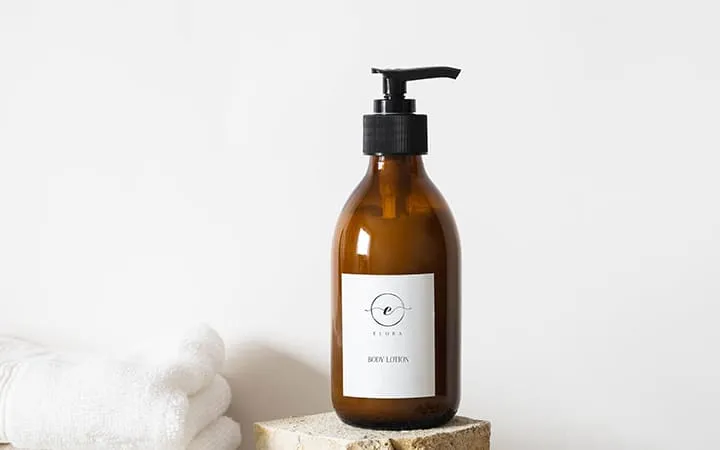
What is cosmetics?
Cosmetics are not a modern invention of the modern era, only the choice and quantity of products has increased greatly in recent years.
The word cosmetics comes from the Greek "Kosmeīn" and means "to arrange or adorn". Around 1400 BC, bath additives and oils were already being mixed for massages in Egypt.
Creams, perfumes and ointments were also made to cleanse the body or keep it beautiful. A multitude of utensils found during excavations confirm this statement.
According to the Federal Office of Consumer Protection and Food Safety, cosmetics are only considered "substances intended to come into external contact with the human body (skin, nails, hair), teeth and oral mucous membranes".
Cosmetic products are mainly used to cleanse, to scent, to change the appearance, to protect, to influence the body odour and to keep the body in good condition. These properties are achieved by the following products
- Bath essence
- Deodorants
- Skin cream
- Nail varnish
- Perfume
- Shaving foam
- Soap
- Make-up
- Sun cream
- Toothpaste
Our bestsellers for cosmetics packaging
Products that are not considered cosmetics, although they serve to beautify, are for example substances for ingestion, inhalation, injection or also insect protection. Likewise, care products for animals are not cosmetics.
In order for cosmetics to be approved for the market in Germany, they must comply with the stipulated regulations. It does not matter how large the production is: whether small or large manufacturers of cosmetics - all cosmetic products must be carefully manufactured and then extraordinarily tested.
Every manufacturer is obliged to have a safety assessment of the cosmetic products carried out by a relevant expert. On the other hand, it is not mandatory to apply for a marketing authorisation. Cosmetic products are subject to strict regulations and official controls just like food or other consumer products.
The aim of cosmetics is to preserve the beauty of an individual person. Cosmetics are used especially for daily hygiene but also to conceal ageing. The care of the skin is the focus here.
The skin should remain clean, supple, firm and "young". At the same time, cosmetic products also serve to highlight certain parts of the face.
What cosmetics are available?
It is difficult to find a clear dividing line between the different cosmetic products that exist on the market. However, there are some ways in which cosmetic products can be divided into different segments.
Basically, cosmetics can be divided into caring/cleansing and decorative cosmetics - of which there are five sub-segments:
- Skin care products and cleansing products - these include soap, shower gel, bath additives; products to protect against mosquito bites; products with special applications such as face masks; cosmetics to balance the skin's hydro-lipid film such as cream, lotion, gel, ointment, UV protection etc.
- Cosmetics for oral and dental care, including toothpaste, mouthwash, tongue cleaner, dental floss, care for dentures...
- Cosmetics for the hair, such as shampoo, conditioners, hair setting lotions, hair dyes, hair treatments, hair oil ...
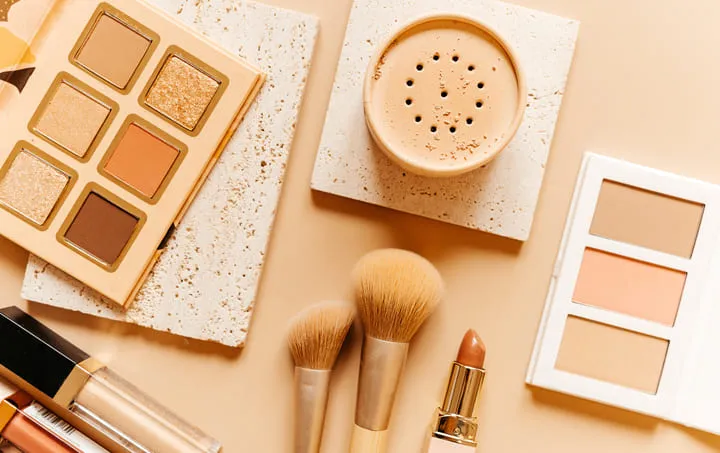
- Decorative cosmetics such as make-up, eye and lip care, self-tanning products, hair removal products.
- Cosmetics for influencing body odour such as deodorant and perfume.
The cosmetic products can also be divided for the different genders and age groups. Women have a wider range of cosmetics available to them than men, simply because of the wide selection of make-up products.
Nevertheless, interest in body care and beautification has also increased among men in recent years.
For example, there are special care lines tailored to men, such as beard care sets or make-up products to cover skin blemishes.
There are also special cosmetic products for babies, toddlers and seniors. The needs of young skin and "older" skin differ considerably. The packaging of the products is also designed differently.
A younger target group usually receives an eye-catching colourful design, whereas a simple but expressive design is chosen for adults. In order to be gentle on the skin and to avoid possible "burning in the eyes", cosmetics for children are made particularly mild. For seniors, "greasy" cosmetics are preferred to keep the skin moisturised.
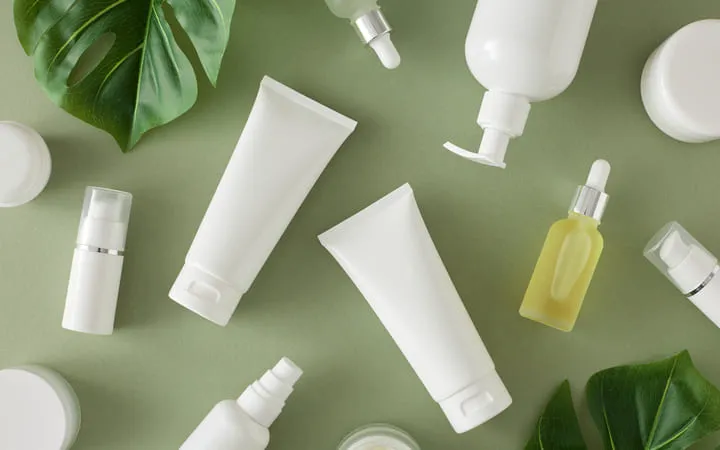
Natural cosmetics are also given an extra section among cosmetics. Natural cosmetics have become cheaper in recent years and can also be found in many drugstores.
This type of cosmetic may be called such if its ingredients consist only of natural ingredients.
Manufacturers of natural cosmetics are obliged to adhere to the standards of the natural cosmetics label, which include:
- Stricter bans on animal testing
- Natural cosmetics are not all the same as organic cosmetics
- Only a few chemically produced substances are allowed/vegetable oils must not influence specified chemical reactions
- Petroleum-based ingredients, silicones and polyethylene glycol (PEG) are prohibited
- Problematic substances (microplastics) are prohibited
Care must also be taken to ensure that storage and shelf life are not affected by the ingredients. Natural cosmetics should be stored in a cool and dark place, if possible, so that they can be kept for longer.
The packaging of natural cosmetics is often designed to reflect the product's positioning through its colours, materials and surface finishes. When selecting packaging for these products, manufacturers should consider product protection, suitability for the ingredients and the specific properties of the packaging materials. Any claims about recyclability or other environmental characteristics must be assessed for the finished packaging.
Packaging options for cosmetics
Cosmetic packaging has a high level of performance: the packaging must be stable and safe, protect the contents from germs and oxidation and no substances harmful to health must be released into the products. At the same time, the packaging must provide a lot of information for the potential customer and have an attractive design. We will show you some options for packaging your cosmetic product.
Folding boxes
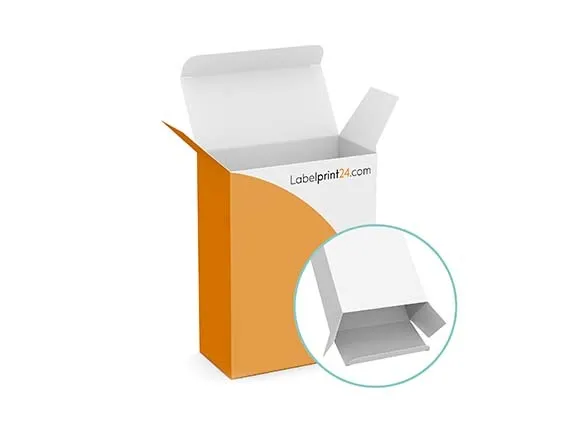
Folding boxes are a classic among cosmetic packaging, whether as primary or secondary packaging.
Small folding boxes are usually used as outer packaging for tubes, jars and vials. However, they can also be used as primary packaging, for example for solid soaps/shampoos.
A diverse design of the boxes, for example with imprints, colours, coatings or finishes (blind embossing, hot foil stamping, etc.) is also possible.
They are easy to set up, have a low weight and are handy. In addition, the boxes offer good value for money.
It is also possible to print a lot of information about the product and its ingredients on the packaging.
Accordingly, the folding box offers both safety and an attractive appearance. There are different models for the folding boxes - you have the choice between:
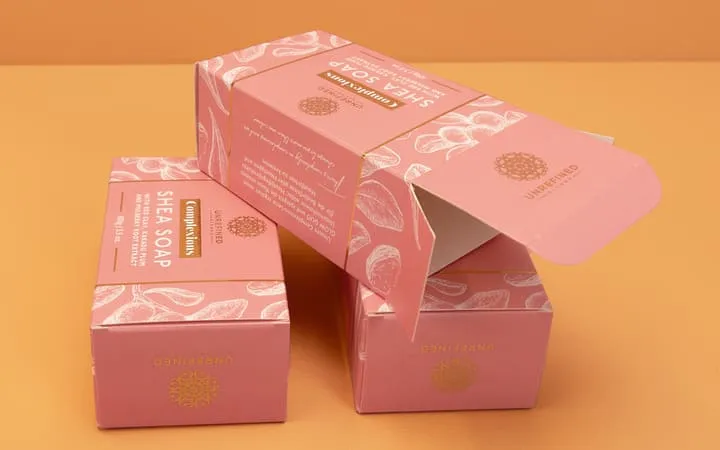
- Standard folding boxes - with various lid and base closures as well as different lashing and closure types.
- Hinged boxes - Box with large lid opening
- Pouch box - tapered variant of the folding box, the shape is reminiscent of a tent or roof, it is opened at the top and can be closed again as often as required
- Counter displays - semi-open packaging for the point of sale area
- Hanging boxes - folding box with euro hole hanger at the lid opening
- Slip-on boxes - consist of two parts (lid and bottom part), the lid is slipped over the bottom part.
Labels
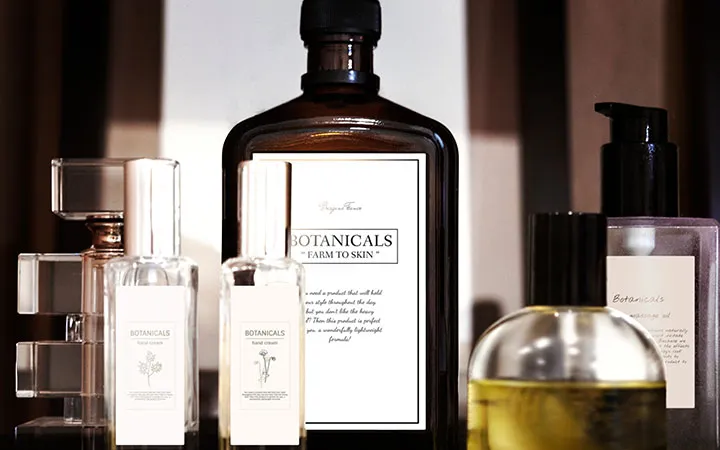
Besides an appealing design, cosmetic packaging must also provide the customer with necessary consumer information.
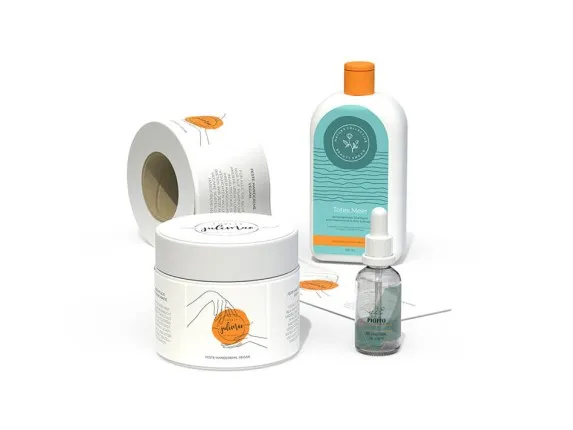
Labels are primarily intended for this purpose. These are stuck directly onto the primary package.
The EU Cosmetics Regulation regulates the essential requirements and obligations for cosmetic products.
Among other things, the regulation requires that cosmetic products must be labelled in German, especially the instructions for use and warnings. Article 19 of the EU Cosmetics Regulation states as follows:
"It should be specified which particulars are to be kept available for the competent authorities. This information should include all necessary references to the identity, quality, safety to human health and the claimed effects of the cosmetic product. In particular, this product information should include a safety report for the cosmetic product demonstrating that a safety assessment has been carried out".
Besides the important information and design options, labels must also be able to meet other requirements for cosmetic products. Labels should be of high quality so that they can withstand difficult conditions. For example, oils and water are often used in the cosmetics industry.
The label should therefore be water and moisture repellent as well as permanently adhesive so that it remains legible and important information is retained. Among others, there are the following labels:
- Printed labels - are labels on a roll with imprint, are used universally
- Unprinted labels - labels without an imprint for individual labelling
- Sheet labels - are produced in the form of paper sheets and are intended for smaller runs, for example for the office and promo stickers.
- Booklet labels - are multi-layer labels and package inserts at the same time.
- Sandwich labels - consist of several layers, the individual layers are placed on top of each other.
- Wrap-around labels - labels for wrapping cylindrical packages with unlimited information space.
Among the most commonly used labels are printed labels on rolls (roll labels). Smaller to medium runs can be printed using digital printing. This type of label is suitable for all forms of cosmetic packaging, whether plastic bottles, jars and tins made of various materials, tubes, pump bottles, or powder compacts.
Labels can be given additional protection with a suitable varnish or laminate. For natural cosmetics, the choice of finish should take account of the required protection against moisture, oils and abrasion, as well as the compatibility of the label with its packaging. Any environmental claims about the finished label must be based on its specific material structure and application.
Tubes
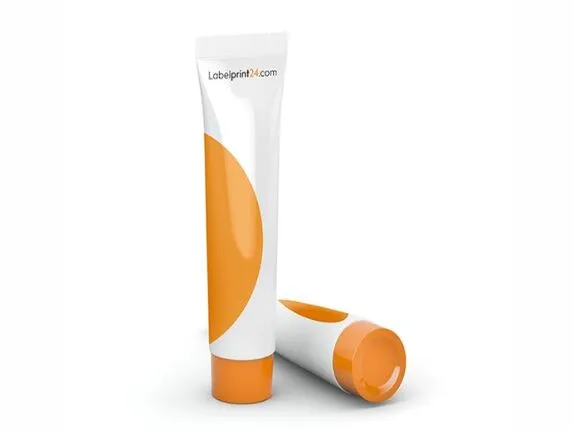
Laminate tubes are used in the cosmetics industry for pasty or semi-liquid products such as make-up, toothpaste, shower gel, cream or hair dye.
Depending on the contents, different materials are used for the tubes, for example aluminium, laminate or plastic tubes.
The tubes are suitable filling goods which are often used for safety and hygiene reasons. Tubes are primary packaging that are constructed as follows:
- Tube body
- Tube shoulder
- Tube thread
- Tube cap
- Tube seal
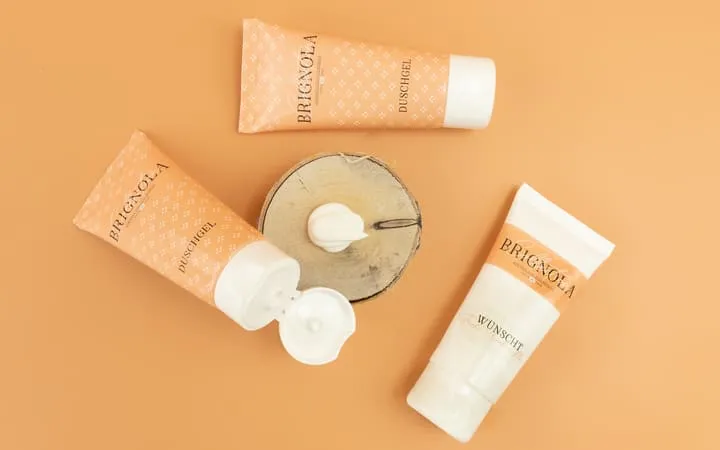
Laminate tubes have a small outlet opening at the neck of the tube, which minimises the contact of the contents with the environment and extends the shelf life of the contents. In addition, tubes are resealable containers and can dispense their contents precisely with the help of the small outlet opening. There are two different types of closure:
- Flip top closure - two elements are connected with a hinge, with the help of pressure the two elements are pushed together or opened again.
- Screw closure - a plastic cap (or other material possible) is "screwed" onto the thread of the container.
The tube surface then serves as an information and advertising medium for your product. With their excellent barrier protection, high elasticity and ease of packaging and use, tubes are a preferred packaging option for cosmetics.
Pouch packaging
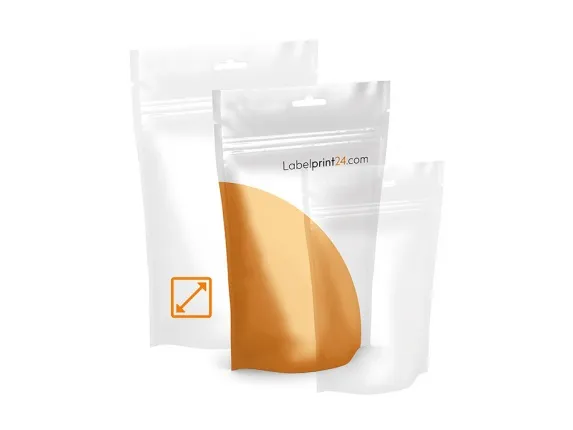
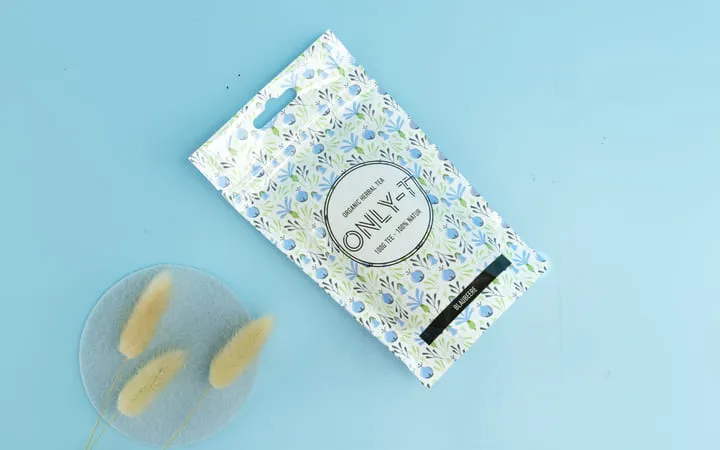
Pouch packaging is printed packaging in a pouch shape. The pouches are versatile, protect your product and offer plenty of space for the contents.
In the cosmetics sector, for example, they are used for liquid hand soap as a refill pack or bath salts. They are available as standard stand-up pouches or unprinted stand-up pouches, each in different formats as well as different materials:
- White film (PET/PE-EVOH-PE)
- Metallised film (PET/PE)
- Transparent film (PET/PE-EVOH-PE)
- Brown uncoated paper/PE
- White paper/PE with EVOH
Design and finish cosmetics packaging
Stylishly packaged cosmetic products go down particularly well with your potential customers. You can create recognition value through individual product packaging. High-quality cosmetic products thus come to the fore and create a distinguishing feature from your competitors.
You can customise your design, whether you want to have your motif printed or convey a specific message - use as many alternatives as possible when designing.
After you have decided on a suitable packaging, you can start with the design. It is important that information and details about the product are legible and recognisable. An additional finishing or coating is another highlight that you can use. There is a wide range of finishing options, of which we would like to describe three types in more detail:
Lamination
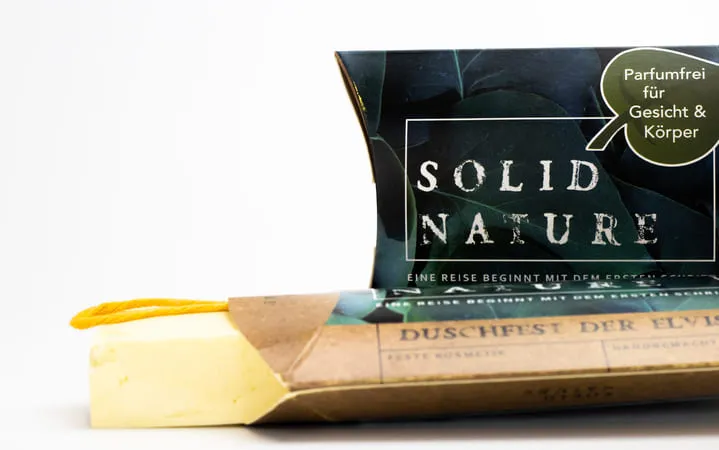
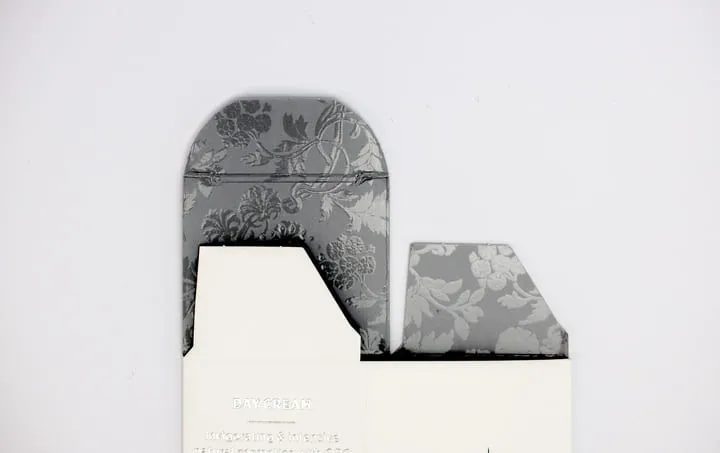
With lamination, you can have a film applied to the entire surface of the base material of your folding box.
The film is mainly used for protection against mechanical abrasion and other environmental influences. The structure of the surface can also be changed - for example, you can choose a brilliant, matt or reflection-free coating.
Coatings based on biopolymers are also used in certain packaging applications. Their properties and effects on recycling depend on the specific polymer, coating structure and the materials used in the finished packaging.
Paintwork
Varnishing is a very popular finishing technique. The cost of varnishing is also much lower than it used to be, thanks to the latest printing presses.
Varnishing can be applied over the entire surface or partially to highlight a logo or motif. There are a variety of varnishes you can use, such as ultraviolet varnishes or dispersion varnishes.
The lacquering also provides the boxes with effective protection against moisture, dirt, scratches, grease, oil, etc.
Embossing
Different embossing techniques can be used to create beautiful effects on your packaging. Embossing is one of the oldest methods for finishing printed products.
Embossing is usually done with an embossing die. The stamp adds a third, tangible dimension to the substrate. This permanently deforms the surface of your packaging.
There are also different embossing processes with great end results. For example, blind embossing uses the embossing die to achieve a highly embossed or deeply embossed deformation.
In flat embossing (or relief embossing), a stamp is also used - but only from one side. There is also hot and cold foil stamping.
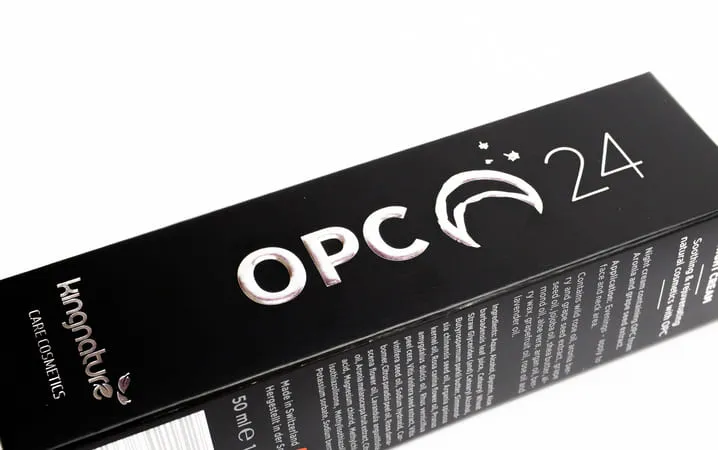
Hot foil stamping is the transfer of stamping foil with pressure and heat onto the material to be finished without causing any deformation. Cold foil stamping, on the other hand, is done without embossing tools or high temperatures.
The embossing foil is applied to the material before printing. In fact, it can be seen that there is an extensive range to make your cosmetic packaging stand out with a finish or coating to help you score at the point of sale. In addition to the unique and beautiful designs, your packaging also receives a protective barrier against external environmental influences.
Sustainability and cosmetics packaging
Naturalness and sustainability now go hand in hand in the cosmetics industry. Both the ingredients and the packaging of cosmetics are now becoming increasingly natural and are considered must-haves in the beauty scene.
When developing cosmetic packaging, manufacturers should consider material consumption, product protection, the use of recycled raw materials where appropriate, and the available collection and recycling systems.
The market for care and beauty products is huge - and customer expectations are correspondingly high. Due to rising energy and raw material costs, the production of packaging has become more expensive. Sustainability is therefore not only highly regarded by customers, but also for the manufacturers of packaging. For example, bamboo and reed fibres are already being used as raw materials.
Grass cardboard is a special type of paperboard that contains grass fibres alongside other paper fibres. The precise proportion of grass fibres and recycled fibres depends on the specific board grade and manufacturer. The composition must be selected to achieve the required stability, printability and processing characteristics for the intended packaging application.
Grass cardboard differs from conventional paperboard in its fibre composition and may contain grass fibres alongside recycled paper fibres. The environmental effects of its production depend on factors such as the raw materials, manufacturing processes and transport requirements.
Furthermore, grass cardboard has a beautiful look and feel. The coarse structure of the individual visible grass fibres gives the material a unique recognition value. Grass cardboard is an excellent match for natural cosmetics and makes them quickly recognisable as such. If you do not like the slightly yellowish base colour of grass cardboard, you can counteract this by printing opaque white.
Certain plastic packaging materials can be recycled through suitable collection, sorting and recycling systems. The recyclability of a specific cosmetic package depends on its complete material structure, including any barrier layers, coatings, adhesives and closures.
Collecting plastic packaging separately can enable suitable materials to enter recycling processes. Recycled plastic may replace a proportion of virgin raw material in new products, depending on the quality of the recyclate and the requirements of the intended application.
Glass is one of several materials used for cosmetic packaging and offers specific properties in terms of product protection, chemical resistance and recyclability.
One negative aspect of glass is the high amount of energy it takes to produce. Glass is also a rather heavy material, so more energy is consumed in transporting it. Furthermore, it is safer to use liquid shampoos, conditioners or shower gels in plastic packaging - glass can break and cause injury. For safety reasons, these packages, which are used in the shower, are made of plastic.
Another good starting point is the refilling or reuse of cosmetic packaging. The reusable system is often suggested as a solution. With the help of doypacks, your already purchased packaging is refilled. The aim of this system is to refill a bottle or container several times.
Refill systems can allow a container to be used several times by replenishing its contents, for example with a refill pouch. Whether such a system reduces environmental impacts depends on the design of the original container and refill packaging, the number of refills, material consumption and transport conditions. This system is supposed to work similarly to the reusable coffee cups, but it will take some time before it becomes established on the market. Some cosmetic brands are already trying to encourage buyers to use the system with beautifully designed reusable aluminium bottles.
Conclusion:
Cosmetic products require packaging that meets different needs, including product protection, hygiene, information and presentation. Developments in materials, packaging formats and refill systems offer cosmetics brands a range of options for improving the functionality and design of their packaging.
When choosing between these options, businesses should consider the product requirements and assess any relevant environmental characteristics of the finished packaging. Claims about environmental benefits should refer to specific, verifiable properties rather than describing packaging as generally environmentally friendly.
FAQ:
- What are cosmetic products?
Cosmetic products are mainly used to cleanse, perfume, change the appearance, protect, influence body odour and keep the body in good condition.
- What should be considered for cosmetics packaging?
The EU Cosmetics Regulation requires cosmetic products to be labelled in German, especially the instructions for use and warnings. It is also important that information and details about the product are legible and recognisable.
- Which materials are available for cosmetic folding boxes?
Cosmetic folding boxes can be made from different cardboard materials, including grass cardboard and board grades containing recycled paper fibres. Grass cardboard typically has a distinctive appearance with visible grass fibres. The exact fibre composition depends on the specific board grade. Properties such as recycled content and recyclability should be assessed separately for the material and finished packaging concerned.