




 BY Judith Enger IN Industry knowledge
How to improve product packaging?
Packaging is no longer just about protecting your product. Today, it acts as a strategic lever to capture consumer attention, differentiate from competition, enhance brand image, and improve the consumer experience. Good packaging design can make all the difference at the point of purchase. So, how can you improve your product packaging to meet current market expectations?
In this comprehensive article, we guide you through the challenges, levers, and best practices for rethinking your packaging design inspiration packaging in an intelligent, effective, and sustainable manner.

1. Understanding the challenges of modern packaging
The evolution of consumer expectations
In the past, the role of packaging was limited to logistics: containing, protecting, and transporting a product to the point of sale or to the customer's home. Today, while this function remains essential, it alone is not sufficient. Packaging design has transformed as consumer expectations have evolved, influenced by new criteria: aesthetics, environmental responsibility, transparency, practicality, and resonance.
Consumers now expect packaging to tell a story, reflect commitments (ecological, ethical, social), and make their lives easier. It must not only be visually appealing but also meet practical needs such as ease of opening, preservation, transport, reuse, or recycling.
In an ultra-competitive environment, packaging becomes a key trigger for purchase. On average, a product has between 5 and 7 seconds to capture a customer's attention on the shelf. This means that the first visual impression is crucial. Well-thought-out design packaging, clear typography, and colour coherence with your brand's universe are elements that can make a difference.
Moreover, consumers seek greater transparency. They want to know what they are buying, who makes it, where the ingredients come from, and the environmental impacts. Packaging box design that is well-executed must be aesthetic, informative, and compelling, playing an increasing role in building customer trust.
In a digital world, packaging also serves as an image relay on social media. Inspiring, original, or eco-friendly packaging is more likely to be photographed, shared, and commented on—thus becoming a source of organic brand awareness.through design inspiration packaging.
Packaging as a communication tool
Today, packaging is an integral part of a brand's communication strategy. It is no longer simply a functional element, but a medium in its own right. Packaging design allows you to convey a message, both visually and through text, directly linked to the identity and values of your company.
Good packaging tells a story—whether about the product or the brand. It should enable consumers to understand the universe it belongs to in just a few seconds. The choice of colours, shapes, textures, materials, and typography is never neutral, and should be a coherent extension of your brand strategy.
For instance, an ethical and committed brand will often opt for recycled packaging, plant-based printing, or minimalist design to communicate its respect for the environment. Conversely, a premium brand will focus on high-end finishes, textured effects, and an overall polished presentation to convey luxury.
Packaging also serves as a powerful branding tool. It helps to build a strong and recognisable visual identity: a well-placed logo, a consistent colour palette, a striking slogan, and a harmonious arrangement of visual elements all contribute to making the product instantly identifiable in-store or online.
At the point of sale, packaging acts as a "silent salesperson." The better it is designed, the more it captures attention, stimulates interest, and triggers purchases. Effective packaging can even reduce the need for external advertising by showcasing products directly at the point of sale, exemplifying excellent packaging design and packaging strategy.
Customer experience and the compelling role of packaging
The customer experience doesn't begin when the product is used, but rather from the very first contact with its packaging. For in-store purchases, this occurs when the product is handled, while for online purchases, it happens upon opening the parcel. This is why packaging plays an essential role in the consumer experience.
Well-designed packaging can be very emotive. It can be pleasant to handle, intriguing in shape, reassuring in sturdiness, or captivating in texture. All these elements contribute to creating a sensory experience that leaves a positive impression on the customer.
Consider the cosmetics sector: high-end brands invest in rigid boxes with magnetic closures, elegant bottles, or soft-touch finishes. The moment customers discover the product becomes a rewarding "ritual," almost ceremonial. This phenomenon, often referred to as the unboxing effect, has a direct impact on customer satisfaction and brand recommendations.
In electronics or connected devices, unboxing can also be staged; each component has its designated place, and each layer of packaging is designed to surprise and impress. This approach effectively creates that "wow" effect and stimulates word-of-mouth marketing.
Good packaging enhances the perception of the product itself. It adds value, coherence, and credibility to your merchandise. It can turn a simple commodity into a desirable item. In this way, packaging actively contributes to customer loyalty and the building of a lasting relationship between your brand and your customers.

2. Review the current situation: Is it really necessary to change?
Listen to customer feedback
Before undertaking a redesign of your packaging, it is essential to start by listening to your customers. They are often the first to point out what works and what doesn’t. Recurring negative feedback about the packaging—such as difficulties in opening, lack of durability, illegible information, or unappealing aesthetics—should be taken seriously. These issues often reveal concrete problems that the marketing or product team may not immediately perceive.
For example, if customers report that the packaging tears easily or that the contents arrive damaged, it indicates a need for optimisation in the material's resistance or format. Similarly, difficult closures or a lack of resealable features can lead to frustration, waste, and product abandonment.
Conducting satisfaction surveys, creating simple feedback forms, or analysing customer service data provides valuable qualitative insights. It's also beneficial to monitor reactions on social media, where users readily share their positive and negative experiences related to your packaging design.
Finally, customer feedback serves not only to correct flaws but also to uncover creative or functional opportunities: a need for portable formats, a preference for more natural materials, or expectations regarding packaging design and aesthetics. Utilising this input effectively can guide you in enhancing your packaging design and packaging strategies to meet current market demands.
Study the competition
Observing competition is a powerful source of inspiration. Examining the packaging of successful brands in your sector allows you to identify market standards and points of differentiation.
Analyse the key elements: what type of packaging is used? What materials are chosen (cardboard, plastic, aluminium, kraft, glass)? How are visuals, texts, and logos arranged? What tone is adopted (institutional, humorous, emotive)?
A packaging benchmark also helps you identify emerging trends. For instance, the rise of visual minimalism, the use of recycled materials, or personalisation through QR codes and dynamic labels are elements you can integrate into your design and packaging analysis.
Additionally, studying how competitors present their packaging online—focusing on details, highlighting durability, and storytelling around packaging—helps you understand how they leverage packaging as a marketing and brand image tool.
However, be cautious not to merely copy. The goal is to identify what works and then adapt or reinvent those codes in a way that aligns with your own positioning. This approach allows you to remain innovative while responding to market expectations, enhancing your packaging design and packaging strategies effectively.
Analysing logistics performance
Packaging must not only appeal to the consumer but also be seamlessly integrated into the logistical chain. Poorly designed packaging can lead to significant additional costs: wasted space in boxes or pallets, unnecessary weight increasing transport expenses, and fragility causing breakage or returns.
Logistical analysis of packaging involves assessing several criteria: its footprint, durability, stability, ease of stacking, and compatibility with filling and sealing machines.
For example, a stand-up pouch (doypack) may be more stable on the shelf than a flat pouch, while overly rigid packaging can complicate carton packing or prolong production times. Similarly, certain formats are better suited for online sales, where resistance to shocks and temperature variations is crucial for maintaining product integrity.
An effective diagnostic will also identify opportunities for streamlining, such as: reducing size, eliminating unnecessary elements, or adopting a standardised format. These choices can enhance margins without sacrificing perceived quality.
In summary, effective packaging strikes a balance between enticement, functionality, and operational efficiency, aligning with your packaging design and packaging strategies for optimal performance in the market.
3. Levers for improving packaging
Visual design: Beyond aesthetics
Visual design must not only captivate consumers but also seamlessly communicate the brand's message. Poorly executed visuals can lead to significant drawbacks, including a lack of engagement, misinterpretation of the brand identity, and reduced customer loyalty.
Analysing visual design involves evaluating several criteria: clarity, aesthetics, branding alignment, and usability. For instance, vibrant colors and striking typography can make a product stand out on the shelf, while overly complex designs can confuse consumers and dilute your brand's message. Additionally, certain design formats are better suited for online platforms, where visual clarity and adaptability to various screen sizes are essential for effective communication.
An effective visual design analysis will also identify opportunities for enhancement, such as: simplifying elements, streamlining colour palettes, or adopting a cohesive design framework. These choices can also improve brand perception and compel your audience without compromising your overall aesthetic.
In summary, effective visual design is one that strikes a balance between aesthetics, functionality, and branding effectiveness, ensuring that both design and visual strategies contribute to your product's overall success.
Ergonomics: Thinking about the end user
One of the key pillars of effective packaging is undoubtedly its ergonomics. Good packaging should not only be visually appealing; it must also be practical, intuitive, and enjoyable to use. The user experience does not end at the moment of purchase—it continues every time the customer interacts with your packaging.
The ergonomics of packaging can be measured through several concrete criteria:
- Is it easy to open without the need for scissors?
- Does it allow for resealing to maintain optimal freshness?
- Does it fit comfortably in the hand and remain stable when put down?
- Is it simple to transport and store?
- Can it be easily sorted and recycled?
In the food sector, innovations such as resealable zippers, dosing caps, or stand-up pouches significantly enhance everyday usability. These features help reduce waste, facilitate portion management, and prolong the product's lifespan after opening.
In the cosmetics industry, airless bottles protect sensitive formulas from oxidation while ensuring precise and hygienic dosing. Drip-free pumps, travel-size formats, and squeeze tubes designed for one-handed opening are other examples of ergonomics tailored for user comfort.
Ergonomics also plays a crucial role in safety. Packaging intended for chemicals, pharmaceuticals, or toxic substances must incorporate child-resistant features, warning pictograms, or pressure caps. For elderly individuals or those with disabilities, good ergonomics allows for easier access without compromising autonomy.
Finally, the format directly impacts domestic logistics; stackable packaging that fits easily into a cupboard or fridge is perceived as more practical. Brands that anticipate these uses gain customer loyalty and satisfaction.
In summary, thinking of the end user means designing packaging that seamlessly integrates into daily life without creating friction. Customers remember this attention to detail in design and packaging strategies.
The choice of materials
The choice of materials is one of the most strategic aspects when designing or reworking packaging. This decision impacts various parameters, including aesthetics, cost, durability, customer perception, environmental impact, and logistics.
Each material has its advantages, constraints, and correlations. For instance, glass implies purity, tradition, or high-end quality. Natural kraft conveys values of authenticity, ecology, and simplicity. Clear plastic offers good visibility of the product but is often linked to less sustainable practices, unless it is bio-based or recyclable.
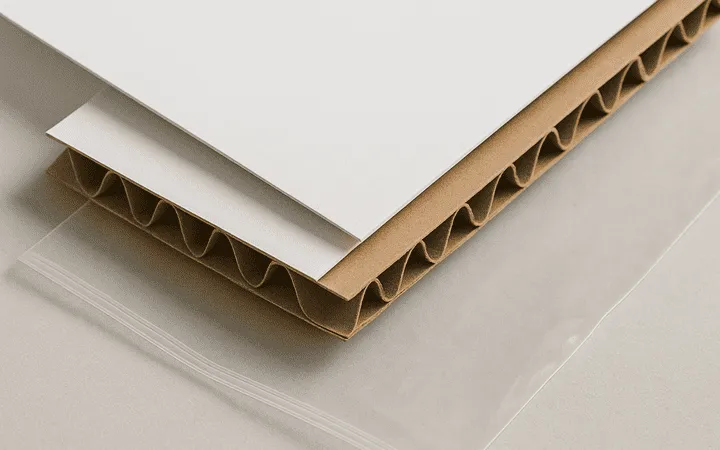
Increasingly, brands are moving away from complex, non-recyclable plastics towards alternatives such as:
- Brown or bleached kraft paper: paper-based materials with different visual and technical characteristics. Whether the finished packaging is recyclable depends on its complete construction, including coatings, adhesives and other components.
- Recycled or FSC-certified cardboard for boxes, kits, or sleeves
- Barrier films for food packaging: films selected according to the product's requirements for moisture, oxygen and aroma protection. Some specialised film structures may have certified compostability properties, which must be verified for the finished packaging and the intended disposal conditions. Compostability does not automatically mean that a film is plastic-free.
- Bio-based plastics (from sugarcane, corn, etc.)
- Recyclable aluminum, often chosen for its strength and ability to preserve aromas
Additionally, the choice of material should align with the nature of the product. Packaging for dry foods will have different requirements than that for liquid cosmetics or chemical products. Consideration must be given to preservation needs, sealing, protection against light or oxygen, and transport conditions.
From a marketing perspective, materials play a role in perceived value. Premium packaging with a soft-touch feel, matte finish, or textured printing can enhance the product's percieved quality. Conversely, cheap or fragile materials can create a negative impression.
Finally, the choice of material has become an ethical branding issue. Consumers are increasingly aware of environmentally friendly packaging. Adopting recyclable, compostable, or lightweight materials demonstrates ecological commitment—provided this is clearly communicated on the packaging itself, showing effective design and packaging strategies for sustainability.
4. Personalised packaging: creating a connection with the customer
The impact of personalisation
Personalised packaging is a powerful lever to strengthen the relationship between a brand and its customers. It transforms packaging into a medium of emotion, recognition, and engagement. By personalising packaging, brands are no longer addressing a general audience, but rather connecting with individuals on a personal level.
This can be expressed through the addition of a name on the packaging, as Coca-Cola successfully demonstrated with its "Share a Coke with..." campaign, or by printing specific messages targeted at particular demographics (youth, parents, eco-enthusiasts, etc.). Some brands take it further by offering exclusive designs for each product line or limited editions that create a sense of scarcity and urgency to purchase.
In e-commerce, personalisation also plays a crucial role during the unboxing experience. Personalised packaging featuring a thank-you message, a handwritten note, or an inspiring quote can transform a simple delivery into a memorable and compelling experience. This encourages customers to share their purchase on social media, enhancing brand visibility and increasing word-of-mouth marketing.
Finally, personalisation fosters a sense of belonging to a community. It turns the customer into a brand ambassador, which can significantly increase loyalty and repurchase rates, illustrating the effectiveness of customised design and packaging strategies.
Examples of success
Several brands have distinguished themselves by placing personalisation at the heart of their packaging strategy. For example, Innocent stands out with its humorous messages and original storytelling on its bottles. The brand successfully creates a close relationship with its customers through its playful and human tone.
Merci Handy, specialising in hygiene products with natural formulas, focuses on a colourful, soft, and comforting visual universe. Their packaging plays with words, textures, and emotions to appeal to a young, connected, and engaged clientele.
Michel et Augustin have built their entire brand image around an accessible, humorous, and quirky tone. Their packaging is filled with handwritten notes, anecdotes, and drawings that give a sense of modern craftsmanship.
Other brands prefer elegant, minimalist, and understated packaging, particularly in the sectors of natural cosmetics, premium teas, or organic products. Here, the choice of materials (kraft, glass, recyclable aluminium) and minimal aesthetics reflect authenticity and an ecological commitment.
Custom packaging can also adapt based on regions or events: a QR code linking to a playlist, local illustrations, or phrases in the native language. These little details create a genuine connection with customers.
Digital printing: Flexibility and creativity
Digital printing has revolutionised the world of packaging by offering brands greater flexibility in design and production. It allows for the rapid and cost-effective printing of customised packaging, whether in small, medium, or large quantities.
With this technology, companies can adapt their visuals for different marketing campaigns, seasonal editions, or even specific events (holidays, trade shows, partnerships). This facilitates more agile, dynamic, and creative communication.
Another major advantage of digital printing is the ability to vary visuals without incurring additional costs for plates or setup, unlike traditional printing methods. This means a brand can create unique packaging with each print run, without wasting time or resources.
This is a considerable asset for startups, digital-native vertical brands (DNVBs), and SMEs that wish to test multiple designs, segment their audience, or respond quickly to changing trends. This flexibility also makes visual A/B testing easier, allowing companies to measure the impact of specific graphic elements on sales.
Digital printing allows artwork versions and order quantities to be adapted to different customer requirements. For certain applications, this flexibility can help businesses order packaging in quantities that reflect their current needs. Whether this reduces surplus production or material consumption in practice depends on the order volumes, production process and comparison with alternative printing methods.
5. Packaging and marketing: A strategic duo
Strengthening Storytelling
Effective packaging doesn't just inform—it tells a story. This presents a unique opportunity to create an emotional connection with the consumer, convey values, and make your product memorable. Storytelling begins with visual elements but is also expressed through tone, graphic details, and various texts scattered across the packaging.
The narrative can highlight the product's origin, artisanal craftsmanship, the brand's commitments (such as ecology, fair trade, or local manufacturing), or the benefits for the user. For instance, organic chocolate made in the UK can share its origin, its producers, and the meticulous processes that contribute to its quality. This transforms the simple act of purchasing into a committed choice.
Effective storytelling ignites curiosity. It encourages customers to read, explore, and share their experiences. It turns an ordinary product into a meaningful experience. It also imbues your brand with personality, which is especially crucial for differentiation in a saturated market.
Finally, packaging storytelling serves as a powerful marketing tool because it is perceived as more authentic and less intrusive than traditional advertising. It subtly, yet profoundly, influences brand image, demonstrating the importance of cohesive design and packaging strategies in building customer relationships.
Sensory and emotive marketing
Packaging doesn't just speak to the eye, it also appeals to the other senses: touch, smell, sound—and sometimes even taste, through expectations set by the packaging.
A soft-touch finish, elegant embossing, or a rough or velvety texture can significantly influence the consumer's perception of quality. Simply handling a product that feels pleasant to the touch conveys a sense of care, refinement, and attention to detail.
Some packaging also harnesses the sense of smell to stand out. This is particularly common in the cosmetics and wellness sectors, where scented inks can create a first olfactory impression that is sweet, floral, or fruity. This approach helps anchor the product in the consumer's sensory memory.
Sound can also play a role. The pop of a cork, the crackle of rigid cardboard opening, or the reassuring click of a cap closing all contribute to the product experience. These sounds are often associated with assurance, quality, or product freshness.
The goal of sensory marketing is to create an immersive experience that aligns with your brand's values and meets customer expectations. It strengthens engagement and fosters a connection with your product.
Building loyalty through packaging
Packaging is one of the most powerful tools for fostering customer loyalty, often unconsciously. Thoughtfully designed and aesthetically pleasing packaging encourages customers to keep, recommend, photograph, or even start collecting your product.
Beautiful packaging can be displayed on a shelf, repurposed for other uses (such as a storage box, spice jar, or decorative accessory), or given as a gift. This prolongs the lifespan of your brand in the customer's daily life, often referred to as secondary use value packaging.
Brands that focus on reusable or modular packaging provide a more sustainable and practical experience, creating a sense of recognition and appreciation among consumers. This can also generate positive word-of-mouth marketing, particularly on social media, where customers enjoy sharing their unique discoveries.
A memorable package is one that leaves a lasting impression. It contributes to brand recall, long-term differentiation, and repeat purchases. In a world where customer loyalty is increasingly hard to achieve, investing in quality packaging can become a significant competitive advantage.
6. Focus on eco-friendly packaging
Reducing environmental impact
The environmental impacts of packaging are an important consideration in product development, particularly in relation to material consumption, waste generation and greenhouse gas emissions. Packaging manufacturers and brand owners can examine different packaging formats and materials to identify suitable solutions for their products. Environmental improvements should be assessed against a clearly defined comparison and should not compromise the protection of the packaged goods.
One aspect of packaging development is the amount of material used. Adjusting packaging dimensions or removing components that are not required for product protection may reduce material consumption in specific applications. Packaging weight and dimensions can also influence transport planning. However, any claimed reduction in material use or greenhouse gas emissions must be based on a defined comparison that takes account of packaging performance and the relevant logistics conditions.
Recycling compatibility is another consideration when selecting packaging materials. Multi-layer packaging can present challenges for sorting and recycling, depending on the materials and barriers used. Alternative structures may improve recycling compatibility if they are designed and assessed for the relevant collection, sorting and recycling processes. The use of bio-based plastic or kraft paper does not, by itself, establish that a finished packaging product is recyclable.
Finally, developing refillable, reusable, or deposit-return formats helps limit waste at the source. Refill systems, commonly used in cosmetics or cleaning products, allow for the retention of a main container while only replacing the refill. These formats align perfectly with a circular economy approach.
These efforts are not only beneficial for the environment; they also enhance your brand's image, credibility, and attractiveness to engaged consumers.
Smart and sustainable packaging
The major challenge of eco-friendly packaging is to reconcile sustainability with functional performance. Packaging remains an essential element for protecting, preserving, and transporting products. It is not enough to be environmentally friendly; it's also necessary to guarantee the integrity of your contents, comply with health standards, and offer a long shelf life.
Fortunately, innovations in materials now allow for meeting these requirements. Some of the most common solutions include:
- Kraft paper-based multi-layer pouches: packaging structures that combine a paper-based outer layer with additional materials selected to provide the barrier properties required for the product. Their recyclability or compostability cannot be determined from the kraft paper appearance alone and must be assessed for the finished packaging structure.
- Films made with starch-based or cellulose-based materials: specialised packaging films whose properties depend on the specific formulation and structure. Any claim of industrial or home compostability must be supported by suitable testing or certification for the finished packaging and the claimed disposal conditions.
- Plant-derived or water-based printing inks: ink systems that can be considered for specific printing applications, depending on the substrate, print quality requirements and production process. Their environmental performance cannot be inferred from the ink base alone and requires an appropriate comparison with alternative ink systems.
- Labels designed for removal or recycling compatibility: depending on their material, adhesive and the packaging they are applied to, some label constructions can be designed to support specific sorting and recycling processes. Their suitability must be assessed together with the associated packaging. Compostability is a separate property and does not automatically improve recycling compatibility.
Additionally, companies are developing smart solutions, such as connected packaging that tracks your product's carbon footprint or informs consumers about proper recycling practices. These smart packages help raise consumer awareness while modernising the product experience.
Environmental considerations can be incorporated into packaging development alongside product protection, visual design and usability. Material selection, packaging weight, barrier properties and end-of-life characteristics are among the factors that may be evaluated. Whether a particular packaging solution offers an environmental improvement must be determined by assessing the relevant characteristics and comparing it with a suitable alternative.
Communicating specific packaging characteristics
When presenting packaging materials and their properties, it is important to provide clear and verifiable information. Consumers should be able to understand which characteristics apply to the packaging and what they mean in practice.
Packaging information may include:
- Material composition and verified recycled content, where applicable.
- Recycling or disposal instructions that are appropriate for the finished packaging and the relevant collection system.
- Valid certifications or recognised marks, used only where the specific product and the intended claim meet the applicable requirements.
- Clear explanations of particular packaging features, such as removable components or refill functions.
QR codes can also provide access to further product-specific information. However, the essential qualifications of an environmental claim should remain clear in the original communication and should not depend solely on information available through a separate link.
7. Best practices for successful packaging redesign
Collaborating with experts
Collaborating with experts is crucial when undertaking a packaging redesign, as this process is a strategic initiative that encompasses much more than just the aesthetic value of your packaging. It requires a variety of skills: graphic design, marketing, materials engineering, industrial printing, logistics, regulation, and often, the integration of all these elements at once.
Therefore, it is highly recommended to work with industry experts. Partnering with an experienced manufacturer, such as Labelprint24, not only provides access to specialised technical advice (material selection, printing types, finishes, etc.) but also ensures the feasibility of your project within set timelines and budget constraints.
Specialised packaging designers offer a creative yet strategic perspective. They understand how to balance brand identity, shelf visibility, visual appeal, and functional coherence. Meanwhile, packaging engineers ensure that the packaging effectively protects the product, complies with relevant standards, and integrates smoothly into the logistical chain.
Engaging a comprehensive service provider also helps anticipate costly errors (such as material/product incompatibility, printing surcharges, compliance issues, etc.) and enhances overall efficiency. This collaboration guarantees professionalism and peace of mind throughout the project, highlighting the importance of effective packaging box design in achieving a successful redesign.
Test before launching
Before mass-producing new packaging, it is essential to review your product with its target audience. A design may seem perfect on paper but reveal usability or perception flaws once in the hands of consumers.
Several methods can be employed to test new packaging:
- Creating physical prototypes allows for concrete evaluation of aesthetics, ergonomics, perceived quality, and durability.
- Organising focus groups enables direct feedback from a panel of target customers on various designs.
- Sending samples to loyal customers along with a structured feedback survey helps gather insights: Is the packaging clear, practical, and aesthetic? Does it inspire trust in your brand? Does it enhance the product's value?
- A/B testing can also be used during an online or in-store launch. This involves selling multiple versions of the same product, each with a slightly different design, to measure actual performance (click-through rates, conversion rates, repurchase rates, etc.).
The goal of these tests is to identify elements to correct or improve before market launch, maximising the chances of success right from the beginning. This highlights the importance of thorough testing in effective design packaging strategies.
Measuring impact
Once the new packaging is launched, it is crucial to measure its effectiveness over time. Packaging is a living tool that can—and should—be continuously optimised. Failing to track its performance means missing out on valuable data for your ongoing strategy.
Here are some key indicators to monitor:
- Sales evolution: Is the new packaging stimulating purchases?
- Customer feedback: Are you recieving positive or negative comments about the packaging?
- Social media shares: Has unboxing become a special moment that customers enjoy showcasing?
- Product return rate: Has it decreased due to better protection or clarity about the product?
- Brand recognition and recall: Do customers identify the brand better on the shelf?
These indicators can be collected through web analytics tools (for e-commerce), customer service insights, retailers, or through post-purchase surveys.
A good practice is to conduct a review 3 to 6 months after launch and adjust certain details as needed (clarifying information, improving ergonomics, simplifying visuals, etc.). This iterative approach allows packaging to become an agile and evolving marketing lever.
Conclusion: Good packaging means a better-selling product
Improving a product's packaging is far more than a simple aesthetic revamp. It is a powerful strategic lever that serves your brand, enhances visibility, and strengthens customer relationships. Well-designed packaging attracts, engages, tells a story, protects, reassures, and above all... it creates an experience.
In an increasingly competitive market, packaging becomes a key differentiator. It reflects your commitments, your creativity, and your positioning. It speaks for you, even when you're not there—and whether you're a rapidly growing startup or an established brand, it deserves your full attention.
There are numerous opportunities for improvement: more sustainable materials, ergonomic formats, clearer designs, refined storytelling, personalisation, and technical innovations. However, it is essential to identify, test, and implement these changes coherently.
The success of a redesign relies on a structured approach: listening to your customers, analysing performance, observing trends, collaborating with the right partners, and, crucially, always considering the end user.
At Labelprint24, we support brands in the design and production of customised packaging, offering different materials, printing options and packaging formats to meet specific requirements for quality, functionality and visual presentation.
Don't wait for your packaging to become obsolete: turn it into a true commercial and relational asset. Because good packaging does not just sell a product—it conveys a promise, an emotion, and sometimes, a vision.