



 BY Judith Enger IN Industry knowledge
What are the 5 main functions of packaging?
Packaging plays a crucial role in the production, distribution and consumption chain. Much more than just a container, it performs several essential functions that influence logistics, product perception, commercial efficiency and consumer experience. In an increasingly competitive market governed by ecological, aesthetic and regulatory expectations, understanding the function of packaging is essential for any company's performance. Here are the five main functions of packaging, detailed and optimised to meet current market expectations.

Protecting the product
The primary purpose of packaging is to protect your product, a fundamental function that determines its quality, shelf life and regulatory compliance. Packaging must protect the contents from external factors such as impact, temperature variations, humidity, UV rays, dust, tears and microbial contamination. This function is particularly critical in sectors with high health requirements, such as food, pharmaceuticals and cosmetics.
The quality of protection depends heavily on the choice of materials. For example, food packaging must be airtight and lightproof, without any migration of toxic substances. A cosmetic bottle must maintain the chemical stability of the product, while a shipping carton must withstand weight and vibration on pallets or during home deliveries. The proliferation of logistics channels, particularly with e-commerce, makes this function even more strategic.
Well-designed protective packaging also limits the costs associated with product returns, breakages and expired products. By reducing losses and waste, this function also has a direct impact on companies' environmental objectives.
Containing and preserving
The function of containing seems obvious, but it requires careful consideration. Packaging gives the product its final form, ensures its stability, and facilitates its transport and handling at every stage of the supply chain. It prevents spills, overflows, leaks, or chemical reactions with the external environment.
This function also includes the ability to preserve the product's properties over time. For food products, this means guaranteeing freshness, flavour, texture and nutritional qualities. For pharmaceutical products, it concerns therapeutic efficacy. In the cosmetics industry, the stability of formulas, fragrance and texture are central to the consumer experience.
Technological innovations now make it possible to extend the shelf life of products without resorting to chemical preservatives: modified atmosphere, multilayer films, self-sealing caps, vacuum systems, moisture absorbers. Packaging is evolving into an active preservation tool, capable of interacting with its contents to enhance their longevity.
Inform
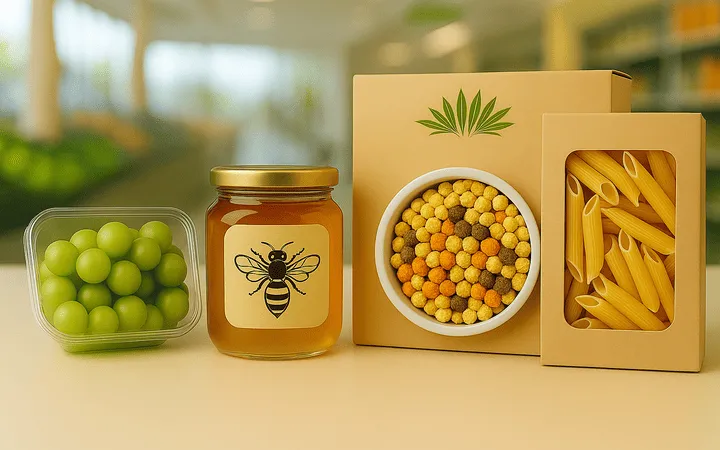
Packaging is also a medium in its own right. It contains most of the information consumers need to identify, understand, choose and use a product. It therefore plays an educational, preventive and commercial role.
It contains mandatory regulatory information: product name, composition, ingredients, allergens, expiry date, net weight, instructions for use, precautions, manufacturer's contact details, barcode, sorting instructions, etc. In the agri-food sector, INCO regulations strictly govern these labels. In cosmetics and pharmaceuticals, CE standards and hazard pictograms are essential.
But beyond the legal aspect, packaging also supports the brand's promises. It can explain environmental commitments, organic or fair trade certifications, and the values of craftsmanship or local production. With the rise of digital technology, QR codes, personalised URLs and smart labels provide access to enriched content, tutorials, testimonials and complete product traceability.
Attract and appeal
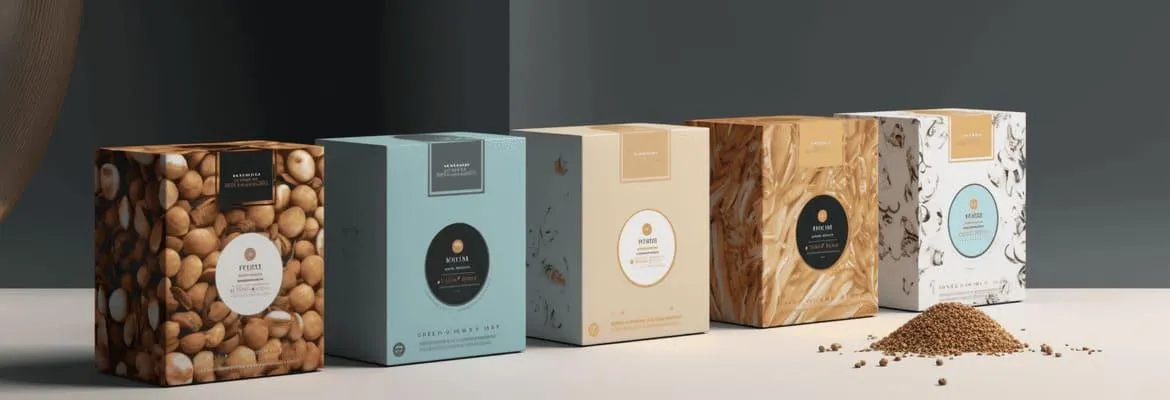
Packaging serves as a powerful tool for appeal in a commercial landscape where consumer attention is scarce. On supermarket shelves, e-commerce sites, or in advertisements, it often stands as the sole means to capture interest and trigger purchases. This role depends not only on graphic design but also on shape, materials, and sensory and emotional impacts.
Every graphic choice tells a story: a warm colour evokes indulgence, a black background suggests luxury, handwritten typography reinforces authenticity. The feel, the sound of packaging being opened, the weight in the hand, the transparency – everything contributes to the user experience even before the product is used. It is this sensory richness that makes packaging such a powerful lever for differentiation.
Packaging storytelling strategies are multiplying: we no longer sell a box of tea, but a sensory escape; we no longer sell soap, but a philosophy of life. This approach enables brands to justify transitioning to premium segments. Additionally, the 'wow' factor of packaging has gained viral traction on social media, generating millions of views through unboxing videos.
Ease of use
Good packaging design is not just about aesthetics: it must be designed for simple, smooth and safe use. This functionality applies equally to end consumers, logistics teams, distributors and recyclers.
For the user, this means easy opening (without scissors or frustration), a format that fits in the hand or bag, practical closure (zippers, flip-top caps), immediate readability and intuitive dosing. A bottle that doesn't leak, a lid that can be removed effortlessly, a box that stands upright: these are all details that transform the user experience and build loyalty.
For professionals, packaging must stack without wasting space, be easy to scan, be dismantled for recycling, or be adaptable to automated production lines. This has a direct impact on storage costs, shelf speed and logistics service quality.
Functionality is also a lever for inclusion. Many brands now design packaging with older people, children, or people with disabilities in mind. These innovations contribute to better product accessibility and reinforce the company's positive image.
Why is packaging strategic for a brand?
Packaging is often perceived as a peripheral element of the product, when in fact it is central to a company's overall marketing strategy. It is a communication vehicle in its own right, capable of conveying your brand's universe, its commitments and its positioning. It embodies the image sold to the consumer. In some cases, it can even become a strong competitive advantage, particularly when it offers a notable innovation or a unique experience.
Successful packaging is not just about aesthetics. It helps to build a consistent and memorable brand identity. It conveys values such as sustainability, luxury, simplicity and modernity. It also promotes immediate recognition of a product on a shelf or online platform. Furthermore, it can support strategies for moving upmarket or diversifying offerings by adapting the packaging to cater to different target audiences.
In a world saturated with advertising messages, packaging remains a physical point of contact between the brand and the customer. It is often the first and sometimes the only chance the product has to interest the consumer. This makes it a key strategic lever that influences sales, brand awareness, loyalty and recommendations.
Packaging and user experience (UX)
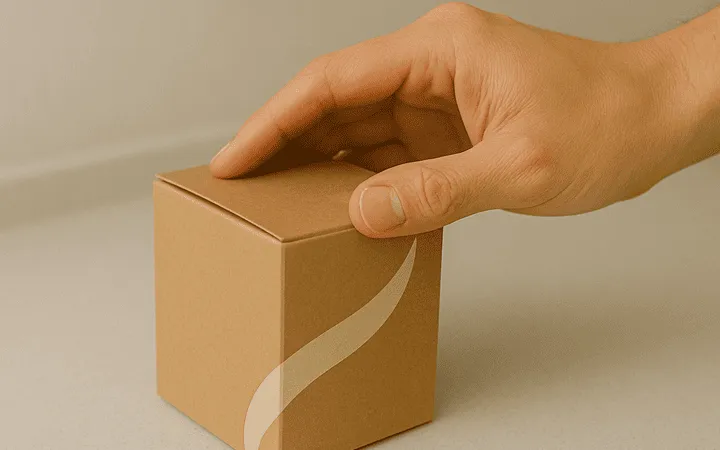
Beyond its visual appeal, packaging must be designed to offer a smooth, user-friendly and consistent experience. This is known as UX (user experience) design, applied to packaging. This approach focuses on anticipating the genuine needs and preferences of consumers, including easy opening, precise dosing, practical formats, resealability, and portability.
A good packaging experience reinforces your brand's positive image. It can transform a daily act into a special moment, or even a rewarding ritual. A cap that screws on effortlessly, a seal that can be removed without frustration, packaging that fits perfectly in the fridge: these are all details that create value in use. UX packaging also emphasizes message consistency; eco-friendly packaging should be perceived as such through its feel, smell, and sound when opened.
Brands that focus on UX in their packaging strategy stand out in highly competitive markets because they add an sensory and also practical dimension to the product. This encourages adoption, loyalty and recommendations.
Mistakes to avoid in packaging
Poorly designed packaging can seriously damage the perception of a product and cause its marketing to fail. Common mistakes include: information that is difficult to read, a lack of clarity on how to use the product, visuals that do not match the content, or oversized packaging that gives the impression of waste. These flaws can unsettle or frustrate consumers.
There are also technical errors: materials unsuitable for transport, poor sealing, packaging that is not recyclable despite ‘green’ labelling, or labelling that does not comply with industry standards. This can lead to product recalls, regulatory sanctions, and even damage brand image.
On the logistics side, poorly sized packaging complicates storage and increases transport costs. In e-commerce, packaging that does not adequately protect its contents generates high return rates, which reduces both margins and customer satisfaction.
To avoid these pitfalls, it is essential to test each piece of packaging in its actual context of use and distribution. An eco-design approach, combined with marketing and logistics considerations, makes it possible to anticipate problems and optimise every aspect of the product life cycle.
Conclusion
Packaging serves five fundamental functions that go well beyond mere decoration. It protects, preserves, informs, attracts, and facilitates use. Mastering these functions allows brands to improve their logistical efficiency, commercial impact, regulatory compliance, and perceived value. In a context where consumer expectations are practical, ethical, and aesthetic, packaging becomes a strategic tool for differentiation, engagement, and sustainable performance.
Well-designed packaging reflects a refined product, a brand aware of its times, and a desire to satisfy as well as inspire. It sits at the intersection of technology, marketing, design, and social responsibility. In this sense, investing in quality packaging is not an expense but an investment in perception, trust, and loyalty.