





 BY Judith Enger IN Industry knowledge
What are the three types of packaging? A comprehensive guide to understanding and optimising your packaging
Packaging does more than just protect a product: it influences consumer perception, facilitates logistics and reflects a brand's values. To design your packaging effectively, it is essential to understand the three main categories that comprise it: primary packaging, secondary packaging and tertiary packaging. Each plays a specific role in the product life cycle: from production, to the point of sale, to the customer's home.
In this comprehensive guide, you will learn in detail about the function, challenges and best practices associated with each type of packaging. Whether you are looking to optimise your costs, improve the customer experience or adopt a more sustainable approach, this guide will give you the key to designing effective packaging that is tailored to your commercial and environmental objectives.

Primary packaging: first contact with the product
Primary packaging is the packaging that comes into direct contact with the product. It is the first line of protection and is often designed to be aesthetic in order to appeal to consumers. It is the first thing that customers see and touch, making it a powerful vehicle for brand image. Primary packaging also plays a role in ensuring safety: it protects the product from contamination, impact and moisture, while complying with health standards.
Consider a fruit juice bottle: it must be securely sealed, easy to open and carry the required information, such as ingredients, the best-before date and storage instructions. The choice of materials, including glass, plastic and aluminium, influences product protection and must also take account of the packaging's intended disposal route. Depending on its construction, a packaging solution may be designed for recycling or use materials with specific biodegradation characteristics. These properties must be assessed separately and do not, on their own, establish a lower overall environmental impact.
The design of primary packaging must strike a balance between aesthetics, functionality and regulatory compliance. Contributing directly to consumers' purchasing decision. A Nielsen study showed that more than 60% of consumers say they have bought a product simply because they were attracted to the packaging. This makes it a powerful commercial lever.
Secondary packaging: grouping and presenting products
Secondary packaging comes after primary packaging. It groups several product units together to facilitate storage, transport or shelf display. It also has an important marketing function, particularly when it comes to promotions, gift boxes or limited edition sets. When well designed, it reinforces the brand's visual presence on the shelf and creates a consistent presentation across your product line.
Imagine a pack of six yoghurts grouped together in a cardboard tray. This cardboard allows the yoghurts to be transported easily, displays the brand logo, advertises a promotion (‘buy 4 get 2 free’) and protects the products during transport. Secondary packaging is a key tool for distributors seeking to optimise space and while improving the shopping experience at the POS.
It also helps to streamline logistics. Standardised secondary packaging facilitates storage in warehouses and palletisation, which can have a direct impact on distribution costs. Sustainable development also has a role to play: companies are increasingly seeking to design reusable, recyclable or eco-friendly secondary packaging that reduces waste while preserving product integrity.
This type of packaging is also often customised for commercial reasons. High-quality printing, modern design and a clear message can encourage consumers to choose one brand over another. Making secondary packaging then a communication medium in its own right.
Tertiary packaging: optimising logistics
Tertiary packaging is the final layer of packaging, designed to meet logistical needs. It is intended for the transport of large quantities of goods, often over long distances. It combines several secondary packages into a single, uniform logistical unit, facilitating handling, storage and delivery.
For example, a shrink-wrapped pallet containing boxes of food products is a typical form of tertiary packaging. This type of packaging must be strong, stable and compliant with supply chain requirements. It must also meet strict safety standards to prevent accidents during transport or storage.
The choice of materials (shrink wrap, strapping, wooden or plastic pallets) depends on weight constraints, product fragility and transport conditions. Good tertiary packaging reduces costs associated with damage, product returns and losses.
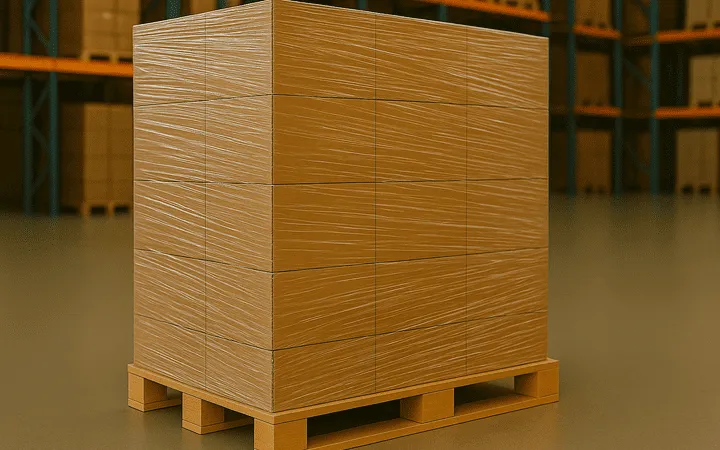
When designing tertiary packaging, companies can assess material selection, packaging weight, transport volume and the protection required for the goods. Depending on the packaging construction, relevant considerations may include compatibility with recycling processes and opportunities to optimise the use of packaging materials. Simulation software can help evaluate transport and storage configurations. Any claimed reduction in environmental impact should be based on an appropriate comparison that takes account of the relevant transport and packaging conditions.
The marketing challenges of packaging
Packaging is much more than just a container. Today, it is at the heart of marketing strategies because it directly influences consumer perception of your product and brand. In a saturated competitive environment, packaging can become a key differentiating factor. It catches the eye, tells a story and conveys values. Successful packaging reinforces a brand's visual identity and creates a connection with the consumer.
Your design, choice of colours, typography and graphic elements all contribute to building a consistent brand image. Premium brands often rely on high-quality materials and sleek designs to convey a sense of quality and exclusivity. Conversely, eco-friendly brands will favour simple, recyclable packaging that provides information about their environmental approach.
Packaging also plays a role in pricing strategy. High-end packaging justifies a higher price, while more economical packaging can support a volume strategy. It also contributes to the user experience: ease of opening, ergonomics, practicality and reusability are all factors that can influence customer loyalty.
Finally, in an era dominated by e-commerce, packaging has become a post-purchase marketing tool. Opening a parcel is often the first physical contact with the product, offering a unique opportunity to enhance satisfaction and brand image. This is known as the ‘unboxing experience’, a powerful lever for customer loyalty and social media marketing.
The economic challenges of packaging
Beyond its logistical or marketing function, packaging has a direct impact on production, transport, storage and waste management costs. Every packaging choice must therefore be evaluated in terms of profitability and efficiency. Poorly designed packaging can lead to significant financial losses, while optimised packaging can improve margins and productivity.
The cost of materials is a key factor. Plastic is often more economical than glass or metal, but regulatory requirements and consumer expectations regarding sustainability are persuading companies to rethink their choices. Recycling, deposit schemes, or the use of bio-based materials may incur a higher initial investment, but generate long-term profit and enhance brand image.
Packaging automation is another important economic lever. It reduces labour costs, increases production speed and reduces errors. However, it requires equipment that is adapted to your chosen format, and a packaging design that is compatible with existing production lines.
Storage and transport volumes are also influenced by the size and shape of your packaging. Compact, stackable packaging reduces logistics costs. Conversely, oversized packaging leads to unnecessary additional costs. Many companies now use calculation and modelling software to optimise these parameters.
Finally, environmental taxation and packaging waste legislation directly influence economic choices. Companies must anticipate future obligations (such as EPR - Extended Producer Responsibility) and integrate these constraints into their packaging strategy in order to remain competitive while complying with current regulatory standards.
Environmental issues
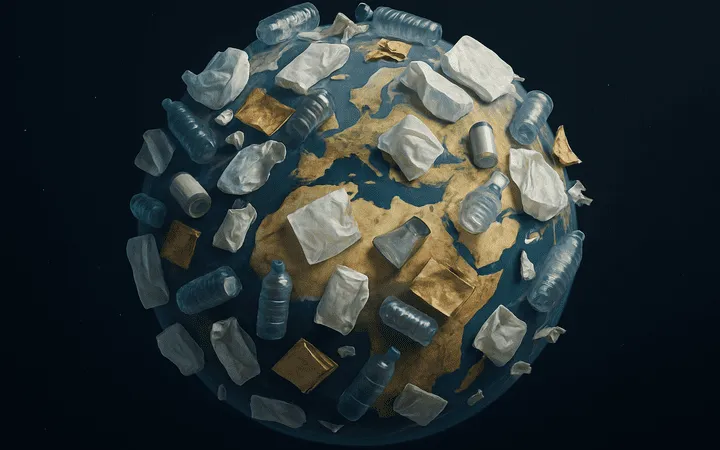
Packaging is at the heart of current environmental concerns. The ecological impact of packaging is closely scrutinised by consumers, governments and NGOs. Packaging generates a large amount of waste, particularly in the agri-food, e-commerce and mass retail sectors. For businesses, this means taking more responsibility: it is no longer just a question of protecting a product, but also of reducing its environmental footprint at every stage of its life cycle.
The materials used play a key role. Plastic, which has long been the primary choice, is increasingly criticised for polluting the soil and our oceans. This is pushing manufacturers to innovate by incorporating greener alternatives: recycled paper and cardboard, bioplastics, compostable packaging, and even packaging-free solutions for certain products. However, the choice of these materials must remain compatible with food safety, preservation and transport requirements.
Packaging design can take account of material use, recyclability and requirements for repeated use from an early stage. These factors must be assessed in relation to the complete packaging construction and its intended application. A life cycle assessment (LCA), where appropriately conducted, can help evaluate environmental impacts across defined stages of the packaging life cycle. Optimising packaging dimensions may also affect packaging weight, loading efficiency and transport requirements. Whether this results in lower greenhouse gas emissions depends on the actual transport conditions and must be established through an appropriate comparison.
Finally, regulatory pressure is intensifying. The European Union has set clear targets for recycling and overall reducing single-use plastics. In the UK, regulations are gradually banning excessive packaging and require clear information on sorting. These rules encourage companies to anticipate and adapt in order to avoid financial penalties, but also to remain credible in the face of increasingly demanding consumers.
Current trends in packaging
The world of packaging is undergoing a transformation. Consumer expectations are changing rapidly, technologies are advancing, and brands are seeking to stand out in an intensely competitive environment. Several major trends are emerging.
Personalisation is one of the most popular at the moment. Thanks to digital printing technologies, it is now possible to produce unique packaging or small customised runs. This allows brands to create a direct connection with their customers, for example by incorporating a first name, message or exclusive design on the packaging.
Digital packaging is also making its debut. By incorporating QR codes, NFC chips or augmented reality elements, brands are adding a digital layer to packaging. These solutions make it possible to inform, entertain or engage consumers, but also to track products and combat counterfeiting.
Another trend is the demand for transparent product information. Consumers increasingly want to understand what they are buying, which materials are used and how products are manufactured. Packaging and labels can communicate this information through clear, specific and verifiable statements about product composition, material origin and other relevant characteristics.
Graphic minimalism is also becoming more popular. Inspired by Scandinavian design, this style aims to focus on the essentials, without visual overload. It reflects values of simplicity and authenticity, often associated with responsible brands. This approach is often accompanied by a return to raw and recycled materials.
Finally, the circular economy is increasingly influencing packaging strategies. Brands are testing deposit, refill and reuse systems. These practices, previously limited to certain markets, are now developing in the cosmetics, food and household sectors.
Packaging regulations in the UK and Europe
Packaging regulations are becoming increasingly strict and structured, both at a national and European level. They aim to regulate corporate practices in order to reduce environmental impact, guarantee consumer safety and encourage responsible innovation.
In the UK, the Environment Act 2021 imposes numerous obligations on producers. It gradually bans certain single-use plastics, sets ambitious recycling targets, and requires marketers to design packaging that is reusable or easily recyclable. Companies must also provide clear information on recycling and disposal through standardised labeling.
Another major measure in the UK is Extended Producer Responsibility (EPR). It requires companies to finance the end-of-life management of their packaging through compliance schemes. The more difficult a packaging is to recycle, the higher the financial contribution will be. This strongly encourages companies to design more sustainable packaging.
In Europe, the Packaging and Packaging Waste Regulation sets harmonised requirements for all Member States. In particular, it sets recycling thresholds for each material, waste reduction targets and reuse obligations. The European Union is also pushing for standardisation of recycling logos to make sorting easier for citizens.
Health and safety standards must not be overlooked. For food and pharmaceutical packaging, materials must comply with very strict regulations, particularly with regard to the migration of chemical substances.
Finally, companies must monitor the constant evolution of these laws. Texts are regularly strengthened, revised or created. Therefore, regulatory foresight has become a crucial strategic skill for any business in the packaging industry.
Conclusion
Understanding the three types of packaging is crucial for any business wishing to optimise its supply chain and offer a quality customer experience. Primary packaging protects and presents the product, secondary packaging facilitates bulk sales and in-store presentation, while tertiary packaging ensures efficient logistics. Each level has its own challenges, specificities and innovations.
By adapting primary, secondary and tertiary packaging to their products and business requirements, companies can improve product presentation, handling and logistics processes. At Labelprint24, we support businesses in designing and producing customised packaging solutions tailored to their intended application. Material selection, packaging dimensions and functional requirements can be considered during the development process, alongside any specific environmental criteria relevant to the chosen packaging construction.