





 BY Judith Enger IN Industry knowledge
ISO Certification for Packaging Companies: A Comprehensive Guide
As the packaging industry continues to evolve, ISO certification will remain a cornerstone of professional practice, providing the foundation for innovation, improvement, and excellence that customers and stakeholders expect.
Companies that embrace these standards and integrate them into their core business practices will be best positioned to thrive in the dynamic and demanding packaging marketplace of the future.
ISO certification is an important achievement for packaging companies that want to show they care about quality, safety, and protecting the environment. At Labelprint24, we know how important it is to follow international standards in our industry.
ISO (International Organisation for Standardisation) certification proves that our products are good quality and helps customers trust us more in the competitive packaging market.
At Labelprint24, our commitment to ISO standards reflects our understanding that certification is not just about meeting minimum requirements—it's about demonstrating a genuine commitment to excellence that permeates every aspect of our operations.
From our security labels to our flexible packaging solutions, every product benefits from the systematic approaches to quality, environmental management, and continuous improvement that ISO certification requires.
In this guide, we'll look at the different ISO standards for packaging companies, the benefits of getting certified, and how to go through the certification process.
We'll also show how our commitment to ISO standards makes sure our customers get packaging that meets the highest international quality standards.
Whether you want to get certification for your own packaging company or just want to understand why it's good to work with an ISO-certified packaging supplier, this guide will help you understand why standards are important in our industry and what packaging manufacturers need to do to follow the rules.
For packaging companies serving regulated industries like pharmaceuticals, food, and cosmetics, ISO certification often becomes essential for market access. The specialised requirements of these industries, combined with increasingly stringent regulatory environments, make certified quality management systems invaluable for demonstrating compliance and building customer confidence.
Our experience in these sectors has shown how ISO certification can differentiate packaging suppliers and create opportunities for long-term partnerships with quality-conscious customers.
The packaging industry needs to follow several ISO standards that control different parts of production, quality control, and environmental impact.
Understanding these standards is important for companies that want certification and for customers who want to make sure they're working with good suppliers that can consistently deliver high-quality packaging products.
Each standard covers specific aspects of packaging production and management, creating a complete framework for excellence in the industry.
ISO certification represents a fundamental commitment to excellence in the packaging industry, providing frameworks for quality management, environmental responsibility, and operational efficiency that benefit both manufacturers and their customers.
As demonstrated throughout this comprehensive guide, the path to certification requires significant investment in systems, processes, and training, but delivers substantial returns through improved credibility, operational efficiency, and market access.
ISO 9001 is probably the most basic certification for packaging companies. This standard focuses on quality management systems and provides a framework for making sure product quality stays consistent.
For packaging manufacturers, ISO 9001 certification shows a commitment to creating and maintaining strong processes that deliver reliable results. The standard emphasises a process-based approach to quality management and includes risk-based thinking to prevent defects rather than just finding them after production.
Our capabilities in customisation, demonstrated through products like our custom folding boxes, show how ISO-compliant processes can accommodate individual customer requirements whilst maintaining consistent quality standards. This flexibility helps customers achieve their unique branding and functional objectives while benefiting from certified quality management systems.
ISO 14001: Environmental Management Systems
Challenges and opportunities in this area include:
ISO 14001 helps packaging companies:
Personalisation and Mass Customisation
This certification is especially relevant for packaging companies as we work to develop more responsible solutions and reduce the environmental impact of our products.
Our stand-up pouches and other flexible packaging options are designed with environmental considerations in mind, balancing functionality with responsible practices through material selection, design optimisation, and production efficiency.

- Lifecycle assessment integration into quality management systems
- Design for circularity principles in product development
- Extended producer responsibility compliance and reporting
- Material passport systems for enhanced recyclability tracking
- Collaboration with recycling infrastructure and waste management systems
For packaging companies that serve the pharmaceutical industry, ISO 15378 is a critical standard that covers the specific requirements of primary packaging materials for medicinal products.
This specialised certification combines the requirements of ISO 9001 with Good Manufacturing Practices (GMP) specific to pharmaceutical packaging, creating a complete framework for ensuring the safety, effectiveness, and quality of packaging that comes into direct contact with medicines.
The increasing focus on circular economy principles is influencing ISO standards and certification requirements for packaging companies. Future standards are likely to place greater emphasis on lifecycle assessment, design for recyclability, and end-of-life management.
This shift requires packaging companies to consider environmental impacts throughout the entire product lifecycle, from material sourcing to disposal or recycling.
ISO 15378 helps ensure that packaging materials used for medicines are safe, effective, and high quality. This standard is important because pharmaceutical packaging must protect medications and not interact with them in harmful ways.
Companies that follow ISO 15378 have careful systems for selecting materials, preventing contamination, tracking products, handling items properly, and keeping detailed records.
This helps make sure that the packaging for medicines meets all the strict requirements of the pharmaceutical industry and government regulations.
These technologies support our commitment to innovation while maintaining the highest quality standards across all our products, from simple labels to complex packaging systems. The integration of advanced digital technologies helps ensure that our manufacturing processes remain at the forefront of industry best practices while supporting ISO compliance objectives.
ISO 22000: Food Safety Management Systems
The integration of digital technologies and Industry 4.0 concepts is transforming how packaging companies approach ISO certification and quality management.
These technologies enable more sophisticated monitoring, control, and documentation of manufacturing processes, potentially revolutionising how compliance is achieved and maintained. Future ISO standards are likely to increasingly recognise and encourage the adoption of these digital technologies.
ISO 22000 includes requirements for:
The packaging industry and its associated ISO standards continue to evolve in response to technological advances, environmental concerns, and changing consumer expectations.
Understanding these emerging trends helps packaging companies prepare for future certification requirements and market demands. Forward-thinking companies that anticipate these changes can gain competitive advantages while ensuring continued compliance with evolving standards.
ISO certification offers many advantages for packaging companies beyond just following international standards. These benefits extend throughout the organisation and provide value to customers as well.
From operational improvements to market differentiation, ISO certification delivers real returns on investment that make it worthwhile for packaging manufacturers of all sizes.
Our cosmetics packaging solutions, including our specialised cosmetic packaging, address these requirements through careful material selection, comprehensive testing, and attention to both functional and aesthetic details.
These products help cosmetic brands maintain their image whilst ensuring product integrity and regulatory compliance.
Benefits of ISO Certification for Packaging Manufacturers
Key aspects of cosmetics packaging certification include:
Certification from recognised international bodies greatly enhances a packaging company's credibility in the marketplace. This credibility is particularly valuable in an industry where product safety, quality, and performance are critical considerations for customers.
ISO certification provides objective verification of a company's capabilities and commitment to quality, making it easier to build trust with new customers and strengthen relationships with existing ones.
Cosmetics and Personal Care Packaging
Operational Efficiency and Cost Reduction
- Migration testing to ensure no harmful substances transfer from packaging to food
- Allergen management and cross-contamination prevention
- Temperature resistance for various food processing and storage conditions
- Barrier properties to maintain food freshness and prevent spoilage
- Compliance with food contact material regulations in multiple markets
Key operational benefits include:
Food packaging presents unique challenges related to safety, migration testing, and regulatory compliance across multiple jurisdictions. ISO certification for food packaging must address not only quality management but also food safety principles, including HACCP (Hazard Analysis and Critical Control Points) and various food contact material regulations. These requirements ensure that packaging materials do not compromise food safety or quality.
Regulatory Compliance Assurance
Our approach to pharmaceutical packaging, including products like our booklet labels, addresses these challenges through specialised production environments, rigorous testing protocols, and comprehensive documentation systems.
These labels are particularly valuable for pharmaceutical applications where extensive product information must be communicated in limited space whilst maintaining readability and durability.
ISO certification helps companies handle this complex regulatory landscape by:
- Ensuring awareness of applicable regulations through systematic monitoring and information management
- Implementing systems to maintain compliance and adapt to regulatory changes
- Documenting compliance efforts to demonstrate due diligence to regulators and customers
- Preparing for regulatory changes through forward-looking management approaches
- Reducing the risk of non-compliance penalties, product recalls, and reputational damage
For specialised packaging like our laminate tubes with screw closures, regulatory compliance is particularly important as these products often contain sensitive materials like cosmetics, pharmaceuticals, or food products that are subject to strict safety regulations.
Our ISO-compliant management systems help ensure that these products meet all applicable requirements whilst delivering the performance characteristics customers expect.

Key challenges in pharmaceutical packaging include:
ISO certification creates a culture of continuous improvement within packaging companies. Rather than seeing quality as a fixed target, ISO standards encourage organisations to continually evaluate and enhance their processes, products, and systems.
This forward-looking approach helps companies stay ahead of changing market demands and technological developments, maintaining competitiveness in a dynamic industry.
Pharmaceutical Packaging Challenges
- Regular review of processes and outcomes to identify improvement opportunities
- Proactive identification of improvement opportunities through data analysis and feedback
- Employee engagement in quality initiatives that leverage front-line knowledge and experience
- Data-driven decision making that focuses resources on high-impact improvements
- Long-term sustainability of quality systems through ongoing refinement and adaptation
Industry-Specific Certification Challenges and Solutions
The ISO Certification Process for Packaging Companies
- Automated inspection systems that check product quality at multiple production stages
- Process control systems that maintain optimal production parameters
- Statistical process control that identifies variations before they affect product quality
- Automated documentation systems that record production data and quality metrics
- Predictive maintenance systems that prevent equipment failures that could affect quality
Initial Assessment and Gap Analysis
Automated production systems and advanced process control technologies play an increasingly important role in achieving and maintaining ISO certification. These technologies help ensure consistent production quality, reduce human error, and provide detailed documentation of manufacturing processes.
ISO standards recognise the value of automation in achieving quality objectives and encourage its adoption where appropriate for the specific packaging applications.
This initial assessment helps identify:
Our implementation of advanced traceability systems supports products like our security labels, where authenticity and tamper evidence are critical requirements. These systems ensure that each product can be tracked throughout its lifecycle, providing the documentation and verification capabilities needed for both ISO compliance and customer assurance.
At Labelprint24, we regularly assess our processes to ensure they meet or exceed ISO requirements, allowing us to maintain the high quality of our packaging solutions.
This ongoing assessment helps us identify opportunities for improvement and ensure that our management systems remain effective as our product range and customer base evolve.
Advanced traceability systems provide several important capabilities:
Documentation is a critical component of ISO certification, providing the foundation for consistent operations and demonstrating compliance with standard requirements.
Whilst the extent of documentation has been streamlined in recent ISO revisions, packaging companies still need to develop and maintain a comprehensive set of documents that define how quality is managed throughout the organisation. These documents not only support certification but also serve as valuable resources for training and operational consistency.
Traceability and Serialisation Technologies
- Quality manuals that outline the overall quality management system and its scope
- Process descriptions that define how key activities are performed and controlled
- Work instructions that provide detailed guidance for specific tasks and operations
- Forms and records that capture data about process performance and product quality
- Policy statements that communicate the organisation's commitments and expectations
Digital quality management systems represent a significant advancement in how packaging companies can achieve and maintain ISO certification. These systems integrate data collection, analysis, and reporting capabilities that provide real-time visibility into quality performance and compliance status.
By digitising quality processes, packaging companies can achieve greater consistency, faster response times, and more comprehensive documentation than traditional paper-based systems.
Implementation and Training
The packaging industry is rapidly evolving with new technologies that enhance both production capabilities and compliance management. Modern ISO certification frameworks increasingly accommodate and encourage the adoption of advanced technologies that improve quality, efficiency, and traceability.
Understanding how to integrate these technologies while maintaining ISO compliance is essential for packaging companies looking to remain competitive in the digital age.
This phase includes several key activities:
Our folding boxes are available in natural, unbleached materials that align with responsible packaging trends. These materials require less processing and chemical treatment, reducing environmental impact whilst providing the structural integrity and printability needed for effective packaging.
By offering these responsible options alongside traditional materials, we help customers make environmentally responsible choices that align with their brand values and environmental commitments.
Internal Audits
Key carbon footprint reduction strategies supported by ISO certification include:
Effective internal audits:
Carbon Footprint Reduction
Internal audits provide valuable opportunities for improvement before the formal certification process begins. At Labelprint24, we conduct regular internal audits to ensure the quality of our flat cardboard sleeves and other packaging products.
These audits help us identify and address potential issues proactively, maintaining the integrity of our quality management system and ensuring consistent product quality.
ISO certification often encourages the use of responsible materials and practices in packaging production, aligning quality management with environmental responsibility.
This integration helps packaging companies develop solutions that meet both performance requirements and environmental goals, addressing growing market demand for environmentally responsible packaging options.
By incorporating environmental considerations into product development and manufacturing processes, certified companies can differentiate their offerings in competitive markets.
The final step in obtaining ISO certification is the external audit conducted by an accredited certification body. This independent assessment verifies that the organisation's quality management system meets all requirements of the relevant ISO standard and is effectively implemented throughout the organisation.
The certification audit is typically conducted in two stages: a documentation review followed by an on-site assessment of actual practices.
ISO 14001 helps packaging companies:
- Identify and control environmental impacts through systematic assessment and management
- Improve resource efficiency by optimising material usage, energy consumption, and water use
- Reduce waste generation through better process design, material selection, and recycling initiatives
- Implement lifecycle thinking that addresses environmental impacts from raw material sourcing to end-of-life
- Set and achieve environmental goals that align with business objectives and stakeholder expectations
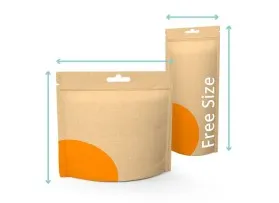
At Labelprint24, our commitment to environmental responsibility is reflected in our kraft paper stand-up pouches and other packaging options. These products use renewable materials with reduced environmental impact whilst maintaining the functional properties required for product protection and presentation.
Our environmental management system helps us continuously improve our environmental performance whilst meeting customer requirements for responsible packaging solutions.
Specialised ISO Requirements for Different Packaging Types
ISO 14001 and Environmental Management
Folding Cartons and Boxes
Environmental Management and ISO Certification for Packaging Companies
Folding cartons and boxes, such as our FEFCO 0210 corrugated board folding boxes, must meet standards related to:
- Material strength and durability to withstand handling, stacking, and environmental conditions
- Folding and gluing quality to ensure structural integrity and reliable assembly
- Print registration and colour consistency for brand identity and product information
- Structural integrity under various load conditions and environmental factors
- Dimensional accuracy to ensure compatibility with filling equipment and secondary packaging
These requirements ensure that folding cartons perform as expected during filling, transport, and use by consumers. Our folding boxes are designed and manufactured to meet these rigorous standards, providing reliable protection and presentation for a wide range of products across different industries.

- Tamper evidence features that provide visible indication of unauthorised access attempts
- Authentication elements such as holograms, colour-shifting inks, and microtext that are difficult to replicate
- Serialisation and traceability features that support product authentication and supply chain security
- Material durability to ensure security features remain intact throughout product lifecycle
- Information security in the production process to prevent compromise of security elements
Labels and stickers have important jobs in packaging, from providing product information to ensuring brand recognition to enabling traceability. These seemingly simple components must meet complex requirements related to adhesive performance, print quality, and environmental resistance.
ISO standards for labels address both the technical performance aspects and the information content that supports product identification and use.
Security packaging has an important job protecting valuable products, preventing counterfeiting, and ensuring product authenticity. This specialised packaging category must meet strict ISO requirements related to tamper evidence, authentication features, and information security.
The standards address both the physical security features and the systems that support verification and traceability throughout the supply chain.
- Adhesive performance under various temperature, humidity, and surface conditions
- Print quality and readability to ensure accurate communication of product information
- Colour fastness and UV resistance to maintain appearance throughout product lifecycle
- Material compatibility with containers to prevent adverse interactions or degradation
- Information content and layout that meets regulatory requirements and user needs
These requirements are particularly important for packaging that contains food products or other sensitive items that require protection from environmental factors and contamination.
Our flexible packaging options are designed to provide reliable protection whilst meeting all relevant ISO standards, combining functional performance with aesthetic appeal and consumer convenience.

Flexible Packaging
Flexible packaging solutions, such as our kraft stand-up pouches, must meet ISO standards related to: