




 BY Christoph Zumdick IN Environment
Alternative adhesives - vegan and environmentally friendly
The possibility of bonding brings many advantages for people. Joining two things together without screws, nails or rivets - this ability is what makes many products from cell phones to airplanes possible in the first place.
Adhesives are also one of the most important components in the packaging industry. After all, a sophisticated wrapper made of cardboard or plastic is of little use if it does not hold together at the crucial points.
The packaging industry is exploring adhesive formulations that use raw materials from different sources, including plant-based materials. This article explains which types of adhesives are commonly used in packaging and which alternative formulations are being developed or are already available on the market.

Adhesives: A long history of natural raw materials
Early adhesives were made from naturally occurring materials such as tree resin and wood tar. In the Stone Age, these substances were used to join different materials and make tools. For example, the prehistoric mummy Ötzi carried an axe whose blade was secured using leather straps and birch pitch. The use of natural raw materials reflects the technologies available at the time but does not, by itself, establish the environmental performance of these adhesives.
Birch pitch is formed as a sticky residue when birch bark is burned and has been known as a primordial adhesive for at least 180,000 years. Much later, at the time of the Egyptians and Sumerians, people then began to cook glue from the bones and hides of farm animals.
Resins and glue made from bones, milk, flour and fish bladders remained the most important adhesives until the end of the 19th century. It was not until the invention of synthetic raw materials that a field of new adhesive types and uses opened up.
A century of synthetic adhesives: improved properties for more uses
In the 19th century, people increasingly sought to develop synthetic adhesives. Scientists wanted to chemically imitate substances with a natural adhesive power, for example tree resins or the molecular chains of starch or protein in glue (natural polymers).
Leo Hendrik Baekeland first achieved this with phenolic resin curing. Shortly afterwards, Fritz Klatte in Germany discovered the first artificial polymer: polyvinyl acetate. To this day, it is considered the most widely used plastic in adhesive production.
Synthetic resin and synthetic polymers opened up new processes and uses. Transparent adhesive tapes were invented, new curing processes using UV light and moisture were developed, and cross-material bonds were possible, for example between plastic and metal.
Meanwhile, the range of available adhesives spans from light tack PSA adhesives that give sticky notes their hold on book pages and objects to robust epoxy-based construction adhesives that bond aircraft parts together.

What requirements should adhesives meet today?
The latest developments are aimed at inventing adhesives that do not bond permanently but can be released again for the purpose of repairs and recycling. This mechanism can be triggered, for example, by the effect of temperature, electricity or a change in pH.
But apart from redissolubility, another property of an adhesive plays the more important role in recycling and environmental protection: the raw materials used and their carbon footprint.
This is because both synthetic resins and synthetic polymers are (partly) produced from petroleum. Here, consumers and the adhesive-using industries are calling for environmentally compatible raw material sources to be tapped and alternative formulations to be developed.
Which adhesives play the most important role in packaging?
The following types of adhesives have the greatest importance in packaging:
1. Hotmelt adhesives
These adhesives are also known as "hot melts" in technical jargon. They are characterized by their tackiness when heated, while they cure at room temperature.
Hotmelt adhesives are used in the packaging industry for bonding cartons, bags and envelopes, but also for large-area bonding of packaging coatings. In detail, hotmelt adhesives today consist of
- Polymers
- Resin
- Stabilizers and
- Wax.
The disadvantage: both polymers and resins in the adhesive are synthetically derived from petroleum products.
2. Pressure sensitive adhesives
These adhesives remain more or less soft and tacky at room temperature. This makes it possible for Post-Its to be removed again or food bags to be resealed. Since pressure-sensitive adhesives develop their adhesive force through pressure, they are also referred to as PSAs (Pressure Sensitive Adhesives).
Pressure-sensitive adhesives are frequently used in the packaging industry; for example, as stickers, labels, self-adhesive films and adhesive tapes.
In earlier times, pressure-sensitive adhesives were obtained from natural rubber and resins. Nowadays, elastic plastics (elastomers) and synthetic resins are used instead, some of which are obtained from mineral oil.
3. Paste and glue
Paste plays the main role in the production of corrugated board. In order to firmly bond the smooth and corrugated paper webs together, starch paste is used, which is usually obtained from corn.
This mixture scores with adhesive strength and flexibility. The latter is important so that the layers of corrugated board do not break apart when rolled and folded during packaging production.
Starch-based paste made from cereals is one of the adhesive types used in paper and corrugated board production. Its composition and adhesive properties depend on the specific formulation and intended application. Adhesives for wood and labels are available in different formulations, some of which contain synthetic polymers, starch or milk-derived components.
Why are alternative adhesives becoming more relevant in packaging?

The development of alternative adhesive formulations is closely linked to changes in packaging materials and manufacturing processes. In addition to conventional cardboard and plastics, the industry is exploring materials containing renewable raw materials, such as hemp fibres and grass fibres. The environmental characteristics of these materials depend on their specific composition, processing and intended use.
This also raises questions about the adhesives used to assemble different packaging structures. Which formulations are suitable for paper, cardboard and plastic packaging, and what alternatives to conventional petroleum-based adhesive components are available?
State of the art: Research is in full swing in the development of alternative adhesives
Essentially, two synthetic adhesive components have to be replaced or reconstituted from environmentally friendly raw materials: Synthetic resins and synthetic polymers. Scientists currently see the following alternative solutions:
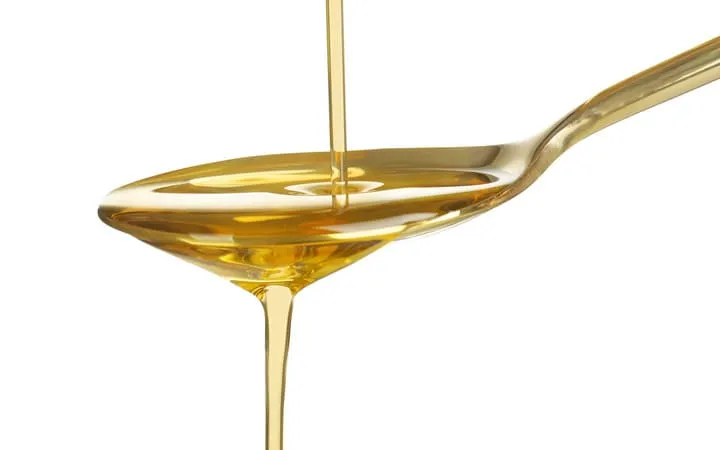
Synthetic resin from vegetable oil
Petroleum-based epoxy resins are now an integral part of heavy-duty adhesives. The mixture of monomers and a chemical hardener can no longer be deformed once they have been heated and cooled.
Researchers at the Fraunhofer Institute for Microstructure of Materials and Systems IMWS have succeeded in developing synthetic resin adhesives based on vegetable oil.
In this process, the fatty acids are epoxidized by the addition of carbon and oxygen so that, in combination with hardeners, they form a solid plastic. At the same time, useful properties of the biosynthetic resin adhesive can also be adjusted, such as electrical conductivity or the addition of antibacterial substances.
The adhesive developed in this research project is described as solvent-free and containing 86% raw materials of biological origin. This percentage relates to the formulation's raw material composition. It does not, by itself, establish that the adhesive has a lower overall environmental impact than a conventional alternative.
Polymers from vegetable raw materials
Polymers are long molecular chains that combine to form solid materials. In adhesives, they are first converted into liquid form by solvents or heating before they develop their adhesive strength during drying or cooling.
In order to replace synthetic polymers, adhesives researchers are experimenting with different plant-based materials.
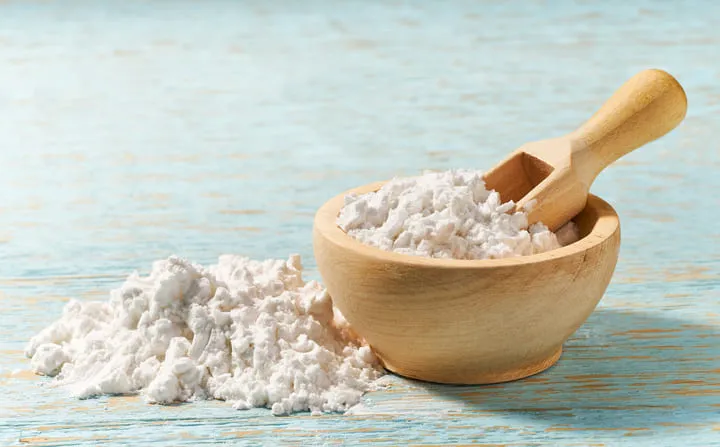
Starch from potatoes and cereals, for example, is particularly suitable as a polymer for paper adhesives. Lactic acid, which is not obtained from milk but from plants, serves as a raw material for adhesive resin and potting compounds.
The fiber lignin, which along with cellulose is responsible for the structure of wood and plant material, can act as a primer in adhesives after certain treatment.
Even the properties of a pressure-sensitive adhesive that can be stuck on and removed again can currently be replicated with plant-based lactic acid polymers.
What alternative solutions are currently already on the market?
Alternative adhesive formulations are already available on the market. Some hot-melt adhesives contain a proportion of bio-based ingredients, while certain paste formulations use plant-derived raw materials such as starch. The exact composition varies by product. Any claims about biodegradability or environmental performance must be supported by evidence for the specific adhesive formulation and the conditions under which it is intended to be used or treated after use.
Vegan adhesives - where do we need to consistently replace animal products?
During the past decades, animal products such as bone meal and fish bladders have been completely replaced by synthetic resins and polymers as adhesive components.
However, one type of glue still exists today that is based on milk proteins: casein glue. This adhesive is popular as a temperature-resistant and waterproof wood glue.
It also plays an important industrial role as a label adhesive. The adhesive meets the high demands of the industry: it is easy to handle in automated processes, gives the labels a firm hold even on difficult surfaces, and can be removed without leaving any residue, for example on deposit bottles.
Animal-derived ingredients in adhesives are increasingly being discussed in connection with consumer preferences and the development of alternative formulations. Casein-based label adhesives, for example, contain milk proteins. Customers who wish to avoid animal-derived ingredients may therefore be interested in information about the adhesives used on labels for food and beverage products. Whether an alternative formulation has lower greenhouse gas emissions must be assessed separately.

How does a label glue without dairy products work?
Vegan labels currently pose a challenge to the adhesives industry. Some suppliers are developing alternatives here that contain fully synthetic polymers, which means nothing other than petroleum-based plastics.
The environmental performance of an adhesive cannot be determined solely by whether its raw materials are fossil-based, plant-based or derived from animal products. In applications involving returnable glass bottles and reusable jars, the adhesive must also meet practical requirements relating to label adhesion, cleaning and removal. The environmental characteristics of the complete packaging system depend on factors such as the container, the label, the adhesive and the way the packaging is used and processed after use.
Starch-based adhesive formulations are another possible alternative to casein-based label adhesives. Starch can be obtained from plant-derived sources, although the complete formulation may contain additional ingredients. Whether a particular adhesive is free from animal-derived or fossil-based components must be confirmed by its manufacturer. The use of plant-based raw materials is a characteristic of the formulation and does not automatically establish a lower environmental impact.
Starch may also be recovered from suitable by-products or process streams in food production, such as starch-containing wastewater from potato processing. The resulting raw material can then be considered for adhesive formulations, subject to the relevant processing and quality requirements.
Conclusion: Alternative adhesives - first solutions are usable and much is in motion!
Adhesive strength, flexibility and reliable processing remain important requirements for industrial adhesives. Alternative formulations containing plant-based raw materials are already being developed and used in certain applications, although they do not yet meet every technical requirement. Research institutes and manufacturers continue to investigate how conventional raw material components can be replaced while maintaining the necessary adhesive properties. The environmental performance of each formulation must be assessed individually.
Explore our website to learn more about our packaging products, available materials and printing options. If you have questions about material composition, adhesive properties or a particular packaging application, our team will be happy to assist you.