




 BY Judith Enger IN Environment
Compostable, recyclable and co.
The most important terms relating to the environmental properties of packaging
- Environmental characteristics of packaging are attracting increasing attention, but the terminology used to describe different materials and disposal options can cause confusion among consumers.
- Biodegradability, compostability, recyclability and bio-based material composition describe different properties of packaging and must be considered separately.
- Ecological demands and the protection of the packaged products mean a difficult balancing act in the development of compostable packaging.
The topics of nature conservation, environmental protection and sustainability are becoming increasingly important in all areas of life. In the packaging industry, we are of course aware of the responsibility this entails. Sustainable and recyclable materials are therefore an important factor in our industry.
This is partly because packaging also accounts for a large share of waste in private households. According to the Federal Statistical Office (Destatis), there was an average of 68 kilograms of packaging waste per capita in 2018, with a total household waste volume of 157 kilograms per inhabitant.
Despite the high recovery rates(75 per cent through recycling according to Destatis), interest in alternatives to conventional plastics as a basis for packaging is growing in the industrial sector. These include compostable materials made from natural substances or bioplastics.
So-called "bioplastics", however, pose a particular difficulty for consumers, because the various terms are often used synonymously. However, biodegradable, compostable, bio-based and recyclable refer to different material properties and end-of-life processes, each of which must be assessed according to its specific characteristics and applicable conditions.
That's why we explain the most important terms around sustainable packaging and show where the differences lie.
Compostable - what does that actually mean?
Garden owners in particular should be familiar with the term "compostable". After all, garden compost is incredibly practical. From branches to lawn clippings to kitchen waste, almost all biodegradable materials can be turned into home-made fertiliser under the right conditions and with enough time.
Composting is a biological treatment process in which suitable organic materials break down under defined conditions. For packaging manufacturers, compostability may be relevant when considering specific materials and their intended disposal routes. However, a compostability claim must relate to the finished packaging and be supported by appropriate testing. Compostable packaging is not automatically preferable to packaging designed for material recycling, and local waste collection rules must also be taken into account.
Composting is a biological treatment process in which suitable organic materials break down under defined conditions. For packaging manufacturers, compostability may be relevant when considering specific materials and their intended disposal routes. However, a compostability claim must relate to the finished packaging and be supported by appropriate testing. Compostable packaging is not automatically preferable to packaging designed for material recycling, and local waste collection rules must also be taken into account.
They do not belong on the garden compost, but in case of doubt in the yellow bag. Under no circumstances should organic plastics be disposed of in nature. Because even if packaging materials are compostable, the controlled conditions in the wild are lacking (see infobox "Certificates for compostable materials") to set the necessary decomposition processes in motion.
Recyclable, compostable, biodegradable - the big differences
Compostability and recyclability describe different end-of-life properties. A compostable material is designed to break down under specified composting conditions, whereas a recyclable material can be collected and processed into secondary raw materials through a suitable recycling system. Whether a particular packaging product meets either requirement depends on its complete material composition and the applicable treatment process. Bio-based materials are not necessarily biodegradable or compostable.
- Biodegradable: The definition for this product designation also comes from the German Institute for Standardisation. If microorganisms such as bacteria are able to decompose a substance, it is considered biodegradable. The decisive factor here is not the raw materials but the chemical structure of the plastic in question. .
This applies to organic waste bags, for example, but also to packaging films made of PLA or other biodegradable materials, which are used to package fresh foods such as fruit and vegetables, among other things. - Bio-based: Bio-based plastics are made wholly or partly from raw materials of biological origin. Depending on the material, they may also contain fossil-based components. The use of renewable raw materials does not automatically mean that a plastic is biodegradable or compostable. For example, bio-based PET is chemically comparable to conventional PET and does not become biodegradable simply because some of its raw materials come from biological sources.
The recycling associations Plastics Recycling Europe and the American Association of Plastic Recyclers clarified what is meant by "recyclable" only a few years ago:
- The plastic used must be collected for recycling, have a market value and be supported under a legally prescribed programme.
- The use for recycling processes stipulates that a product must pass through previously defined sorting and aggregation streams. In this process, different materials are separated from each other and aggregated respectively.
- The plastic must be processable and recoverable in commercial recycling processes.
- At the end of the recycling process, a raw material must be created from which new products can be manufactured.
- For packaging manufacturers such as Labelprint24, the selection of materials and the assessment of their environmental properties are important aspects of product development and production planning.

Loading...
We already pay attention to innovative and resource-saving methods and materials during production. To this end, the recyclability of our paper and cardboard products is a key aspect, just as it is for the various tubes and labels made of plastic.
In order to be able to make an even greater contribution to sustainability in the future, we ourselves are researching various solutions for primary and secondary packaging. We are fully aware of the importance of innovative and sustainable disposal options. Our long-term goal is therefore also to give compostable packaging more room in our manufacturing processes.
This is all the more important because additional factors can influence compostability or possible recycling. Printing inks, a film lamination or hot foil finishes, for example, are among the variables that we as manufacturers have to take into account when developing ecological packaging concepts.
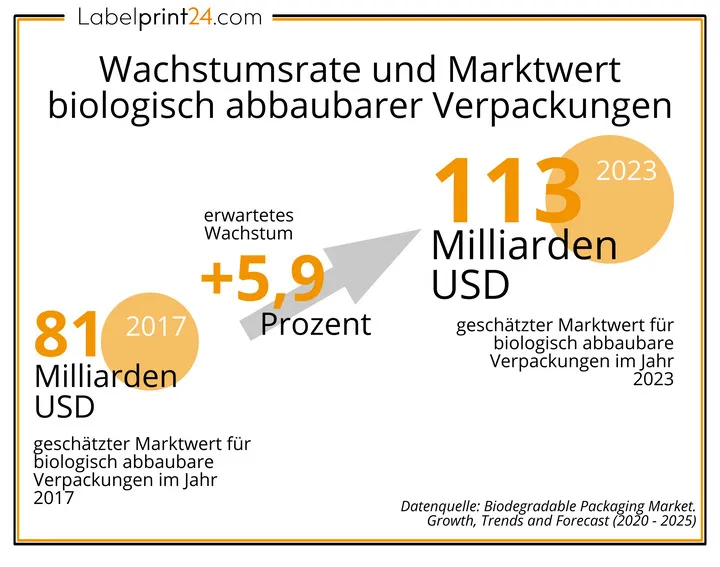
Market potential sustainability: On the triumphant march with compostable materials
The fact that compostable packaging is on the rise and represents a huge growth market brings with it a whole range of positive effects in terms of environmental protection and sustainability:
- The amount of plastic packaging can thus be significantly reduced. Conversely, this means that the mountains of plastic waste, which have become a serious environmental problem, can also be reduced.
- Bio-based, biodegradable plastics have a significantly better CO2 balance compared to conventional plastics. This is because no petroleum is needed for their production.
Apart from that, sustainability is an economic factor. It plays a central role in purchasing decisions for a growing number of people, and not only for food.
For the packaging industry, changing purchasing behaviour is both a driving factor and a challenge. Those who want to satisfy the needs of customers with their products in the future must adapt to the changed conditions.
Loading...
As the market volume of the packaging industry continues to grow, the topic of waste and its disposal remains an ever-present issue. As a company, we are also in demand to find innovative and attractive solutions.
Particularly in the area of food packaging, tightrope walks have to be performed: On the one hand, food protection must be guaranteed at all times. On the other hand, as little packaging waste as possible should be produced.
When evaluating food packaging, product protection and the prevention of food waste must be considered alongside the environmental properties of the packaging itself. The suitability of compostable or conventional packaging depends on the specific application and the available treatment options. Transport distances and transport methods can also influence the environmental impact of a packaging solution, but their significance must be assessed together with other relevant factors, including material production, packaging weight and end-of-life treatment.
Our aim is to offer packaging solutions that meet our customers' requirements for product protection, functionality, print quality and design, while taking relevant material properties and end-of-life considerations into account.
These articles might also interest you:
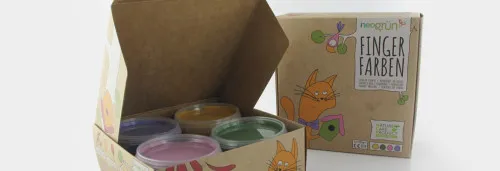
Natural cardboard for folding boxes that inspire
Natural cardboard has gained considerable popularity as a packaging material in recent years. Packaging often consists of the well-known plain brown cardboard.