



 BY Judith Enger IN Environment
Edible packaging: The path to greater sustainability?
The best thing would be for packaging to simply disappear. You wouldn't have to dispose of them, and they wouldn't show up in landfills either. It sounds like science fiction, but it already exists - thanks to innovative packaging that you can eat. In the following text, we'll show you how they work and what's packed in them.
What is edible packaging?
There are numerous different packaging variants that are edible. As a representative, we will go into more detail about one method and then show you other examples.
Edible packaging is made from materials intended to be safe for consumption under their specified conditions of use. However, edibility, biodegradability and compostability describe different properties. A packaging material that is edible is not automatically suitable for disposal in the environment or in an organic waste collection system.
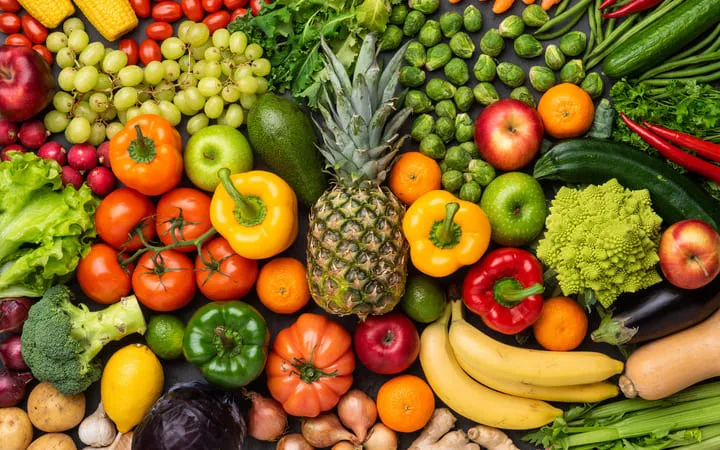
One example is the substance "pullulan", which can be used to wrap food. Pullulan consists only of sugar molecules and therefore tastes very sweet. This substance wraps itself in fine threads around a food item - perhaps an apple - and thus keeps it fresh. Some tests conducted by a team of researchers in the USA have already shown promising results:
- The pullulan-based coating can be removed from the food using water. Its biodegradation behaviour depends on the specific formulation and the environmental conditions under which it is tested.
- Compared to unpackaged fruit, pullulan protects much better: an avocado packaged with it had only about half the mold spots compared to the unpackaged fruit.
- The substance is cheap: sugar is not expensive and can therefore be understood as a serious alternative to plastic & Co.
These are advantages that cannot be denied - but there are still some construction sites.
The limits of current technology
A complex apparatus is required to wrap a fruit in this fabric. Two to four minutes pass before an orange, for example, is wrapped. To wrap masses of fruit in Pullulan, this is perhaps still too slow. In addition, the machines are not yet ready for mass production, so production has yet to start. So while the benefits of the technology are obvious, it will be some time before it is ready for the market.
More alternatives
Edible packaging comes in numerous varieties. While pullulan is still in the feasibility study stage, other packaging has already arrived in practical use. Some examples turn out as follows:
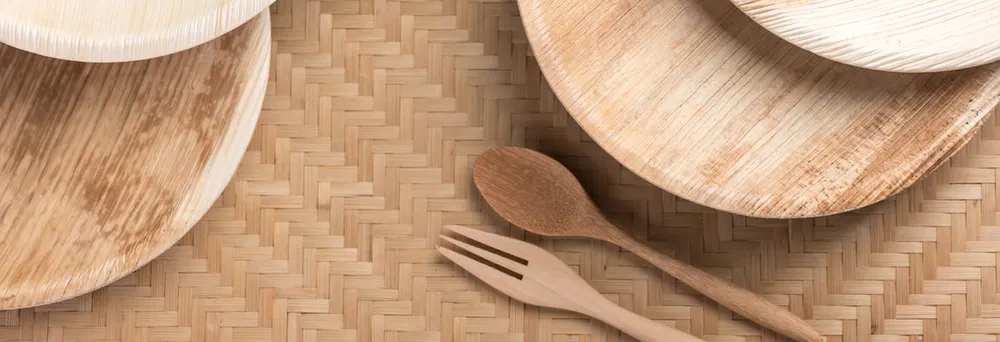
- Certain bowls are designed for food. They are made of products like wheat bran, then baked and used to serve soups, for example. When you're done, you can eat the bowl right after as a dessert.
- Various cups and mugs can also be eaten - for example, an espresso cup made of baked dough.
Some edible cups and bowls are made from ingredients such as flour, bran or legumes. Not all of these products are intended to be eaten, and their disposal requirements may differ. Whether a particular container is compostable depends on its complete composition and the conditions under which compostability has been assessed.
Applications for edible packaging
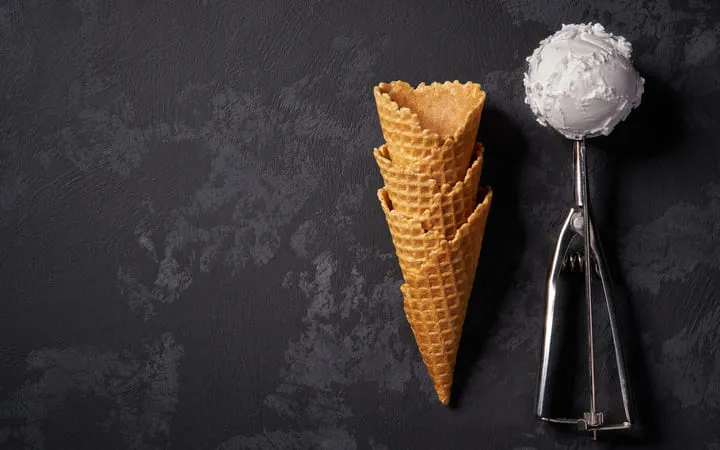
Most packaging of this type is currently used in the food industry. This makes sense: if you are eating or drinking something anyway, you can eat the packaging at the same time.
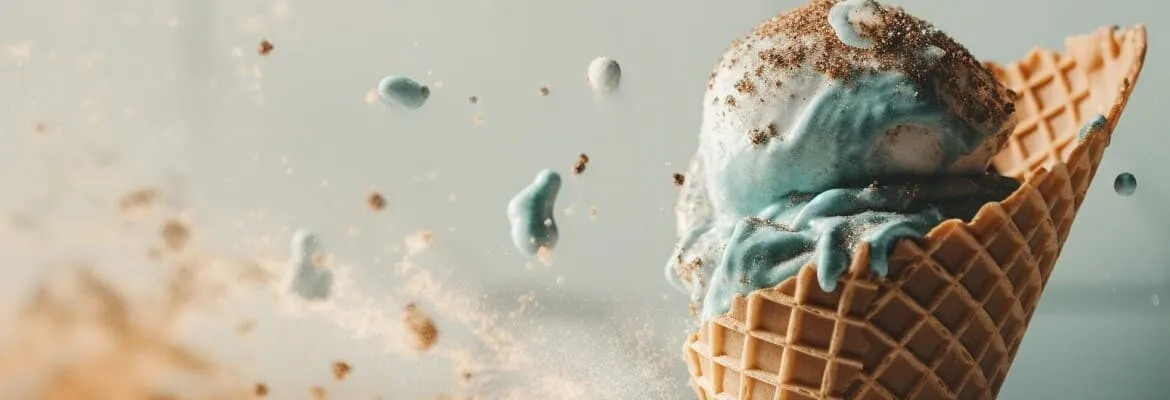
This may sound unusual at first. At the same time, however, you are guaranteed to already know one edible package and have even eaten it many times: the ice cream cone.
It serves as packaging for ice cream scoops and is then eaten. Nothing is left of the actual product and you don't have to throw anything away. This would also be a conceivable solution for the future for other to-go products that we buy on the go.
With the appropriate technologies and food, we could also go to fast-food restaurants in the future, order something there and leave a clean table at the end with at most a few glasses left on it. We simply ate the rest.
Edible packaging away from the food industry
As a packaging material, too, the edible packaging bandwagon is slowly getting rolling. For example, Evoware from Indonesia produced packaging from seaweed. You could use these as fertilizer - or as a seasoning for fish and similar dishes. If you don't have a specific use for them, you simply hold them under hot water. They will dissolve in a few seconds.
TIPA develops flexible packaging materials designed for composting under specified conditions. Whether a particular bag is certified for industrial or home composting, and how it behaves during treatment, depends on its material structure and applicable certification. Its suitability as an alternative to conventional plastic packaging must also be assessed according to the product's protection, storage and handling requirements.
Some problems still exist: Compared to "real" plastic, the two solutions presented are less durable. So if storage is required for years, these methods are not yet an alternative to full plastic. However, if it is foreseeable that a short storage is sufficient - for example for a transport from the online store to the buyer - these biological alternatives are completely sufficient.
Consumers and businesses: Why do we need edible packaging?
Both companies and consumers benefit from some of the advantages that edible packaging can bring. All of the benefits come under the great mantle of sustainability, which we are still a long way from industry-wide. However, both groups have a vested interest in slowly moving our economy in that direction.
Edible packaging for business
Depending on the country, companies are now sometimes subject to strict Environmental Social Governance (ESG) requirements or have voluntarily committed to comply with them. This means that they must find ways to reduce their biological footprint and curb CO2 emissions, for example.
Conventional and compostable plastic packaging can differ in raw material origin, production processes and end-of-life options. Switching from one packaging format to another does not automatically improve a company's environmental performance. Any potential benefit should be assessed using a suitable comparison that includes packaging functionality, emissions across the relevant life-cycle stages and the actual waste treatment infrastructure.
In addition, advantages beckon from an image perspective. Younger people in particular rate companies that are committed to sustainability much more positively than conventional industries. Their own brands are thus strengthened, and the company's image improves.
Edible packaging from the consumer's point of view
For private individuals, there is always the advantage that they usually have an interest in a planet that is free of garbage. Besides, everyone knows the dilemma at home: after a generous week's shopping, half a yellow bag is already filled with new trash. This is recycled - but of course it would be better not to create this waste in the first place.
In addition, many people today also make their purchasing decisions from a sustainability perspective. If the decision is between a sustainable and a non-sustainable product, consumers often enough opt for the former.
Edible packaging may be relevant to consumers interested in reducing certain types of packaging waste. However, whether a particular edible packaging solution offers an environmental benefit depends on its production, intended use and what happens to it after use.
Sustainability: How good is edible packaging really?
Just how much waste we really produce becomes clear when we take a look at the popular coffee. Every hour(!), Germans treat themselves to a total of around 320,000 cups of coffee. These are disposable cups that are thrown away. That's 2.8 billion cups of coffee per year. On top of that, there are another 1.3 billion lids - made of plastic.
After all: These data from last year can now no longer be maintained. Since July 2021, cups like these must be made from materials other than single-use plastic. However, the dimensions illustrate the problem, because there are of course many other types of packaging than coffee cups.
The amount of plastic waste generated illustrates the importance of packaging waste management. However, replacing conventional plastic packaging with compostable alternatives would not automatically prevent the same quantity of waste from arising. Compostable packaging also becomes waste after use unless it is consumed or otherwise used as intended. Its potential environmental benefits must therefore be evaluated in relation to the specific application and available treatment processes.
The Road to Zero Waste
Edible packaging is one of several approaches being explored to reduce certain packaging waste streams. Conventional plastic packaging can also be recyclable, depending on the polymer type, packaging structure and available collection, sorting and recycling systems. A reduction in packaging waste requires suitable design, consumption and waste management practices rather than relying on one material category alone.
Packaging designed for consumption or certified composting may offer alternatives for particular applications. However, composting is a controlled waste treatment process and does not mean that packaging disappears without any environmental impact. Material composition, treatment conditions and remaining components must all be considered when evaluating such packaging.
Do edible packaging have a future?
Yes, as soon as some problems are solved. In the food sector in particular, edible packaging is already proving to be quite robust. However, some processes are still too complex for widespread use - such as the pullulan mentioned at the beginning.
We would therefore say that this packaging not only has a future, but that it has even just begun. We wouldn't be surprised if in 20 years' time virtually all packaging is edible or compostable. But until then, we need a lot more research and experience.
Conclusion: The packaging of tomorrow
Edible packaging has already arrived in the food industry. It will be some time before every new smartphone arrives in packaging made of algae plastic. For reasons of sustainability, however, we would be surprised if most packaging is not compostable in the future.