Product advisor for labels
Personal advice at Labelprint24
Do you have any questions or would you like further information?
As an expert in labels, I will be happy to help you.
Printing serial numbers: consecutive, list-based and combinable
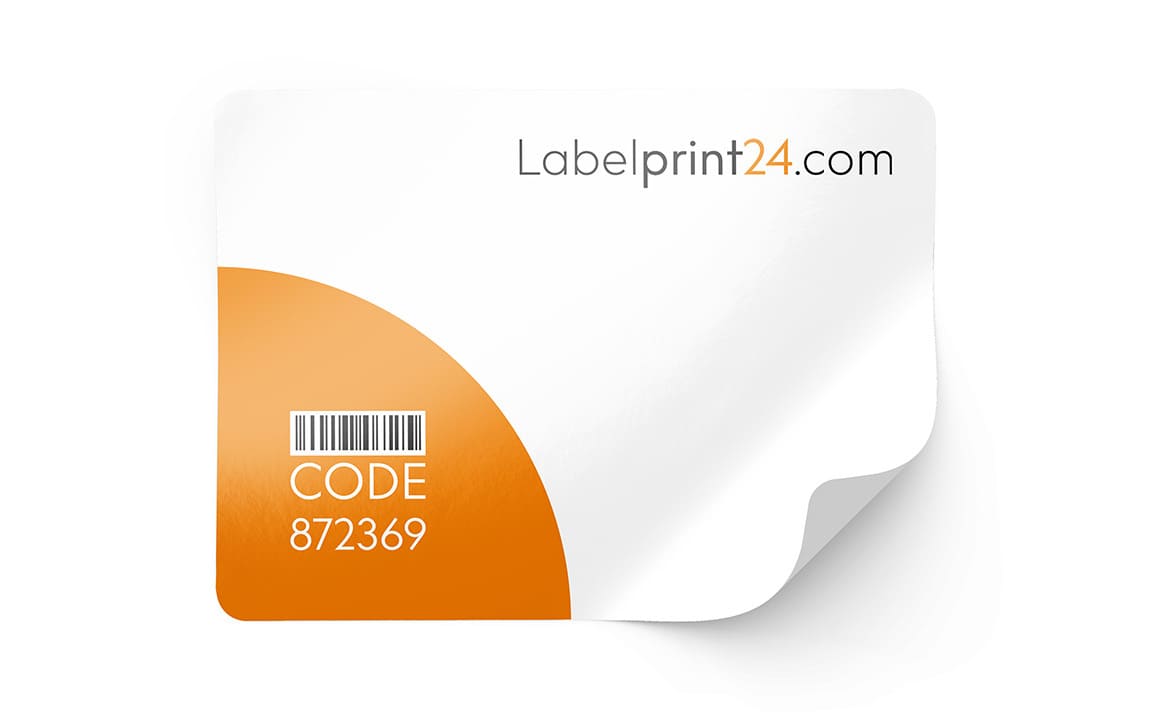
Serial number stickers are mainly used to uniquely identify devices, components or products. The key factor is the data source: numbers can be generated consecutively or imported from a list, for example as a CSV or Excel file. They are often combined with barcodes or QR codes to link scannable information with plain text.
As a general rule for stickers with codes, paper is suitable for indoor identification, while film materials are recommended for more robust environments, including outdoor use. At Labelprint24.com, numbering, layout and material can be configured so that identification requirements and service life are perfectly matched.
Code options for serial number stickers from Labelprint24
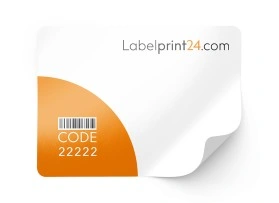
Consecutive code (1-colour)
- Application: serial identification in production and service environments. Each label is unique and supports traceability.
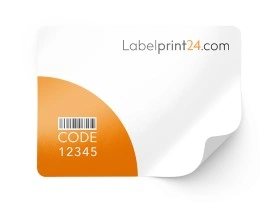
Static code (1-colour)
- Application: identical labelling in large quantities, for example for storage locations, containers or recurring process IDs.
Consecutive code + layout (4-colour)
- Application: serial numbers with branding or logo in Euroscale, for example for asset labels and equipment identification in field service.
Static code + layout (4-colour)
- Application: recurring codes with a designed template, ideal for standard processes and internal workflows.
Material selection tips for serial code stickers from Labelprint24
White PP film, permanent adhesive 💰
- Application: cost-effective film-based solution for frequent handling on boxes, plastic and metal.
Matt paper, permanent adhesive
- Application: cost-effective paper sticker for dry indoor areas, such as shelves, cardboard boxes, folders and warehouse labelling.
PE high-tack with high initial adhesion
- Application: first choice for difficult substrates such as low-surface-energy plastics (PE/PP), as well as rough or textured surfaces.
FAQ



 Custom-made Manufacturing
 Express Production
 Premium Quality since 1961
 Professional Expert Advice