Products in cart
Notifications

Powered by:
 Custom-made Manufacturing
 Express Production
 Premium Quality since 1961
 Professional Expert Advice



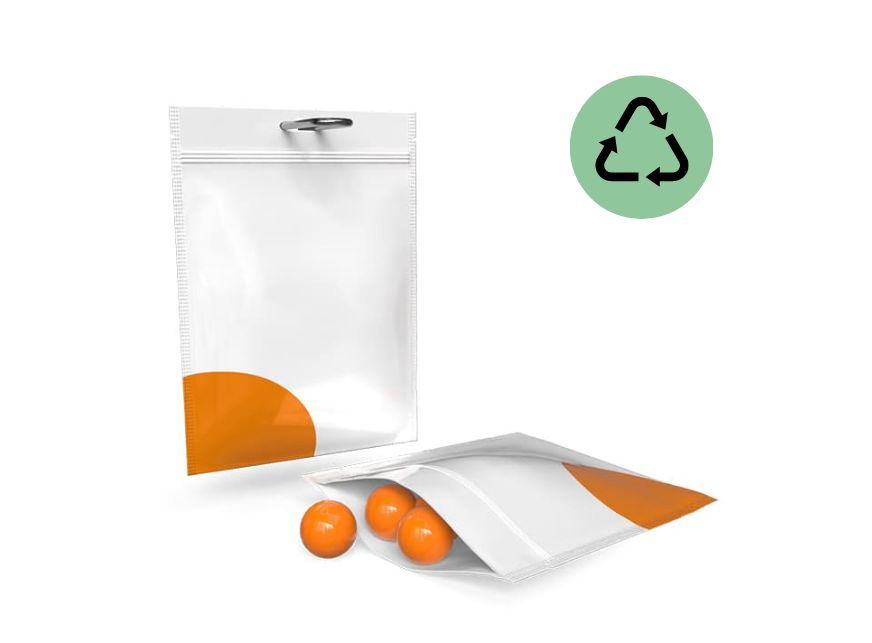
Are you looking for Pouch packaging made from materials designed for specific recycling requirements? A flexible solution with efficient material use, that ensures lasting freshness of its contents? Then our flat pouches with specific material structures from Labelprint24.com are for you!


Product Advisor for Flexible Packaging
Whether it’s roll stock for snacks or stand-up pouches with zippers and windows – I’m your advisor for packaging made from film, kraft paper, and mono-materials. Perfect for food, cosmetics, non-food, chemicals, and other industries.
"High filling capacity with efficient material use!"
I will be happy to help you personally.
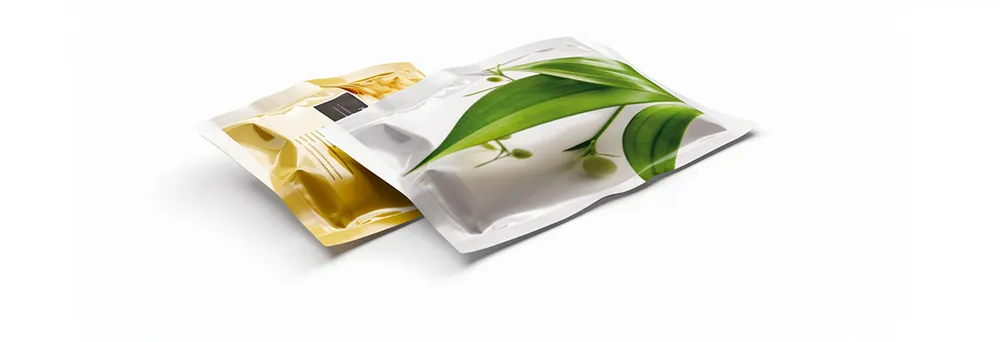
Flat pouches are available in material structures designed for specific recycling requirements. Typically made from materials like paper or plastics, these pouches can be designed for specific recycling requirements. By using Flat pouches designed for specific recycling requirements, businesses can make supports specific material and resource-efficiency objectives.
To assess whether flat pouches are suitable for recycling, the specific material structure and applicable recycling requirements should be considered. Recycling symbols alone do not confirm recyclability. For consumers and businesses to understand the intended recycling route for the specific pouch structure.
Labelprint24 also offers a variety of Pouch material options include mono-material structures, kraft paper and natural paper. By focusing on these material options, we can collectively make supports defined material-efficiency objectives.
For our flat pouches, we provide a range of materials. If you are looking for specific material options, we recommend mono-material structures, kraft paper or natural paper. A pouch is considered recyclable if its material is sortable or separable and can re-enter the recycling loop. Proper disposal allows recyclable materials to be broken down and repurposed into new products. Additionally, recycled materials can be blended with new materials to create entirely new products.
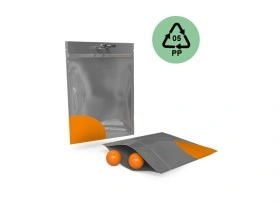
In pouch packaging, plastics are categorized into Mono-material structures and composite materials. Mono-material structures consist of a single material, making them "pure" and suitable for specific recycling requirements, as they significantly simplify the process. Recycling Mono-material structures requires less energy, as there is no need to separate or split different materials.
Composite materials, on the other hand, are made from at least two different substances bonded together. While they remain distinguishable on a macroscopic level, they merge on a microscopic scale. Composite materials offer various advantages, such as robustness, high strength at low weight, and UV resistance. However, for those focused on recycling, Mono-material structures are the better environmental choice due to their simplicity and efficiency in the recycling process.
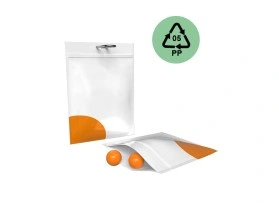
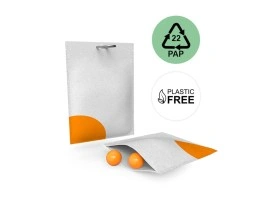
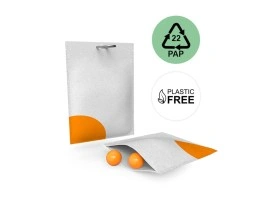
Our white, plastic-free paper with a barrier is the perfect solution for primary packaging of food items such as chocolate, tea, or unsalted nuts. With an overall thickness of 75 µm, it ensures secure packaging while offering easy handling through heat-sealability. The specialized barrier makes the paper suitable for paper recycling while providing reliable protection against external influences, keeping your products fresher for longer. Certified for food contact and compliant with all required standards, this packaging guarantees the safety of your products. Please note that material and barrier properties are indicative. We recommend individual testing for product-specific requirements.
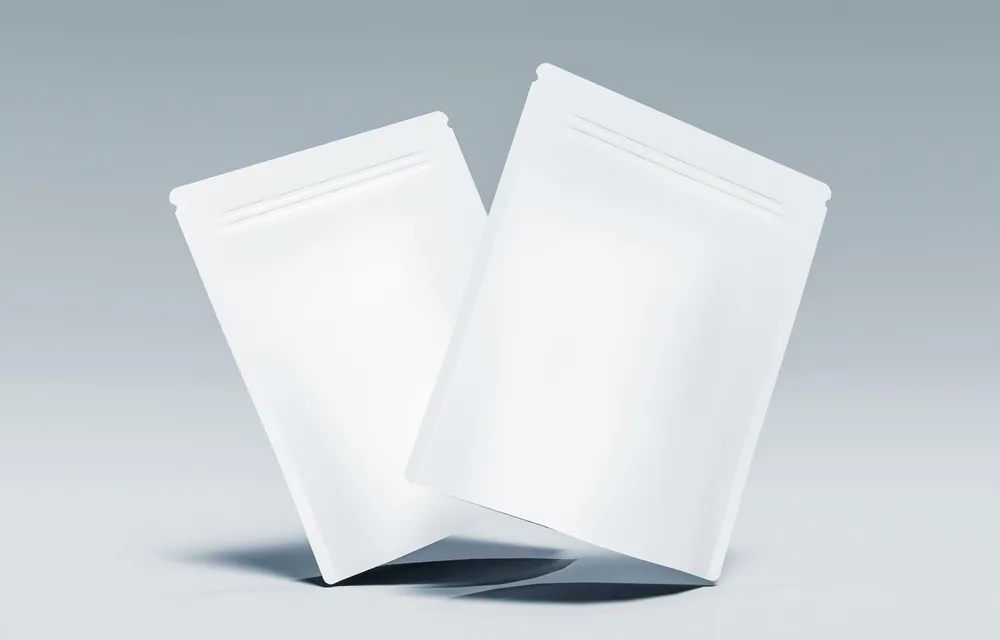
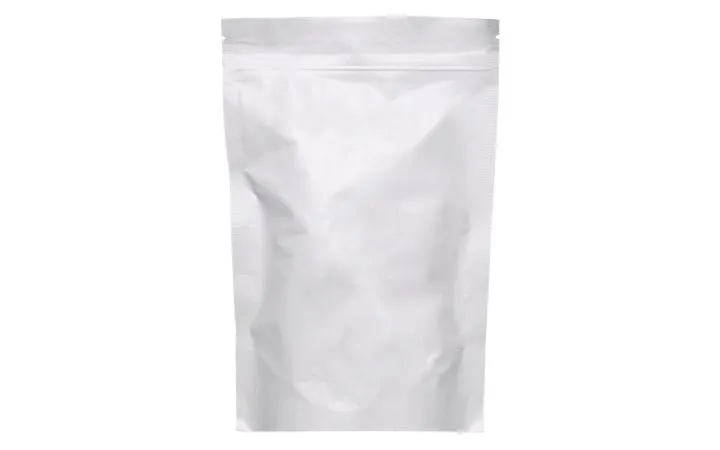
This unique packaging material stands out for its versatility and specific material properties, while offering an appealing appearance. With an overall thickness of 65 µm, it is both durable and lightweight. A key feature is its heat-sealability without requiring an additional barrier, making it suitable for paper recycling, depending on the specific material structure and available recycling infrastructure. Ideal as primary and secondary packaging, it suits a wide range of products such as pudding powder, cream stabilizer, baking powder, cutlery, electrical components, and more. By using this plastic-free white paper, you can support specific material-efficiency objectives but also present a high-quality product. Combining functionality with specific material properties, it is the perfect solution for businesses seeking packaging alternatives with specific material properties.
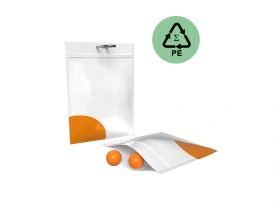
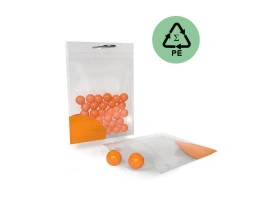
These pouches feature white natural paper on the outside and white polyethylene (PE) on the inside. With a total thickness of approximately 110 µm, it provides moderate oxygen, carbon dioxide, and aroma barriers, making it ideal for packaging all types of dry and pasty food and non-food items. A key feature of this material is its recycling suitability depending on the specific material structure and available recycling infrastructure The combination of paper and PE creates a high-quality packaging solution that is both functional and visually appealing. For companies seeking a reliable and packaging option with specific material properties, white natural paper/PE for flat pouches is an excellent choice. Its versatility and specific material properties also make it a forward-looking investment.
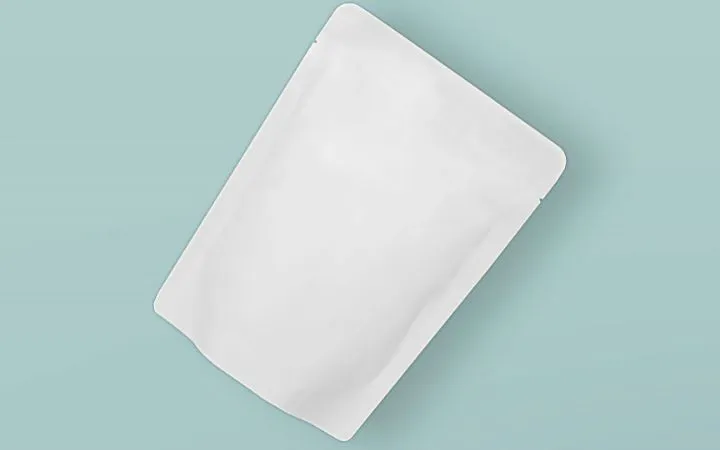
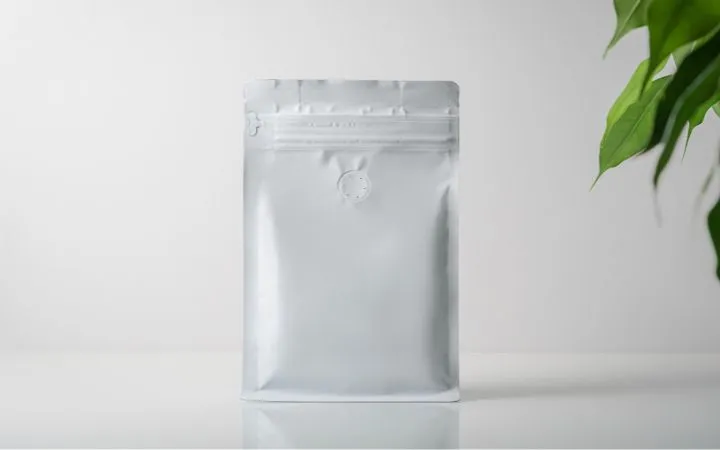
Our white film has a PET/PE-EVOH-PE multilayer structure., with a thickness of approximately 95 µm. It features a white exterior and interior and is ideal for small pouches up to 1500ml. These pouches can be used for solid products, pastes, powders, or liquids. The film’s excellent barrier properties ensure optimal protection for packaged products, maintaining freshness for longer by providing outstanding oxygen, carbon dioxide, and aroma barriers. Please note that the specified material and barrier properties are guidelines and do not replace specific testing for individual contents. With this white film for flat pouches, you get a high-quality material that meets your needs and keeps your products safe and fresh.
Transparent film for flat pouches offers a range of advantages, particularly for the presentation and protection of food and other products. With excellent barrier properties against oxygen, carbon dioxide, and aromas, this film ensures extended shelf life and freshness of packaged goods. Its transparency allows for an attractive display of contents, which is especially beneficial for retail sales. With an overall thickness of approximately 95 µm, it is ideally suited for small pouches with a capacity of up to 1500 ml. Versatile in application, it accommodates all types of dry, liquid, and paste-like foods as well as non-food items. Its adaptability and reliability make it an excellent choice for various packaging industry needs.
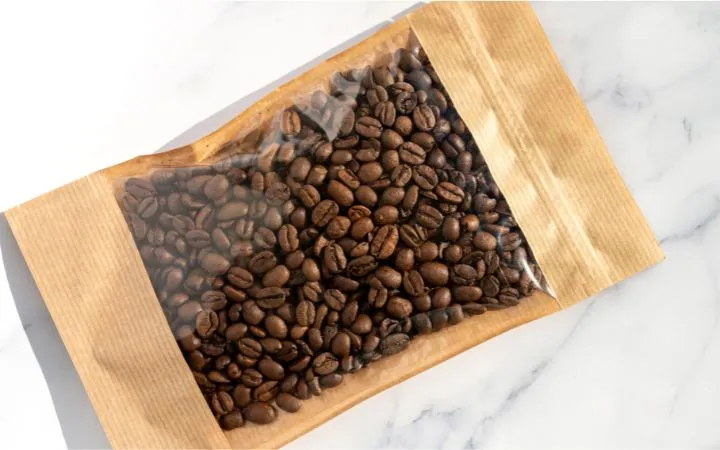
Flat pouches designed for specific recycling requirements are versatile and can reduce plastic material use compared with a defined reference design. In the food industry, they are commonly used for the secure transportation of fruits, vegetables, and other food items. They are also popular in retail for packaging products such as clothing. After use, Flat pouches designed for specific recycling requirements can be suitable for specific recycling streams. Through specialized recycling processes, the pouches can be processed into new plastic products within suitable recycling systems. To ensure effective recycling rates, it is important for consumers to dispose of their flat pouches correctly. Make sure the pouches are empty and free of other waste. By doing so, you play a vital role in environmental protection and the sustainable use of resources.
 Free choice of format
 Free delivery
 Quality since 1961
 Over 30.000 customers

harder-online GmbH
An der Borntelle 4
01619 Zeithain
 Email has been copiedinfo@labelprint24.com
Monday - Thursday: 08:00 - 17:00
Friday: 08:00 - 16:30