




 BY Christoph Zumdick IN Industry knowledge
Selecting Label Sizes and Shapes: A Comprehensive Guide
Introduction to Label Sizes and Shapes
Selecting the right label size and shape is crucial for creating effective product packaging. The perfect label not only enhances your product's visual appeal but also ensures all necessary information is properly displayed. At Labelprint24, we understand that finding the ideal dimensions and shapes for your labels can impact your product's marketability and compliance with industry regulations.
Labels come in various sizes and shapes, each serving different purposes depending on your product type, container dimensions, and branding requirements. Whether you need labels for honey products, beverages, cosmetics, or chemicals, the right size and shape will help your products stand out on shelves whilst effectively communicating important information to consumers.
In this guide, we'll explore the factors to consider when selecting label sizes and shapes, discuss industry standards for various product categories, and provide expert recommendations to help you make informed decisions. Whether you're launching a new product or rebranding an existing one, understanding these basics will ensure your labels perform their essential functions whilst enhancing your product's overall appeal.
Understanding Label Size Fundamentals
How to Measure Labels Correctly
When selecting label sizes, accurate measurements are essential for ensuring proper fit and appearance on your product containers. Label dimensions are typically measured in millimetres or inches, with width (horizontal measurement) listed first, followed by height (vertical measurement). For example, a 100mm x 50mm label has a width of 100mm and a height of 50mm.
To determine the appropriate label size for your product, you need to consider the dimensions of your container. For cylindrical containers like bottles, you'll need to measure the circumference (for wrap-around labels) or the available flat surface area (for front and back labels). For rectangular containers, measure the width and height of each panel where labels will be applied.
Remember to account for curved surfaces when measuring cylindrical containers. The label width should be slightly less than the container's circumference for wrap-around labels to avoid overlap or gaps. For products with multiple labels, ensure sufficient space between them for a clean, professional appearance.
Our labels for spices and food products come in various sizes to accommodate different container types, from small spice jars to larger packaging options. Proper sizing ensures that all required information, including ingredients, nutritional facts, and branding elements, fits appropriately on the label.
Standard Label Sizes for Different Products
Different product categories often have standard label sizes that have proven effective for their specific applications. Understanding these industry norms can help you make informed decisions when selecting label dimensions for your products.
For food and beverage products:
- Small jars and bottles: 30mm x 40mm to 50mm x 70mm
- Medium containers: 60mm x 90mm to 90mm x 120mm
- Large packaging: 100mm x 150mm or larger
For cosmetic and personal care products, small containers like lip balms typically need labels from 30mm x 40mm to 50mm x 60mm. Medium bottles for shampoos and lotions usually require labels between 70mm x 100mm to 90mm x 130mm, whilst large containers may need labels 100mm x 150mm or larger.
Our booklet labels for cosmetic products offer a practical solution when you need to include extensive information in a limited space. These multi-page labels provide ample room for ingredients, usage instructions, and regulatory information whilst maintaining a clean, professional appearance on your product.
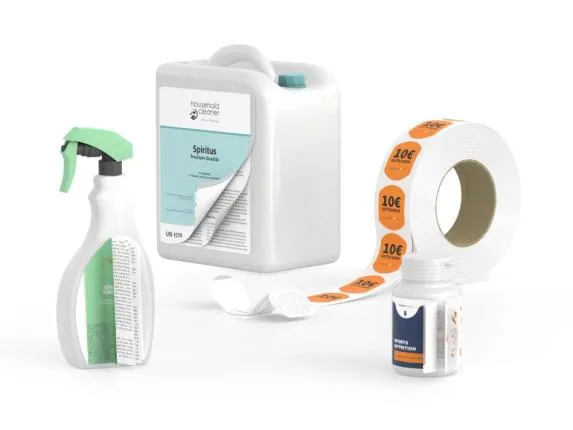
For chemical and industrial products, larger labels are often necessary to accommodate hazard symbols, safety information, and detailed usage instructions. Our chemical labels are designed to meet industry regulations whilst providing clear, legible information even in challenging environments.
Choosing the Right Label Shape
Common Label Shapes and Their Applications
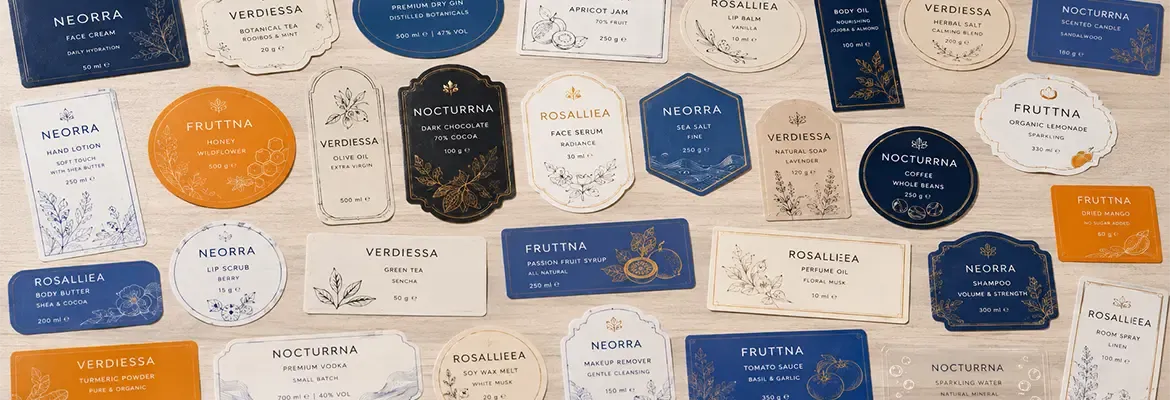
The shape of your label plays a significant role in its effectiveness and visual appeal. Whilst rectangular and square labels are the most common due to their versatility and efficient use of space, various other shapes can help your product stand out on shelves and reinforce your brand identity.
1. Rectangular labels: The most versatile option, suitable for most products and containers. Rectangular labels provide ample space for information and are cost-effective to produce.
2. Square labels: Ideal for square or cubic containers, creating a harmonious visual balance. Square labels work well for premium products with minimalist designs.
3. Round/circular labels: Perfect for jar lids, bottle caps, and cylindrical containers. Round labels create a sense of completeness and work well for products with circular branding elements.
4. Oval labels: Combine the benefits of rectangular and round labels, providing more space than circular options whilst maintaining soft, elegant curves. Oval labels are popular for wine bottles, speciality foods, and premium personal care products.
5. Custom shapes: Distinctive shapes that align with your product or brand identity, such as die-cut designs that follow the contours of your logo or product theme. Our labels for spices are available in custom shapes that can enhance the visual appeal of your packaging and help establish brand recognition.
How Container Type Influences Label Shape Selection
The container type significantly influences which label shapes will work best for your product. Different containers present unique challenges and opportunities for label application:
For cylindrical bottles and jars:
- Rectangular or square labels work well on the front and back
- Wrap-around rectangular labels can showcase more information
- Round labels are ideal for lids or caps
For rectangular boxes and packages, rectangular labels provide a clean, professional look, whilst square labels create visual balance on square panels. Custom die-cut shapes can add visual interest to standard packaging.
For tubes and irregular containers, flexible materials help labels adhere to curved surfaces. Oval labels work well on tubes, providing more space than circular options, and custom shapes can follow the contours of unique container designs.
Our multi-layer labels offer a practical solution for products with limited surface area but extensive information requirements. These labels provide multiple printed pages within a single label, making them ideal for cosmetics, pharmaceuticals, and other products that require detailed information.
For containers with textured or challenging surfaces, consider the label material and adhesive in addition to shape. Our waterproof labels are designed to adhere securely to various surfaces, even in damp or challenging environments, ensuring your labels remain intact and legible throughout your product's lifecycle.
Specialised Label Sizes for Different Industries
Food and Beverage Label Sizing
Food and beverage products require labels that not only look appealing but also comply with industry regulations regarding information disclosure. The size of these labels must accommodate nutritional information, ingredients lists, allergen warnings, and branding elements whilst fitting appropriately on the container.
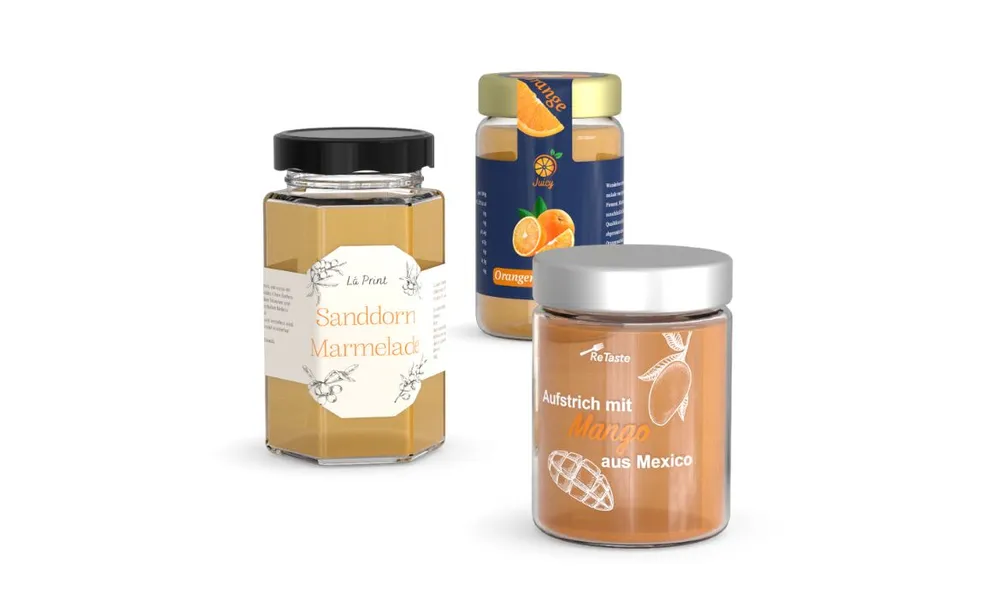
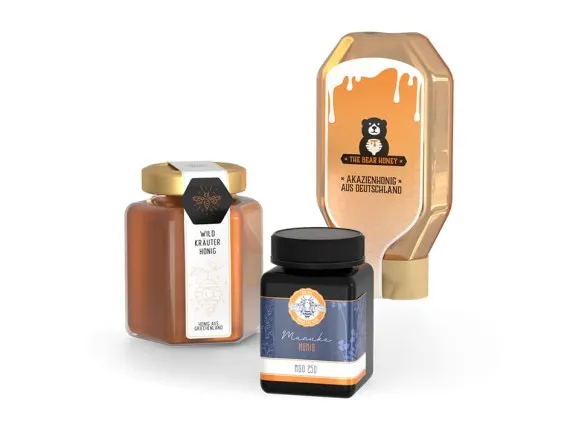
For honey products, jar labels typically range from 70mm x 40mm for small jars to 110mm x 80mm for larger containers. Our honey labels are designed to showcase your product's quality whilst providing ample space for required information. These labels are made with high-quality materials that resist moisture and maintain their appearance throughout the product's shelf life.
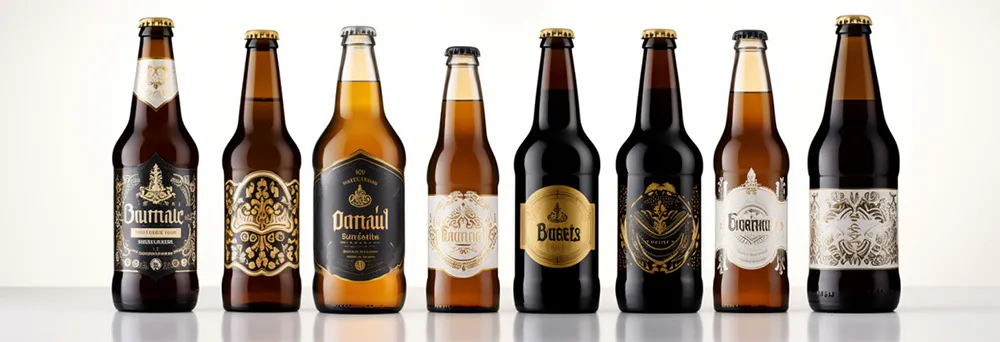
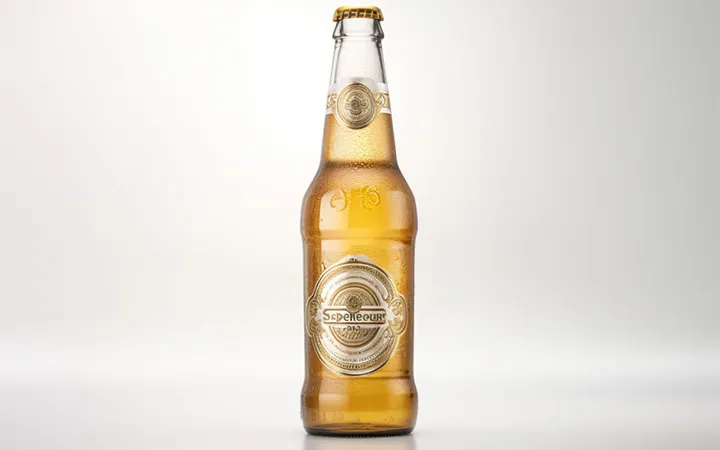
Beer bottles typically use labels sized between 80mm x 120mm for main body labels and 60mm x 60mm for neck labels. Our beer labels are designed to withstand cold temperatures and moisture, ensuring they remain attractive and legible even when refrigerated or exposed to condensation. Available in various materials including foil and paper, these labels can be customised to match your brand's aesthetic and functional requirements.
For spice containers, labels generally range from 40mm x 30mm for small jars to 70mm x 50mm for larger containers. Our labels for spices are designed to fit various jar sizes and shapes, providing clear product identification whilst enhancing shelf appeal.
When selecting food and beverage label sizes, consider:
- Required regulatory information (which varies by country and product type)
- Branding elements and visual appeal
- Container size and shape
- Application method (manual or automated)
Cosmetic and Personal Care Label Dimensions
Cosmetic and personal care products present unique labelling challenges due to their diverse container shapes and sizes, as well as extensive regulatory requirements. Labels for these products must include ingredients lists, usage instructions, warnings, and often multiple languages, all whilst maintaining an attractive, premium appearance.
For small cosmetic containers like lip balms or small cream jars, labels typically range from 30mm x 20mm to 50mm x 40mm. Medium-sized bottles for products like shampoos and lotions usually require labels between 70mm x 50mm and 90mm x 70mm. Larger containers may need labels 100mm x 80mm or bigger.
Our booklet labels for cosmetic products offer an elegant solution for including comprehensive information without compromising on design. These compact, multi-page labels provide ample space for mandatory details whilst maintaining your product's premium appearance. Available in customisable sizes and finishes, these labels help you meet regulatory requirements without sacrificing brand aesthetics.
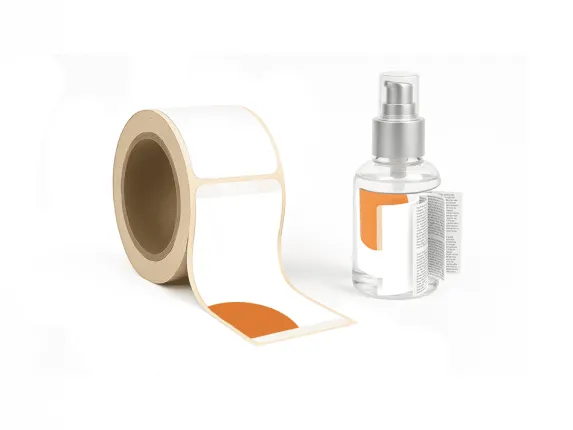
For products with limited space but extensive information requirements, our multi-layer labels combine two printable sides within a single label layer. These practical, space-saving labels are ideal for cosmetics that need to include information in multiple languages or extensive ingredient lists.
Industrial and Chemical Label Requirements
Industrial and chemical products have stringent labelling requirements governed by regulations such as GHS (Globally Harmonised System) and CLP (Classification, Labelling, and Packaging) in Europe. These labels must include hazard symbols, signal words, hazard statements, precautionary statements, and product identifiers, all in a clear, legible format.
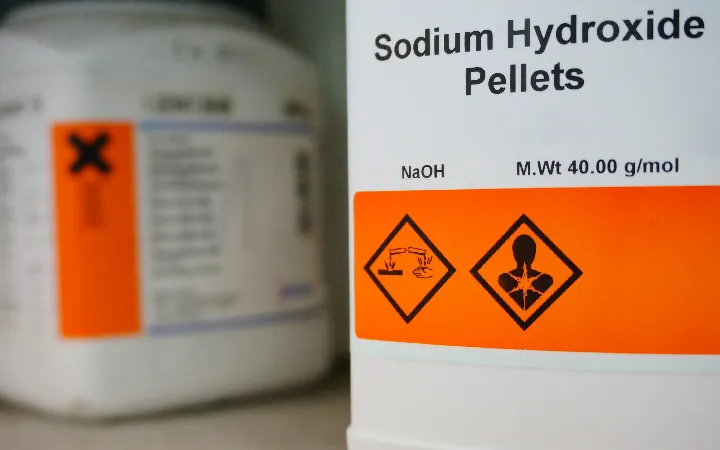
The size of chemical labels depends on the container capacity:
- Small containers (less than 3 litres): Minimum 52mm x 74mm
- Medium containers (3-50 litres): Minimum 74mm x 105mm
- Large containers (50-500 litres): Minimum 105mm x 148mm
- Very large containers (more than 500 litres): Minimum 148mm x 210mm
Our chemical labels are designed to meet industry regulations whilst providing clear, legible information even in challenging environments. These labels are resistant to acids, solvents, and other harsh chemicals, ensuring they remain intact and readable throughout the product's lifecycle.
For products with extensive safety information that won't fit on a standard label, booklet labels or multi-layer labels provide practical solutions. These formats offer additional space for detailed safety instructions, handling procedures, and regulatory information.
Material Considerations for Different Label Sizes
How Material Choice Affects Label Size Selection
The material you choose for your labels significantly impacts which sizes and shapes will work best for your application. Different materials have varying levels of flexibility, durability, and printability, all of which influence how they perform at different sizes and on different container types.
Paper labels are versatile and cost-effective but may have limitations for very small or intricate designs. They work well for standard sizes and shapes but may not conform as effectively to highly curved surfaces.
Film labels (PE, PP, PVC) offer greater flexibility and can conform to curved or irregular surfaces, making them ideal for complex container shapes or when waterproofing is required. Our waterproof labels utilise these film materials to ensure optimal fit and moisture resistance, even in challenging environments.
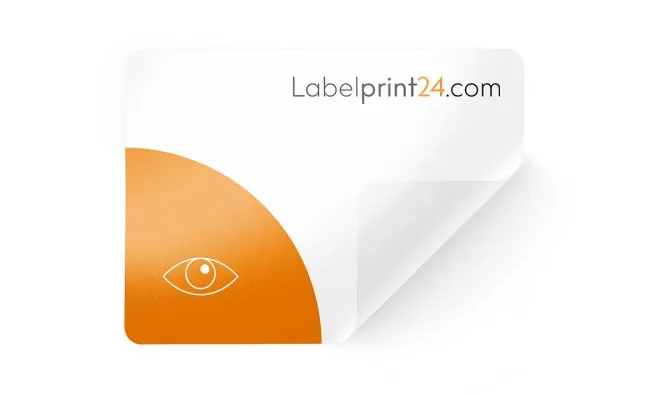
Transparent labels create a "no-label look" where the product appears to be directly printed. These labels work particularly well on clear containers or when you want to showcase the product inside. The material's transparency makes size selection crucial, as edges may be more visible than with opaque materials.
When selecting materials for different label sizes, consider:
- Container shape and surface texture
- Environmental conditions (temperature, moisture, UV exposure)
- Application method (manual or automated)
- Required durability and lifespan
- Desired aesthetic effect
Durability Requirements for Various Applications
Different applications place varying demands on label durability, which in turn influences both material selection and size considerations. Labels that need to withstand harsh conditions require specific materials and construction techniques to maintain their integrity and legibility.
For refrigerated and frozen products, labels must withstand cold temperatures without cracking, peeling, or losing adhesion. Our labels for frozen goods are specifically designed to perform in freezer environments, maintaining their appearance and adhesion even at sub-zero temperatures.
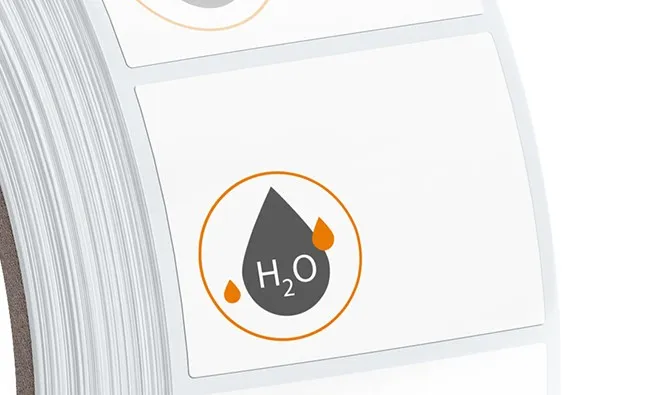
For products exposed to moisture or outdoor conditions, waterproof labels provide the necessary protection. These labels utilise film materials (PE, PP, PVC) and specialised adhesives to remain intact and legible even when wet. The size and shape of waterproof labels must account for the additional stress placed on edges and corners in damp environments.
Chemical-resistant labels for industrial applications need to withstand exposure to acids, solvents, and other harsh substances. Our chemical labels are designed with materials and adhesives that resist chemical degradation, ensuring they remain functional throughout the product's lifecycle.
Custom Label Shapes and Sizes
Benefits of Custom Die-Cut Labels
Custom die-cut labels offer unique opportunities to enhance your product's visual appeal and brand recognition through distinctive shapes that stand out on store shelves. Unlike standard rectangular or square labels, custom die-cuts can follow the contours of your logo, product theme, or container shape, creating a seamless, integrated look that captures consumer attention.
The benefits of custom die-cut labels include enhanced brand recognition, improved product differentiation, better container integration, increased perceived value, and creative design opportunities. Unique shapes become part of your brand identity, making your products instantly recognisable and helping them stand out in competitive markets.
Whilst custom die-cut labels offer numerous advantages, they require careful planning to ensure they accommodate all necessary information whilst maintaining visual appeal. Working with experienced label manufacturers like Labelprint24 ensures your custom shapes are both visually striking and functionally effective.
Designing Effective Custom Label Sizes
Creating effective custom label sizes requires balancing aesthetic considerations with practical requirements. The design process should begin with a clear understanding of your container dimensions, required information, and brand identity, then develop a custom size and shape that optimally addresses these factors.
When designing custom label sizes, consider information hierarchy, white space, application method, production efficiency, and scaling considerations. Organise content by importance, ensure adequate margins, and think about whether labels will be applied manually or by machine, as this affects tolerance requirements and precision.
At Labelprint24, we accept various file formats for custom label designs, including vector formats that ensure clean, precise die-cutting of your custom shapes. Our team can provide guidance on optimal file preparation to achieve the best results for your custom labels.
For packaging solutions beyond labels, our folding cardboard boxes offer customisable options that complement your label design, creating a cohesive brand presentation across all packaging elements.
Technical Considerations for Label Application
Label Application Methods and Size Requirements
The method used to apply labels to your products significantly impacts which sizes and shapes will work effectively. Different application methods have specific requirements for label dimensions, spacing, and construction that must be considered during the design phase.
Manual application offers the most flexibility in terms of label size and shape but may be impractical for high-volume production. Hand-applied labels can feature complex die-cut shapes and irregular dimensions, as human operators can adjust to variations that might challenge automated systems.
Semi-automatic labelling equipment typically requires more standardised label dimensions with consistent spacing between labels on the roll. These systems can accommodate a range of sizes but may have limitations for very small or very large labels.
Fully automated high-speed labelling lines have the most stringent requirements for label dimensions and construction. These systems typically need consistent label height and width, precise gap spacing between labels, specific core sizes and roll diameters, and materials with controlled elasticity.
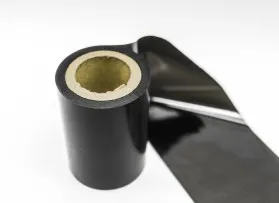
Our thermal transfer ribbons are designed for use with thermal transfer printers, ensuring optimal print quality for labels that will be applied with automated systems. Available in specific dimensions (such as 44 mm x 300 m), these ribbons are compatible with a wide range of label materials and printing equipment.
Planning for Label Placement on Products
Strategic label placement enhances both the functional and aesthetic aspects of your packaging. Proper planning ensures labels are positioned where they'll be most visible to consumers, contain all required information, and adhere securely throughout the product's lifecycle.
For cylindrical containers like bottles and jars, consider these placement options:
- Front panel for primary branding and product identification
- Back panel for detailed information (ingredients, instructions)
- Neck labels for additional branding or product highlights
- Wrap-around labels that combine front and back information
Our FEFCO 0711 folding cartons offer 100% customisable sizing options, allowing you to create packaging that perfectly complements your label design and placement strategy. These cartons provide an ideal surface for label application, with flat panels that ensure secure adhesion and optimal visibility.
We provide pre-production samples to help you evaluate label placement and appearance before committing to a full production run. These samples allow you to test different placement options and ensure your labels achieve the desired visual impact and functional performance.
Optimising Label Information for Different Sizes
Balancing Information Density and Readability
One of the most challenging aspects of label design is determining how much information to include and how to present it effectively within the available space. Striking the right balance between comprehensive information and clear, readable presentation is crucial for creating effective labels.
For standard-sized labels, establish a clear hierarchy of information, use appropriate font sizes (minimum 6-8pt for required information), employ concise language, utilise icons or symbols where appropriate, and incorporate white space strategically.
For small labels with limited space, focus on essential information only, use abbreviated text where permitted by regulations, consider QR codes linking to additional information online, implement a minimalist design approach, and choose highly legible fonts even at small sizes.
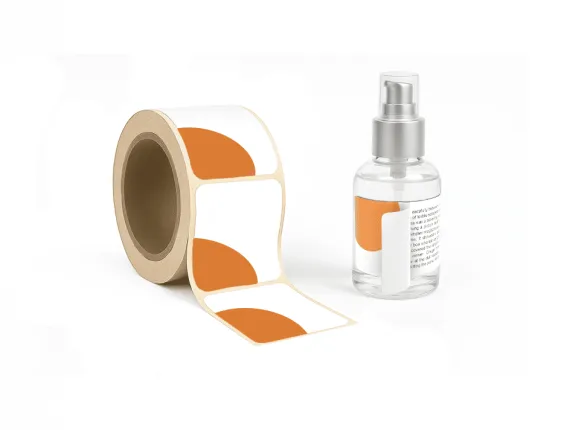
For products requiring extensive information, booklet labels provide an excellent solution. These multi-page labels offer ample space for detailed information whilst maintaining a clean, professional appearance on your product. Our booklet labels for cosmetic products are specifically designed to accommodate the extensive information requirements in this industry.

Similarly, multi-layer labels combine two printable sides within a single label layer, effectively doubling the available space for information. These practical, space-saving labels are ideal for products with extensive information requirements but limited surface area.
Solutions for Products Requiring Extensive Information
Many products, particularly in the pharmaceutical, cosmetic, and chemical industries, require more information than can reasonably fit on a standard label. For these applications, specialised label formats provide practical solutions that balance regulatory compliance with aesthetic considerations.
Booklet labels consist of multiple pages folded and attached to the product, providing extensive space for information whilst maintaining a clean appearance. These labels are ideal for pharmaceuticals with detailed dosage and safety information, cosmetics with extensive ingredient lists, multi-language products, and products with detailed warranty or technical information.
Multi-layer labels feature two or more layers that can be peeled back to reveal additional information. These labels offer a clean, uncluttered appearance when closed and significantly increased information space when opened.
Best Practices for Label Size and Shape Selection
Working with Professional Label Designers
Collaborating with experienced label designers ensures that your label size and shape decisions are informed by expertise in both aesthetics and functionality. Professional designers understand the technical constraints of different printing methods, material properties, and application processes, allowing them to create labels that are both visually appealing and practically effective.
At Labelprint24, our design team works closely with clients to understand their specific requirements, including container dimensions, regulatory needs, branding objectives, and budget constraints. This collaborative approach ensures that the final label design optimally balances all these factors whilst creating distinctive, effective packaging that enhances product appeal and market performance.
Testing and Prototyping Label Designs
Before committing to full production runs, testing label designs through prototypes and samples is essential for ensuring optimal results. Physical samples allow you to evaluate how labels look on actual containers, assess readability at different viewing distances, verify colour accuracy and print quality, test adhesion and durability under real-world conditions, and identify any application challenges.
We provide pre-production samples that allow you to evaluate label appearance, placement, and performance before final production. This testing phase often reveals opportunities for optimisation that might not be apparent from digital mockups alone, potentially saving significant costs and preventing issues that could affect product launch timelines or market performance.
Conclusion
Selecting the appropriate label sizes and shapes represents a critical decision that impacts product presentation, brand recognition, regulatory compliance, and consumer engagement. The ideal label dimensions and configuration emerge from careful consideration of multiple factors including container type, required information, industry regulations, application methods, and brand positioning objectives.
Understanding the fundamentals of label measurement ensures accurate sizing that fits your containers properly whilst providing adequate space for required content. Standard sizes for different product categories offer proven starting points, though custom dimensions may better serve specific needs. The shape you choose—whether rectangular, circular, oval, or custom die-cut—should complement your container design whilst reinforcing brand identity and enhancing shelf appeal.
Industry-specific requirements significantly influence size selection, particularly in food and beverage, cosmetics, and chemical sectors where regulatory compliance mandates specific information presentation. Material considerations play an equally important role, as different substrates perform differently at various sizes and on different container types. Waterproof labels, frozen goods labels, and chemical-resistant options each have specific sizing considerations that ensure optimal performance in their intended environments.
For products requiring extensive information, innovative solutions like booklet labels and multi-layer formats provide practical alternatives to oversized standard labels. These specialised options allow comprehensive content inclusion whilst maintaining clean, professional product presentation. Custom die-cut shapes offer opportunities for distinctive branding that captures consumer attention and reinforces product identity, though they require careful planning to ensure functionality alongside visual impact.
Technical considerations around application methods—whether manual, semi-automatic, or fully automated—impose specific requirements on label dimensions, spacing, and construction. Strategic placement planning ensures labels occupy optimal positions for visibility and adhesion whilst accommodating all required information in accessible, readable formats. Balancing information density with readability remains one of label design's most challenging aspects, requiring thoughtful hierarchy, appropriate typography, and effective use of white space.
At Labelprint24, we provide comprehensive label solutions across all industries and applications. Our range includes honey labels, beer labels, spice labels, cosmetic booklet labels, and chemical labels, each optimised for its specific application whilst offering customisation options to meet unique requirements.
Working with experienced label manufacturers ensures that size and shape decisions are informed by technical expertise alongside creative vision. Pre-production samples allow testing of designs under real-world conditions, identifying optimisation opportunities before full production. This collaborative, iterative approach typically yields superior results compared to making decisions based solely on theoretical considerations or digital mockups.
Remember that label selection is not merely a design exercise but a strategic decision affecting multiple aspects of product success. Well-chosen label sizes and shapes enhance shelf presence, facilitate consumer information access, support brand recognition, ensure regulatory compliance, and ultimately influence purchasing decisions. By carefully considering all relevant factors and working with knowledgeable partners, you can develop labelling solutions that effectively serve both functional and marketing objectives whilst staying within budget constraints.