



 BY Judith Enger IN Technology
Maximizing Efficiency: Innovative Strategies for Streamlining Packaging Processes
Introduction: The Critical Role of Efficient Packaging in Business Operations
In today's competitive marketplace, efficient packaging processes are essential for business success. Streamlined packaging operations can help businesses manage labour costs, improve material utilisation and increase customer satisfaction. The potential for reducing material waste depends on the existing packaging processes, the materials used and the specific improvements implemented. At Labelprint24, we understand the challenges businesses face when optimising their packaging workflows.
Packaging efficiency isn't just about speed—it includes material optimization, equipment utilization, and workflow design. Whether you're managing a small production line or overseeing large-scale operations, the principles of streamlining packaging processes remain consistent. This guide explores proven strategies to enhance your packaging operations, featuring our innovative solutions designed to meet diverse industry needs.
Our cardboard packaging solutions offer versatility across various sectors, while our premium label options provide the finishing touches that elevate your brand presentation. Let's explore how to transform your packaging processes for maximum efficiency and competitive advantage.
Understanding Your Current Packaging Workflow
Before making improvements, you need to assess your existing packaging operations. This evaluation provides the foundation for targeted enhancements that address specific inefficiencies.
Conducting a Comprehensive Process Audit
Start by mapping your entire packaging workflow from material receipt to finished product shipment. Document each step, noting time requirements, labor inputs, and potential bottlenecks. This visual representation helps identify redundancies and opportunities for streamlining. A detailed process map serves as both a diagnostic tool and a baseline against which you can measure future improvements, ensuring that any changes you implement deliver measurable benefits to your operation.
Key questions to consider during your audit:
- How much time does each packaging step require?
- Where do delays or bottlenecks typically occur?
- Which processes require the most manual intervention?
- Are there quality issues that necessitate rework?
- How efficiently are your packaging materials being used?
Our sample box with product selection can help you evaluate different packaging options before committing to full-scale production, allowing you to test efficiency with various designs.

Identifying Common Inefficiencies
Most packaging operations share similar challenges that hurt performance. Excessive material handling increases labor costs and risk of damage, while inconsistent processes lead to quality variations and customer complaints. Equipment limitations from outdated or poorly maintained machinery cause frequent delays and downtime, disrupting your entire production schedule. Improper material storage increases retrieval time and can lead to damaged materials, while manual data entry creates delays and increases error potential.
Establishing Performance Metrics
Using measurable metrics allows for clear evaluation of your packaging efficiency. Without these measurements, it's impossible to tell if your improvements are working. Units Per Hour measures production speed and shows your capacity clearly. Tracking this number over time shows trends and the impact of process changes on your output.
Changeover Time tracks how long it takes to switch between different product packaging, highlighting opportunities to reduce downtime. In operations that handle multiple products, reducing changeover times can dramatically increase available production hours, expanding your capacity without additional equipment or shifts. Material Waste Percentage helps you monitor material efficiency and identify cost-saving opportunities. Even small waste reductions can mean big savings, especially for high-volume operations or when using premium materials.
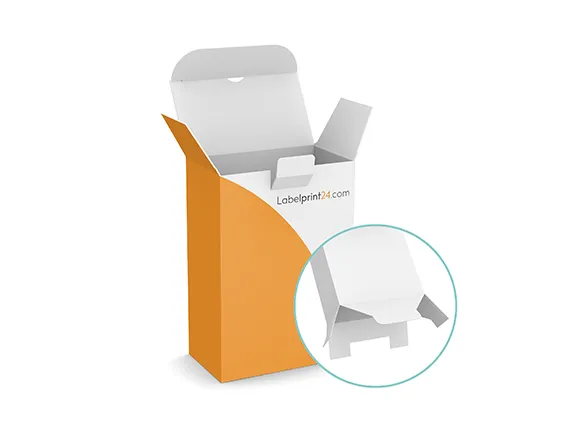
These metrics establish a baseline for measuring improvements. Our folding boxes with snap lock base are designed for quick assembly, potentially improving your units-per-hour metric.
Optimizing Packaging Materials and Design
The materials and design you choose greatly impact packaging efficiency, affecting everything from storage needs to assembly time. Making smart choices in these areas can lead to big improvements in your overall packaging process.
Selecting Right-Sized Packaging Solutions
Packaging dimensions should be selected according to the size, weight and protection requirements of the product. Compared with a suitably sized shipping box, an oversized box may require additional packaging material or filling material and occupy more storage and transport space. Packaging that is too small, on the other hand, can increase the risk of product damage. Choosing suitable dimensions helps businesses balance material requirements, handling efficiency and product protection.
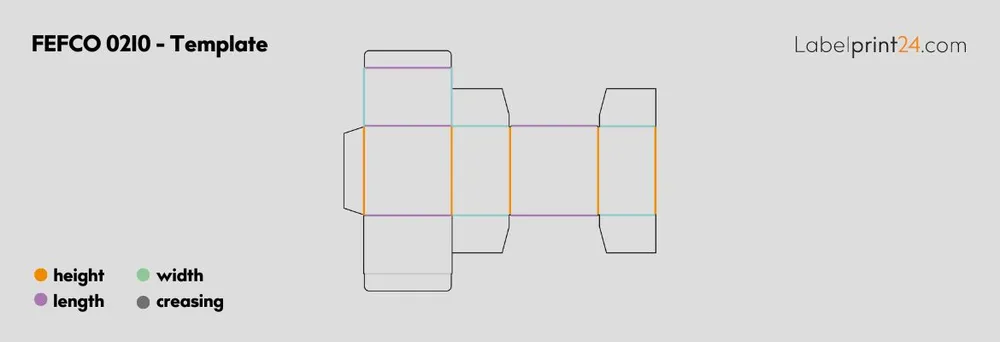
At Labelprint24, we offer customisable packaging sizes that can be adapted to the dimensions and protection requirements of your products. Our FEFCO 0210 corrugated cardboard boxes can be manufactured to your specifications. Choosing suitable box dimensions can help avoid unnecessarily large packaging formats while ensuring that the required level of product protection is maintained.

Streamlining Design for Easy Assembly
Complex packaging designs increase assembly time and error rates. When packaging requires multiple steps to assemble or uses complicated folding patterns, your production line slows down and mistakes become more likely. This affects your labor costs and can lead to increased waste from incorrectly assembled packages. By focusing on designs that prioritize efficiency, you can greatly improve your packaging process.
Consider these design principles for more efficient packaging:
- Minimize Components: Fewer separate pieces mean faster assembly and less inventory to manage. Each additional component introduces another opportunity for error and increases handling time.
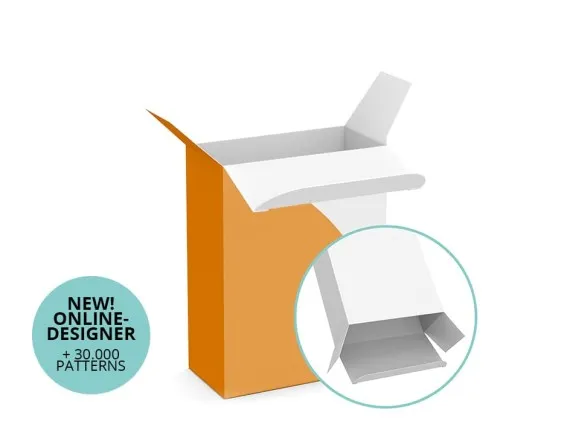
- Self-Locking Features: Packaging designs with interlocking elements can simplify assembly and, depending on the construction, reduce or eliminate the need for additional tape or glue during manual assembly. Our folding boxes with a snap-lock base illustrate this type of construction.
- Clear Assembly Indicators: Visual cues that guide correct assembly reduce training time and minimize errors, especially for new employees or complex designs.
- Standardized Designs: Using similar structures across product lines reduces training needs and allows workers to develop muscle memory, increasing speed and accuracy.
Material Selection for Operational Efficiency
The right materials can greatly impact your packaging process efficiency. Material selection affects not just the final product but the entire packaging workflow. The weight of materials impacts handling fatigue and shipping costs, with lighter materials generally allowing for faster processing and reduced worker strain. Rigidity and strength determine how materials maintain their shape during assembly, with more stable materials reducing errors and improving automation compatibility. Print compatibility affects how readily surfaces accept print, with some materials requiring additional preparation steps that slow production.
Our packaging solutions include options in various materials, from E/B/EB flute corrugated board for shipping boxes to premium GC1/GC2/GD2 cardstock for retail packaging. Each material is selected for optimal performance in specific applications.
Implementing Automation and Technology Solutions
Automation offers one of the biggest opportunities for improving packaging efficiency, providing consistent performance with less labor. From simple mechanical aids to fully integrated systems, automation can transform your packaging operations.
Assessing Automation Opportunities
Not every packaging process needs automation. The key is finding which processes will give you the best return on investment when automated. High-volume, repetitive tasks typically yield the greatest ROI, as the consistent workload maximizes equipment use. Simple, standardized processes are easier to automate than complex, variable ones, making them ideal first candidates. Processes prone to human error can see big quality improvements through automation, while tasks requiring significant manual effort offer substantial labor savings.
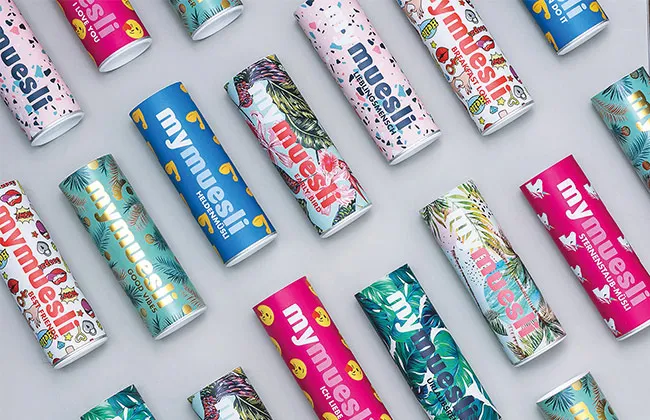
As shown in our Fachpack 2019 coverage, Labelprint24 emphasizes digitization and speed in modern packaging solutions. Our case study with mymuesli shows how we've implemented mass customization through digital processes, allowing for personalization from the very first item.
Scalable Automation Solutions
Automation doesn't require complete production line overhauls. Many businesses benefit from step-by-step approaches that allow them to gradually increase automation as needs grow and budgets allow. Semi-automated equipment assists operators rather than replacing them entirely, providing a middle ground that boosts productivity while maintaining flexibility. These systems can significantly increase output while requiring less training than fully automated solutions.
Modular systems offer another approach, allowing components to be added incrementally as needs grow. This strategy spreads investment costs over time while providing immediate benefits in the areas where automation is most needed. Collaborative robots (cobots) represent a flexible automation option that works alongside human operators, handling repetitive tasks while humans manage more complex operations. These robots can be reprogrammed for different tasks as needs change, providing versatility that traditional automation sometimes lacks.
Smart conveyor systems offer intelligent material handling that adapts to different package types, improving flow through various packaging stations and reducing bottlenecks. These systems can route packages based on size, weight, or destination, optimizing the entire packaging workflow.
Digital Workflow Management
Beyond physical automation, digital systems offer major efficiency improvements that can transform your packaging operations. Inventory management software ensures materials are available when needed, preventing costly production delays due to stock outages. These systems can track usage patterns, automatically generate reorder alerts, and optimize stock levels to balance availability with storage costs.
Production scheduling tools optimize equipment use and reduce changeover time by grouping similar jobs together. By analyzing order requirements and equipment capabilities, these systems can create efficient production sequences that minimize downtime between jobs. Quality control systems with digital inspection reduce errors and rework by identifying issues early in the process.
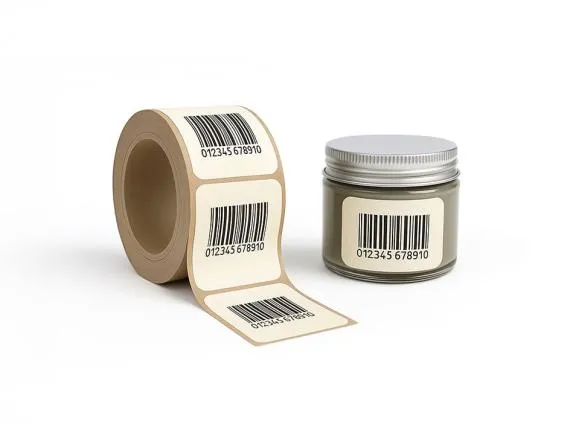
Our barcode labels for cosmetic products integrate seamlessly with inventory and tracking systems, while our digital printing capabilities allow for production runs as small as needed without setup penalties. This flexibility is particularly valuable for products with frequent design changes or seasonal variations.
Optimizing Workspace Layout and Flow
The physical arrangement of your packaging area greatly impacts efficiency. Strategic workspace design minimizes movement and maximizes productivity, allowing your team to accomplish more with less effort and time.
Principles of Efficient Workspace Design
When evaluating your packaging area layout, several key principles can guide you toward a more efficient setup. Linear flow ensures materials move in a logical sequence without backtracking, reducing unnecessary movement and confusion. The ideal layout allows materials to progress smoothly from receiving to shipping, with each workstation positioned to support this forward movement. Minimizing travel distance keeps frequently used items within easy reach, reducing the time workers spend moving around.
Establishing clear work zones with dedicated areas for specific functions reduces confusion and improves focus. These zones should be clearly marked and organized according to their purpose, whether it's material preparation, assembly, quality control, or packaging. Ergonomic considerations such as proper work heights and positioning reduce fatigue and increase productivity. Adjustable workstations that can accommodate different workers and tasks are particularly valuable for maintaining comfort throughout shifts.
Visual management using clear indicators for inventory levels, work instructions, and quality standards helps workers quickly identify status and requirements. Color-coding, shadow boards, and visual displays can significantly reduce time spent searching for information or materials.
Material Staging and Inventory Management
Efficient material handling starts before the packaging process begins. Strategic approaches to material staging and inventory can dramatically improve your packaging workflow. Point-of-use storage keeps materials close to where they're needed, eliminating time-consuming trips to central storage areas. This approach reduces handling and ensures materials are immediately available when required, preventing delays and disruptions.
Visual inventory systems with clear indicators of stock levels prevent shortages by making it immediately obvious when replenishment is needed. These systems might use color-coded bins, minimum/maximum level markers, or electronic displays to signal inventory status. First-in-first-out (FIFO) flow ensures materials are used in the correct sequence, preventing quality issues from aged stock. This is particularly important for date-sensitive materials like adhesives or printed components.
Our specialized labels for shampoo and honey products are designed with application efficiency in mind, featuring consistent roll formats that work smoothly with automated labeling equipment.

Workstation Design and Tool Organization
Individual workstations should be optimized for the specific tasks performed, enhancing both efficiency and worker comfort. The 5S methodology—Sort, Set in order, Shine, Standardize, and Sustain—provides a framework for organizing workspaces to eliminate waste and improve productivity. This systematic approach ensures that only necessary tools are present, everything has a designated place, work areas are kept clean, and improvements are maintained over time.
Shadow boards with visual outlines showing where tools belong make it immediately obvious when items are missing and ensure quick retrieval. These visual cues reduce time spent searching for tools and help maintain organization throughout shifts. Height-adjusted work surfaces that match working height to the task reduce strain and fatigue, allowing workers to maintain productivity throughout their shifts. Adjustable tables or platforms can accommodate different workers and different packaging tasks without compromising ergonomics.
Standardizing Processes and Training
Consistency is the foundation of efficiency. Standardized processes reduce variation, minimize errors, and simplify training, creating a framework for continuous improvement.
Developing Standard Operating Procedures (SOPs)
Well-documented procedures create a framework for consistent performance across your packaging operation. Process mapping with visual representations of correct workflows helps employees understand the complete process and their role within it. These maps can highlight decision points, quality checks, and handoffs between team members, ensuring nothing is overlooked. Clear instructions with step-by-step guides and images eliminate confusion and reduce the need for verbal explanations. These instructions should be accessible at workstations and detailed enough that even new employees can follow them accurately.
Decision trees provide guidance for handling exceptions and unusual situations, empowering employees to make correct choices without supervisor intervention. These tools are particularly valuable for complex processes with multiple variables. Quality standards with explicit criteria for acceptable output ensure consistent product quality and reduce subjective judgments. These standards should include visual examples of both acceptable and unacceptable results.
Understanding the history and development of folding boxes provides valuable context for packaging professionals, informing better design and process decisions.
Effective Training Programs
Well-trained staff are essential for efficient operations. Investing in comprehensive training programs pays off through improved productivity, reduced errors, and greater adaptability. Hands-on learning with actual equipment and materials provides practical experience that theoretical training cannot match. This approach allows employees to develop muscle memory and confidence before working on actual production. Visual aids such as videos and demonstrations of correct techniques improve understanding and retention, particularly for complex procedures. These resources can also serve as refreshers for experienced staff.
Progressive complexity, starting with basics before advancing to complex tasks, builds confidence and competence systematically. This approach prevents overwhelming new employees while ensuring they develop all necessary skills. Cross-training that teaches multiple roles increases flexibility and resilience in your packaging operation. When employees can perform various tasks, you can easily adjust staffing to meet changing demands or cover absences.
Continuous Improvement Culture
Efficiency is an ongoing journey, not a destination. Creating a culture that embraces continuous improvement ensures that your packaging operations become progressively better over time. Regular process reviews with scheduled evaluations of current methods identify opportunities for improvement and prevent complacency. These reviews should examine performance data, employee feedback, and changing requirements to identify areas for enhancement.
Employee suggestion systems tap into the valuable insights of frontline workers who often have the most intimate knowledge of process challenges and potential solutions. Creating easy ways for employees to submit ideas and recognizing valuable contributions encourages ongoing participation. Kaizen events—focused improvement activities targeting specific processes—can deliver significant results in short timeframes. These structured events bring together cross-functional teams to analyze problems and implement solutions rapidly.
Managing Changeovers and Flexibility
In today's market, packaging operations must balance efficiency with flexibility to accommodate various products and formats. Effective changeover management is key to maintaining productivity while offering diverse packaging options.
Quick Changeover Techniques
Reducing time between different packaging runs significantly improves overall efficiency. Every minute spent changing over equipment is time that could be spent producing finished goods. The SMED (Single-Minute Exchange of Dies) methodology provides a structured approach to rapid equipment changeovers. This system categorizes setup activities as either internal (requiring equipment shutdown) or external (can be performed while equipment runs), then converts as many internal activities to external as possible and streamlines remaining steps.
External setup preparation involves preparing for the next run while current production continues. This might include gathering materials, preparing tools, and completing paperwork before stopping equipment. Standardized adjustment points with consistent setup mechanisms across equipment reduce the time and skill required for changeovers. When adjustment points are clearly marked and operate consistently, operators can make changes quickly and accurately.
Balancing Standardization with Customization
Finding the sweet spot between efficiency and flexibility is a key challenge in modern packaging operations. While standardization improves efficiency, customers increasingly demand personalized packaging. Modular packaging systems with standard components that can be combined differently offer a compromise, providing variety while maintaining efficiency. These systems use common bases, inserts, or closures that can be mixed and matched to create different packaging configurations without completely changing production processes.
Late-stage customization allows generic packaging to be customized at the last moment, typically through digital printing or labeling. This approach maintains efficient production of standard packaging while still providing the uniqueness customers desire. Digital printing enables on-demand decoration without plate changes, allowing for efficient production of small runs or even individual designs without the setup costs associated with traditional printing methods.
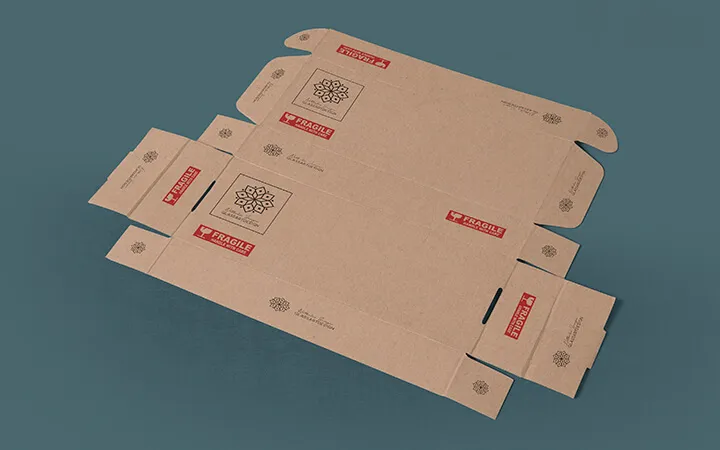
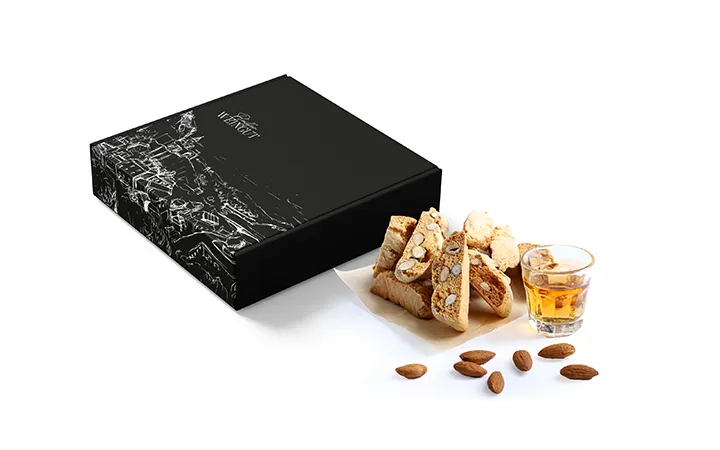
Our sample box showcases our ability to produce diverse packaging types with consistent quality, demonstrating how standardized processes can still yield customized results.

Scheduling Strategies for Efficiency
Smart production scheduling minimizes changeovers and maximizes throughput. The way you sequence your packaging runs can significantly impact overall efficiency and output. Product families grouped together reduce setup changes by running similar items consecutively. This approach minimizes adjustments between runs, as similar products often use similar materials, sizes, or printing requirements. Color sequencing from light to dark colors reduces cleaning time between runs, as darker colors can cover lighter ones but not vice versa. This strategy is particularly valuable for printing operations where color changes require thorough cleaning.
Grouping production jobs that use similar substrates can reduce the number of material changes required during a production schedule. Fewer changes may shorten set-up times and reduce material losses associated with machine adjustments and start-up procedures, depending on the equipment and production conditions. Where appropriate, arranging jobs by packaging size can also simplify machine adjustments and improve production efficiency.
Measuring Success and Continuous Improvement
Effective improvement requires consistent measurement and ongoing refinement of processes. Without clear metrics and systematic approaches to enhancement, it's impossible to know if your efficiency efforts are succeeding.
Key Performance Indicators for Packaging Efficiency
Track these metrics to evaluate your packaging operation's performance and identify areas for improvement. Overall Equipment Effectiveness (OEE) combines availability, performance, and quality into a single metric that provides a comprehensive view of equipment productivity. This industry-standard measurement helps identify losses from downtime, slow cycles, and defects, providing a clear picture of where improvements are needed. Units Per Labor Hour measures workforce productivity by tracking how many packages are completed relative to the labor hours invested. This metric helps evaluate staffing levels and the effectiveness of training and process improvements.
Changeover Time tracks the duration between the last good piece of the previous run and the first good piece of the next run. Reducing this time directly increases available production time and flexibility. First Pass Yield measures the percentage of packages completed correctly on the first attempt, without rework or adjustment. This quality metric highlights process stability and the effectiveness of training and standardization.
Implementing Structured Improvement Cycles
Continuous improvement works best when approached systematically rather than sporadically. The Plan-Do-Check-Act (PDCA) cycle provides a proven framework for testing and implementing improvements. Plan identifies opportunities and develops solutions, using data analysis to understand root causes and designing targeted interventions. This planning phase requires careful consideration of potential impacts and resource requirements.
Do implements changes on a small scale first, testing proposed solutions before full deployment. Pilot testing allows you to validate assumptions and refine approaches without risking entire operations. Check measures results against objectives, collecting data to evaluate whether the change delivered expected benefits. Honest assessment of results, even when they don't meet expectations, provides valuable learning.
Act standardizes successful changes and addresses shortcomings. When improvements prove effective, document them as new standard procedures and train all relevant personnel. If results fall short, analyze why and either modify the approach or try different solutions. Regular PDCA cycles create momentum for improvement while building organizational capability to solve problems systematically.
Benchmarking and Industry Best Practices
Looking beyond your own operations provides perspective on what's possible and identifies improvement opportunities you might not discover internally. Industry benchmarking compares your performance metrics against similar operations, revealing gaps and setting improvement targets. Professional associations, industry publications, and peer networks provide access to comparative data.
Facility tours and site visits to other operations expose your team to different approaches and technologies. Seeing how others solve similar challenges sparks ideas and demonstrates that improvements are achievable. Cross-industry learning brings fresh perspectives by examining how other sectors address similar issues. Packaging innovations from food, pharmaceutical, or consumer goods industries can often be adapted to your specific situation.
Technology monitoring keeps you informed about emerging tools and techniques that could enhance your operations. Trade shows, supplier partnerships, and industry publications help you stay current with packaging innovations. However, adopting new technology should always be driven by specific needs rather than chasing the latest trends.
Conclusion: Building Your Path to Packaging Excellence
Streamlining packaging processes requires a comprehensive approach that addresses multiple aspects of your operation simultaneously. From conducting thorough process audits and implementing lean principles to selecting appropriate materials and equipment, each element contributes to overall efficiency. The strategies outlined in this guide provide a roadmap for transforming your packaging operations from basic functionality to competitive advantage.
Success in packaging optimization isn't achieved through a single dramatic change but through consistent attention to detail and systematic improvement. Whether you're implementing 5S workplace organization, reducing changeover times with SMED methodology, or developing comprehensive training programs, each improvement builds upon previous gains. The key lies in establishing clear metrics, engaging your workforce, and maintaining commitment to continuous enhancement.
At Labelprint24, we understand that efficient packaging operations require more than just quality materials—they demand partnership with suppliers who appreciate your challenges and support your improvement initiatives. Our comprehensive range of cardboard packaging solutions, labels, and flexible packaging options provides the foundation for streamlined operations across diverse industries and applications.
The packaging landscape continues to evolve with advancing technology and changing customer expectations. Organizations that invest in optimizing their packaging processes today position themselves for long-term success in an increasingly competitive marketplace. By applying the principles and techniques discussed in this guide, you can reduce costs, improve quality, enhance customer satisfaction, and build operational resilience that supports your business growth for years to come.
Remember that packaging efficiency is not a destination but a continuous journey. Regular assessment of your operations, openness to new approaches, and willingness to learn from both successes and setbacks will keep your packaging processes at the forefront of industry best practices. Start with a thorough evaluation of your current state, prioritize improvements that offer the greatest impact, and build momentum through early successes that demonstrate value to your organization. With commitment and systematic application of proven methodologies, your packaging operation can achieve levels of efficiency, quality, and flexibility that directly contribute to your competitive advantage and bottom-line performance.