



 BY Christoph Zumdick IN Industry knowledge
Label Material Comparison: Finding the Perfect Match for Your Product
Introduction to Label Materials
Choosing the right label material is one of the most important decisions you'll make for your product packaging. The material you select affects not just how your label looks, but how well it performs throughout your product's lifecycle. Whether you're labeling food products, cosmetics, or industrial items, different applications require specific materials to achieve the best results. The right material choice can enhance your brand image, ensure regulatory compliance, and protect your product information in challenging environments.
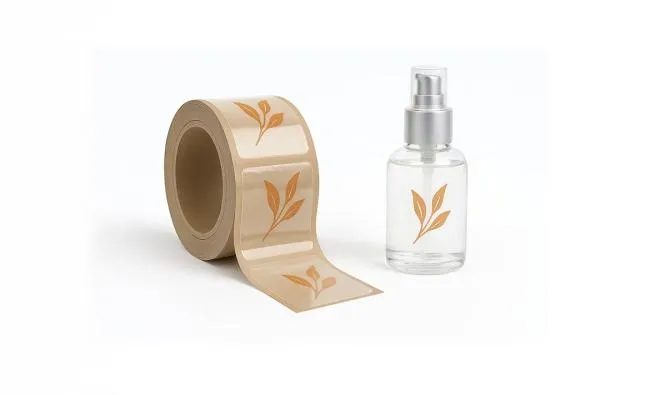
When we talk about labels, we're actually discussing a system with three main parts: the facestock (the surface you print on), the adhesive layer (the sticky part), and the release liner or backing (what protects the adhesive until you use the label). Each of these components plays an important role in how your label works in different environments. The facestock determines printability and durability, the adhesive affects how well the label sticks to various surfaces, and the liner influences application efficiency. Our printed labels on roll come in many different materials to match what your product needs.
In this guide, we'll look at the different types of label materials available, what makes them special, and how to pick the right one for your specific product. We'll also talk about how different environments affect labels and what to consider when making your choice. By understanding the properties of various materials, you can make an informed decision that balances performance requirements, aesthetic considerations, and budget constraints to create the perfect label solution for your products.
Paper vs. Film: Understanding the Fundamental Difference
The first big choice you'll need to make when selecting label materials is between paper and film. These two options have very different properties that make them suitable for different uses. Understanding the fundamental differences between these material categories will help you narrow down your options and focus on materials that are most likely to meet your specific requirements.
Paper-Based Label Materials
Paper labels are popular because they're affordable and work well for many everyday products. They print beautifully, allowing for high-quality graphics and text. Paper materials typically offer excellent ink absorption and color reproduction, making them ideal for applications where print quality is paramount. Additionally, paper labels have a natural, traditional appearance that works well for certain brand aesthetics, particularly in food, beverage, and craft product categories. Our blank labels on roll include paper options that give you a versatile base for printing your own labels, whether you're using thermal transfer printing or other methods.
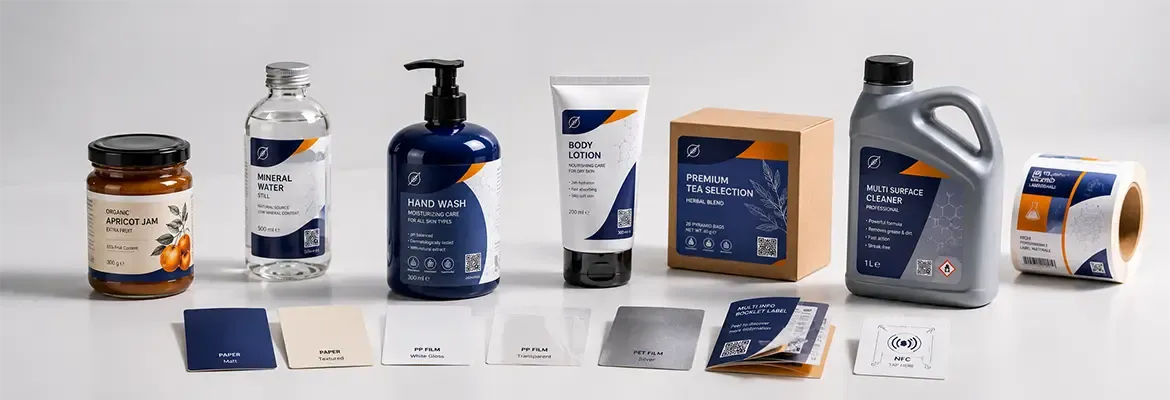
Paper labels work best for indoor applications where they won't be exposed to water, chemicals, or rough handling. They come in different finishes like matte, glossy, and textured, letting you choose the look that matches your brand. The variety of finishes available allows for creative design options, from understated elegance to eye-catching brilliance. However, it's important to note that paper labels do have limitations in terms of durability and environmental resistance, making them less suitable for products that will face challenging conditions.
The main features of paper labels include:
- Great printability for detailed graphics and text, allowing for fine details and small text to be reproduced clearly
- Cost-effective for small to medium print runs, making them accessible for businesses of all sizes
- Available in different finishes (matte, gloss, textured) to match various brand aesthetics and product positioning
- Limited resistance to moisture, tearing, and scratching, requiring additional protection in challenging environments
- Best for indoor use and dry environments where exposure to moisture and physical stress is minimal
- Excellent opacity that prevents show-through on dark containers

Film-Based Label Materials
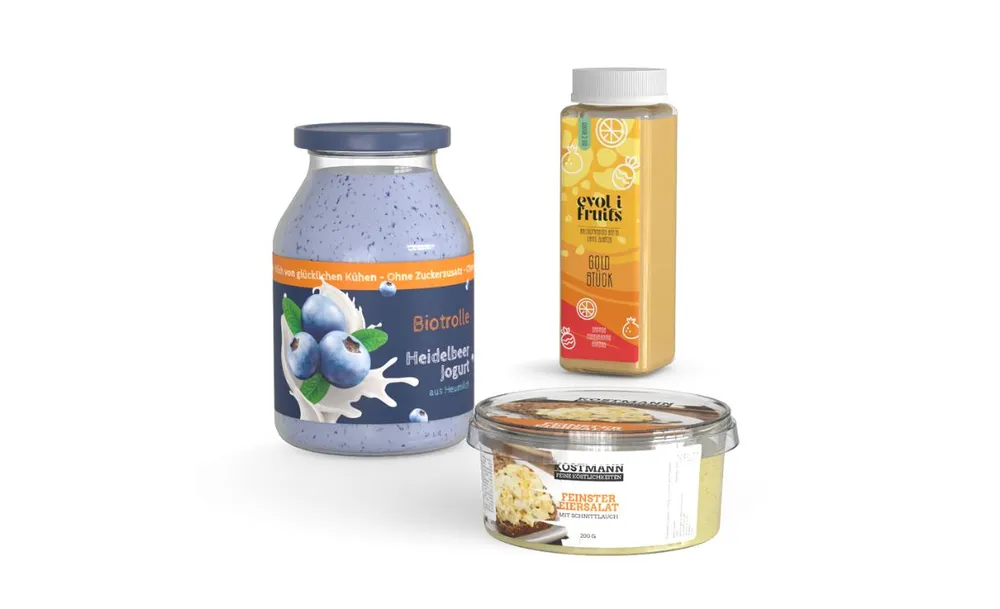
Film labels are made from synthetic materials like polypropylene (BOPP), polyester (PET), and vinyl (PVC). They're much more durable than paper labels and can handle tough conditions like moisture, chemicals, and temperature changes. These materials offer superior resistance to tearing, scratching, and environmental factors, making them ideal for products that will face challenging conditions. Film labels also provide design versatility with options ranging from completely transparent "no-label look" applications to opaque white or metallic finishes for premium product positioning.
If your products will be stored in the refrigerator, used in the bathroom, or kept outdoors, film labels are usually a better choice. The molecular structure of these synthetic materials creates a barrier against water and other substances, preventing the degradation that paper labels would experience in similar conditions. Film labels also tend to have greater conformability, allowing them to adhere smoothly to curved or irregular container surfaces without wrinkling or bubbling.
The main features of film labels include:
- Excellent durability and longevity, often lasting the entire product lifecycle without degradation
- Resistance to moisture, chemicals, and UV light, maintaining appearance and legibility in challenging environments
- Flexible and can conform to curved surfaces, providing smooth application on complex container shapes
- Available in clear, white, or metallic finishes to achieve different visual effects and brand positioning
- Higher cost compared to paper labels, though this may be offset by improved performance and longevity
- Perfect for products exposed to challenging environments such as refrigeration, moisture, or outdoor conditions
- Superior resistance to oils and greases, making them ideal for food products, cosmetics, and industrial applications
- Excellent print receptivity with the right ink systems, allowing for vibrant, long-lasting graphics
Our transparent cosmetic labels offer an invisible elegance with a seamless look that enhances your product's appearance while providing the durability needed for cosmetic applications. These clear film labels create the illusion that printing is directly on the container, creating a premium, sophisticated appearance that elevates your brand perception.
Detailed Comparison of Common Label Materials
Let's take a closer look at the most common label materials and compare their properties and ideal uses. Each material has distinct characteristics that make it suitable for specific applications and environments. Understanding these differences will help you select the optimal material for your particular labeling needs.
Standard Paper
Standard paper labels are uncoated and have a natural, matte appearance. They're economical but don't hold up well to moisture or rough handling. The uncoated surface provides excellent ink absorption, resulting in rich, saturated colors when printed. However, without a protective coating, these labels are susceptible to smudging, scratching, and water damage. The natural paper texture can be appealing for certain products, particularly those with an artisanal or handcrafted brand identity.
Best for: Indoor product labeling, shipping labels, and temporary applications where durability isn't a major concern. Standard paper works well for dry goods, boxed products, and items that will remain in controlled environments. The cost-effectiveness of these materials makes them particularly suitable for high-volume applications where labels will not be exposed to challenging conditions.
Coated Paper
Coated paper labels have a layer of coating that improves printability and gives some protection against moisture. They come in gloss, semi-gloss, and matte finishes, offering more options for your brand's look. The coating creates a smoother surface for printing, resulting in sharper images and text compared to uncoated papers. While not as durable as film materials, coated papers offer a good balance of cost-effectiveness and performance for many common applications. The coating also provides a modest barrier against moisture and scuffing.
Best for: Food products, beverages, retail products, and applications requiring better print quality than standard paper. Coated papers are particularly well-suited for products that need attractive, high-quality graphics but won't be exposed to extreme conditions. Wine bottles, specialty food packages, and premium retail products often use coated paper labels to achieve an upscale appearance at a reasonable cost.

Polypropylene (BOPP)
Biaxially Oriented Polypropylene (BOPP) is a versatile film material that offers good moisture resistance, flexibility, and conformability. It's available in clear, white, and metallic finishes, giving you options for different product looks. BOPP provides excellent durability at a moderate price point, making it one of the most widely used film materials in the labeling industry. The biaxial orientation process creates a material with excellent dimensional stability and tensile strength, allowing the labels to maintain their shape and position even when exposed to varying environmental conditions.
Best for: Squeeze bottles, cosmetics, personal care products, beverages, and products exposed to moisture. BOPP labels are particularly well-suited for applications requiring a balance of durability and flexibility. Their ability to conform to curved surfaces makes them ideal for bottles and containers with complex shapes. The moisture resistance of BOPP makes it appropriate for products used in bathrooms, kitchens, or refrigerated environments where exposure to condensation is likely.
Our shampoo labels are designed to stick securely to shampoo bottles – even in moist conditions – making them perfect for bathroom environments where humidity is a constant challenge. These specialized labels utilize BOPP film with moisture-resistant adhesives to ensure they remain firmly attached and visually appealing throughout the product's use.
Polyester (PET)
Polyester labels offer exceptional durability, temperature resistance, and dimensional stability. They can withstand extreme conditions and are resistant to chemicals, scratching, and tearing. PET film is one of the most robust label materials available, with outstanding resistance to heat, cold, and harsh environmental factors. The molecular structure of polyester creates a material that maintains its integrity even when exposed to oils, solvents, and many industrial chemicals. Additionally, polyester labels have excellent dimensional stability, meaning they resist stretching or shrinking when exposed to temperature changes.
Best for: Industrial applications, durable goods, electronics, automotive parts, and products exposed to harsh environments or chemicals. Polyester labels are the material of choice when maximum durability is required. They're commonly used for asset tracking, equipment identification, under-hood automotive applications, and other scenarios where labels must survive for years in challenging conditions. Their temperature resistance makes them suitable for applications involving heat exposure, such as appliance labels or products that undergo heat sterilization.
Vinyl (PVC)
Vinyl labels are thick, flexible, and highly durable. They offer excellent outdoor performance and can withstand exposure to UV light, moisture, and temperature changes. The flexibility of vinyl makes it particularly well-suited for application to irregular or textured surfaces where more rigid materials might not conform properly. Vinyl also has excellent resistance to abrasion and many chemicals, making it appropriate for applications where labels will face physical contact or exposure to cleaning products. Additionally, vinyl materials can be formulated to provide specific properties such as removability or extreme weather resistance.
Best for: Outdoor equipment, safety labels, industrial applications, and products requiring long-term durability in challenging environments. Vinyl labels are particularly valuable for outdoor applications due to their exceptional UV resistance and weatherability. They're commonly used for equipment identification, safety warnings, and product labeling in construction, agriculture, and other outdoor industries. The conformability of vinyl makes it ideal for textured surfaces or applications requiring the label to stretch or flex with the substrate.
Specialized Label Materials for Specific Applications
Beyond the standard materials, there are several specialized options available for specific applications and requirements. These materials are engineered to address particular challenges or provide enhanced functionality for certain types of products. Understanding these specialized options can help you find the perfect solution for unique labeling needs that standard materials might not adequately address.
Thermal Transfer Materials
Thermal transfer labels are designed to work with thermal transfer printers, which use heat to transfer ink from a ribbon onto the label surface. These materials offer excellent print quality and durability. The thermal transfer printing process creates images that are resistant to smudging, scratching, and fading, making it ideal for applications requiring long-lasting legibility. Thermal transfer materials are available in both paper and film options, with surfaces specifically engineered to receive and retain the transferred ink. This printing method allows for high-resolution barcodes, fine text, and detailed graphics with excellent edge definition.
Our thermal transfer wax/resin ribbons are suitable for all printers with Flat-Head heads and provide excellent print quality for your label applications. With a core diameter of 26 mm / 1 inch, these ribbons work with most standard thermal transfer printers. The wax/resin formulation offers a balance of print quality and durability, making it suitable for a wide range of applications where labels need to withstand moderate handling and environmental exposure.
Multi-Layer and Booklet Labels
For products that need to include a lot of information in a limited space, multi-layer and booklet labels offer an innovative solution. These labels provide additional printed surfaces while maintaining a clean, professional appearance. Multi-layer labels consist of two or more layers that can be peeled back to reveal additional information, while booklet labels incorporate multiple pages in a booklet format attached to the product. These specialized formats are particularly valuable for products requiring extensive regulatory information, multilingual content, or detailed instructions that wouldn't fit on a standard label.
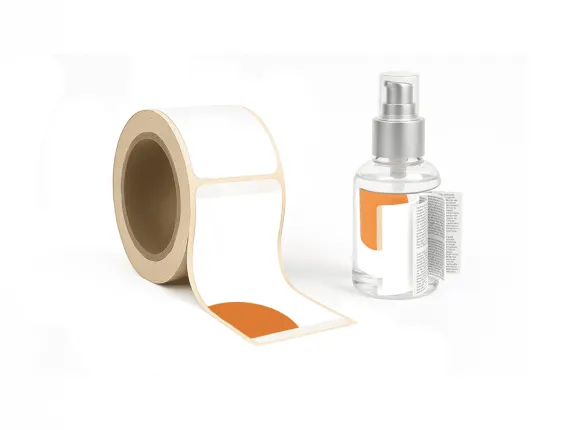
Our multi-layer labels with 3 printed pages provide many different possibilities for effective product labeling. They're perfect for products that need more space for information and can be designed to stick on, remove, or reattach as needed. These innovative labels allow you to include comprehensive product details, usage instructions, and regulatory information without cluttering your packaging design or compromising your brand aesthetics.
For even more information space, our booklet labels for cosmetic products offer plenty of room in a compact format. These labels are perfect for including detailed ingredient lists, multiple languages, and regulatory information without making your product look cluttered. The booklet format allows for organized presentation of information in a way that consumers can easily navigate, enhancing the user experience while meeting compliance requirements. These specialized labels maintain a clean, professional appearance on the shelf while providing access to all necessary information.
Label Materials for Specific Industries
Different industries have unique requirements for their label materials. Let's explore some industry-specific considerations that influence material selection and performance requirements. Each industry faces distinct challenges related to regulatory compliance, usage environments, and consumer expectations that must be addressed through appropriate material choices.
Food and Beverage Label Materials
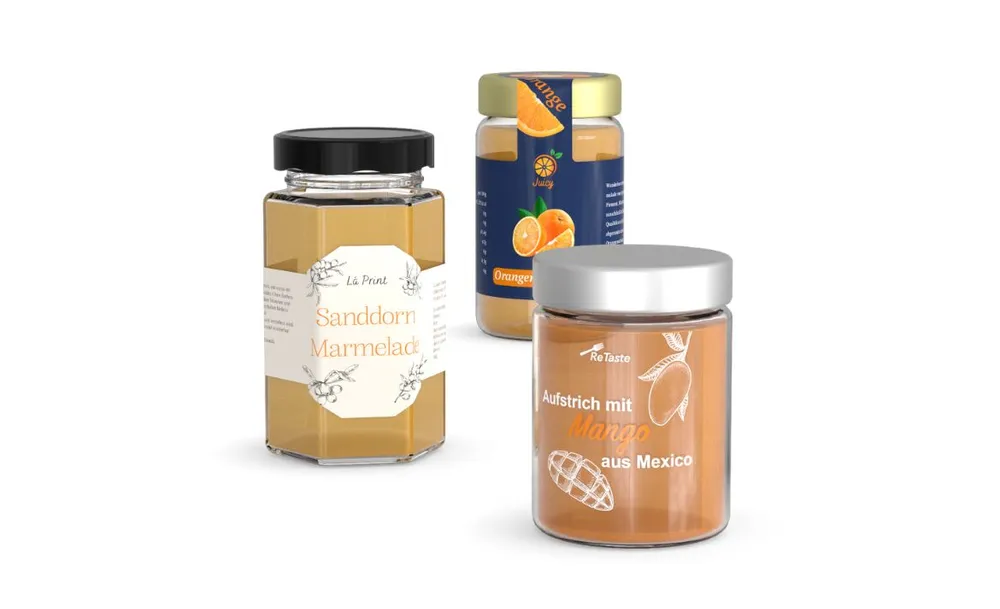
Food and beverage labels must comply with regulatory requirements while withstanding various conditions, including refrigeration, moisture, and oil exposure. Materials used in food labeling must meet FDA standards for indirect food contact and often need to perform in challenging environments such as refrigerators, freezers, or high-humidity storage. Additionally, these labels may need to resist exposure to oils, water, and other substances commonly found in food products and preparation environments. The visual appeal of food and beverage labels is also crucial, as these products rely heavily on packaging to attract consumers at the point of purchase.
Our food labels are produced with first-class print quality and adhere to strict safety standards. As a HACCP audited supplier of food labels, we use low-migration colors, varnishes, foils, and papers to ensure your food packaging meets all regulatory requirements. Our specialized materials for food applications are designed to maintain their integrity and appearance throughout the product's shelf life, whether stored at room temperature, refrigerated, or frozen.
Key considerations for food and beverage label materials:
- FDA compliance for direct food contact, ensuring safety for consumers and regulatory compliance
- Moisture resistance for refrigerated or frozen products, preventing label degradation in cold storage
- Oil resistance for fatty foods, maintaining adhesion and appearance when exposed to oils and greases
- Temperature resistance for hot-fill applications, preventing label failure during filling processes
- Durability in varying storage conditions, from freezer to room temperature transitions
- Resistance to condensation that can form during temperature changes
- Ability to withstand handling during food preparation and consumption
Cosmetic and Personal Care Label Materials
Cosmetic products often require labels that can withstand exposure to oils, water, and chemicals while maintaining an attractive appearance. The bathroom environment presents particular challenges, with high humidity, frequent handling, and exposure to various personal care products that may contain oils, alcohols, and other substances that can degrade standard labels. Additionally, cosmetic products often use packaging as a key brand differentiator, requiring labels that enhance rather than detract from the product's premium positioning. Clear labels that create a "no-label look" are particularly popular in this industry, allowing the product formulation to be visible while still providing necessary information.
Our transparent cosmetic labels offer invisible elegance with a seamless look that enhances your product's appearance. These labels are available in custom shapes for small to large runs and feature high-quality printing that can be individually configured to match your brand aesthetic. The clear film material creates a sophisticated "no-label look" that allows your product and packaging to take center stage while still providing necessary information and branding elements.
Key considerations for cosmetic label materials:
- Resistance to oils, water, and chemicals found in cosmetic formulations and bathroom environments
- Attractive appearance and finish options that enhance rather than detract from product aesthetics
- Conformability to curved containers, which are common in cosmetic packaging
- Durability in bathroom environments (humidity, frequent handling, exposure to various products)
- Space for regulatory information (ingredients, warnings) while maintaining brand appeal
- Clarity and transparency options for creating premium "no-label look" applications
- Resistance to smudging from oils transferred during handling
- Ability to withstand repeated exposure to water and cleaning products
Wine and Beverage Label Materials
Wine and beverage labels often serve as a key marketing element, requiring materials that offer both aesthetic appeal and practical functionality. The beverage industry faces unique challenges, including condensation from refrigeration, exposure to ice buckets, and the need for labels to maintain their appearance and adhesion throughout the product's consumption cycle. Premium beverages in particular rely heavily on label appearance to convey quality and justify higher price points. Wine labels specifically must often balance traditional aesthetics with practical performance requirements, including resistance to both dry and wet conditions.
Our sparkling wine labels are designed to convey a feeling of luxury and premium quality. Available in both foil and paper materials with high-quality finishes, these labels help your sparkling wine products stand out on the shelf. We offer various material options specifically engineered to withstand the challenging conditions these products face, including ice bucket immersion, condensation from refrigeration, and the pressure changes that can affect label adhesion on sparkling wine bottles.

Key considerations for wine and beverage label materials:
- Ice bucket performance (water and ice resistance) for products served chilled
- Condensation resistance to prevent label deterioration when removed from refrigeration
- Premium appearance (textured papers, foils, embossing) to convey quality and brand positioning
- Adhesion to glass surfaces, which can be challenging due to their smooth, non-porous nature
- Resistance to scuffing during shipping and handling to maintain appearance at point of purchase
- Ability to withstand pressure changes in carbonated beverages that can affect label adhesion
- Color stability when exposed to light, particularly for products with long shelf display times
Adhesive Types and Their Performance
The adhesive layer is a critical component of any label, determining how well it sticks to various surfaces and performs under different conditions. Adhesive selection is often as important as facestock selection, as even the most durable material will fail if the adhesive doesn't perform properly. Different adhesive formulations are designed to address specific application challenges, container materials, and environmental conditions. Understanding adhesive properties is essential for ensuring your labels remain securely attached throughout your product's lifecycle.
Permanent Adhesives
Permanent adhesives are designed to create a strong bond that remains intact throughout the product's lifecycle. They're difficult to remove without damaging the label or leaving adhesive residue. These adhesives continue to build strength over time, creating an increasingly secure bond with the substrate. Permanent adhesives are formulated with various properties to address specific application requirements, including initial tack (how quickly and strongly they adhere upon application), ultimate adhesion (the final bond strength after curing), and resistance to various environmental factors like temperature, moisture, and UV exposure.
Best for: Products that require long-term labeling, security applications, and items not intended for relabeling. Permanent adhesives are ideal for product identification, warning labels, instructional information, and any application where label removal would be problematic or undesirable. They're also suitable for applications where the label must remain intact despite exposure to challenging environmental conditions or frequent handling.
Removable Adhesives
Removable adhesives provide sufficient adhesion while allowing the label to be removed cleanly without damaging the surface or leaving residue. These specialized formulations maintain a consistent, moderate adhesion level over time rather than building strength like permanent adhesives. This allows for intentional removal when needed while still providing enough adhesion to keep the label securely in place during normal use. Removable adhesives are engineered to release cleanly from specific surfaces, though their performance can vary depending on the substrate material, texture, and environmental conditions.
Best for: Temporary labeling, promotional items, retail price marking, and applications requiring repositioning or removal. Removable adhesives are valuable for situations where labels need to be changed or updated, such as seasonal promotions, limited-time offers, or products that will be relabeled for different markets. They're also useful for applications where the container will be reused or repurposed after the product is consumed, allowing consumers to easily remove the label without damaging the container.
Cold Temperature Adhesives
Specially formulated to maintain adhesion at low temperatures, these adhesives perform well in refrigerated and frozen environments. Standard adhesives often become brittle and lose tackiness in cold conditions, leading to label failure. Cold temperature adhesives contain specialized polymers and additives that maintain flexibility and adhesive properties even when exposed to freezing temperatures. These formulations must address both application challenges (applying labels to cold surfaces) and performance requirements (maintaining adhesion during cold storage and potential temperature cycling).
Best for: Frozen foods, refrigerated products, cold storage applications, and items applied in cold environments. These specialized adhesives are essential for products that will be stored in freezers or refrigerators, as well as for labeling applications performed in cold facilities. They ensure labels remain securely attached despite the challenging conditions, preventing the costly and problematic issues that can arise when labels detach from products in the cold chain.
How to Select the Right Label Material for Your Application
Choosing the right label material involves considering various factors related to your product, its environment, and your specific requirements. This decision-making process should be systematic and thorough to ensure you select a material that will perform reliably throughout your product's lifecycle while meeting your aesthetic and budgetary requirements. Taking the time to properly evaluate your needs and test potential solutions can prevent costly problems and ensure your labels enhance rather than detract from your products.
Consider Your Product's Surface
The surface material of your product significantly impacts which label material and adhesive will work best:
- Glass and metal surfaces typically require different adhesives than plastic surfaces due to their non-porous, smooth nature and potential for condensation
- Textured surfaces may need more aggressive adhesives or conformable materials to ensure good contact across the entire label area
- Curved surfaces benefit from flexible film materials that can conform without wrinkling or creating air bubbles during application
- Low surface energy plastics like polyethylene and polypropylene require specially formulated adhesives to achieve proper adhesion
- Powder-coated or painted surfaces may interact differently with adhesives compared to bare materials
- Surfaces with varying textures or transitions may require particularly flexible and conformable label materials
Evaluate Environmental Conditions
Consider the conditions your labeled product will face throughout its lifecycle:
- Temperature extremes (both hot and cold) can affect adhesive performance and material stability
- Moisture exposure (humidity, condensation, submersion) can compromise paper materials and some adhesives
- UV light exposure (outdoor applications) can cause fading, yellowing, or material degradation over time
- Chemical exposure (cleaning products, oils, solvents) can degrade certain materials or cause ink to bleed
- Abrasion and handling frequency can wear down printed surfaces or damage less durable materials
- Temperature cycling (moving between hot and cold environments) can stress adhesives and cause label failure
- Storage conditions before application can affect label performance if materials are sensitive to humidity or temperature
- Application conditions (temperature, humidity) can significantly impact initial adhesion and long-term performance
Determine Durability Requirements
How long does your label need to last? Consider:
- Short-term applications (promotional labels, temporary information) may allow for more economical materials with lower durability
- Medium-term applications (most consumer products) require a balance of durability and cost-effectiveness
- Long-term applications (durable goods, industrial equipment, outdoor products) demand highly durable materials despite higher costs
- Regulatory requirements may dictate minimum durability standards for certain information, such as safety warnings or product identification
- Expected handling and usage patterns will influence how much wear and tear the label will experience
- Product lifecycle considerations, including whether the label needs to last beyond the product's consumption or use
- Consequences of label failure, which may be more serious for certain applications (medical devices, safety equipment)
Balance Aesthetics and Functionality
The visual appearance of your label is important, but it must also perform its function effectively:
- Consider the printing method and ink compatibility to ensure optimal print quality and durability
- Evaluate finish options (matte, gloss, textured) to achieve the desired visual effect and brand positioning
- Determine if special effects are needed (foil stamping, embossing) and verify compatibility with your chosen material
- Assess clarity requirements for transparent labels, considering factors like haze, yellowness, and optical clarity
- Balance the desire for premium appearances with practical performance requirements
- Consider how the label will look throughout the product's lifecycle, not just at the point of purchase
- Evaluate how the label material enhances or complements your packaging design and brand identity
- Assess readability requirements, particularly for regulatory information that must remain legible
Our free sample box contains different label types and materials, allowing you to physically examine and test various options before making your final decision. This can be invaluable in selecting the right material for your specific application. The sample box lets you evaluate materials in person, assessing factors like feel, appearance, and performance that can be difficult to judge from descriptions alone.
Testing and Validation
Before committing to a specific label material for a large production run, it's a good idea to test it to make sure it meets your requirements. Testing under actual use conditions can reveal potential issues that might not be apparent from material specifications alone. This validation process helps prevent costly mistakes and ensures your labels will perform as expected throughout your product's lifecycle. Different applications may require different types of testing to properly evaluate material performance.
Adhesion Testing
Apply sample labels to your actual product containers and subject them to the conditions they'll face during use. Check for:
- Initial adhesion (does it stick well right away?), which is particularly important for high-speed application processes
- Long-term adhesion (does it stay stuck over time?), especially after exposure to expected environmental conditions
- Performance under environmental conditions (temperature, moisture, etc.) that your product will encounter
- Edge lift resistance, particularly for labels applied to curved surfaces or exposed to moisture
- Adhesion to difficult substrates specific to your application, such as low surface energy plastics
- Performance during temperature cycling if your product will move between different temperature environments
- Evaluate how the label material enhances or complements your packaging design and brand identity
- Resistance to specific substances your product might be exposed to, such as oils, cleaning products, or chemicals
Print Quality and Durability Testing
Evaluate how well the printed information holds up under various conditions:
- Abrasion resistance (does the print rub off easily?) using standardized tests or simulated handling conditions
- Chemical resistance (does exposure to products or cleaning agents affect the print?) with actual substances the label will encounter
- UV resistance (does the print fade when exposed to light?) through accelerated aging tests or outdoor exposure
- Barcode scannability over time, particularly for labels used in inventory or point-of-sale systems
- Color stability and resistance to fading under expected lighting and storage conditions
- Legibility of fine print and required regulatory information after exposure to expected conditions
Application Methods and Equipment Considerations
The method by which labels are applied to your products can significantly influence your material selection. Different application techniques work better with specific materials and adhesives, and understanding these relationships can help you optimise both your labeling process and label performance. Manual application allows for more flexibility in material choice, whilst automated high-speed application requires materials with specific characteristics to ensure consistent, reliable application without jamming or misalignment.
Manual Application
Manual label application offers the greatest flexibility in material selection since human operators can accommodate variations in material behaviour and make adjustments as needed. However, even manual application benefits from materials that are easy to handle and position accurately. Labels with good dimensional stability and appropriate liner release characteristics make manual application more efficient and reduce waste from application errors. For small production runs or custom applications, manual application may be the most cost-effective approach despite lower throughput rates.
Best materials for manual application: Most paper and film materials work well for manual application, with coated papers and BOPP films being particularly user-friendly. The key considerations are liner release characteristics (not too aggressive or too light) and material flexibility that allows for repositioning if needed without tearing or losing adhesive effectiveness.
Automated Application
High-speed automated labeling equipment requires materials with consistent properties to ensure reliable operation. The label material must have appropriate stiffness to prevent jamming, consistent liner release to enable smooth dispensing, and dimensional stability to maintain registration accuracy. Automated systems also require materials that perform consistently across varying environmental conditions, as production facilities may experience temperature and humidity changes that can affect material behaviour.
Best materials for automated application: Film materials like BOPP and polyester typically perform better in high-speed automated systems due to their dimensional stability and consistent properties. Coated papers can also work well if they have appropriate stiffness and moisture resistance. The adhesive must provide consistent initial tack and buildable bond strength to ensure labels remain properly positioned during high-speed application.
Pressure-Sensitive vs. Heat-Activated Application
Most modern labels use pressure-sensitive adhesives that bond when pressure is applied during labeling. However, some applications benefit from heat-activated adhesives that require elevated temperature during application to achieve full bonding. Heat-activated systems can provide superior initial adhesion and may be necessary for difficult-to-adhere surfaces or extreme service conditions. The choice between these systems affects equipment requirements and material selection significantly.
Cost Considerations and Value Analysis
When evaluating label materials, it's important to consider total cost of ownership rather than just initial material costs. A slightly more expensive material that performs better or lasts longer may provide better value than a cheaper option that requires replacement or causes product failures. Understanding the various cost factors involved in label selection helps you make decisions that optimise both performance and budget requirements.
Direct Material Costs
The immediate cost of label materials varies significantly based on the substrate type, adhesive formulation, and order quantities. Paper materials generally cost less than film materials, but this price difference may be offset by performance benefits in challenging applications. Specialty materials for extreme conditions or unique requirements typically command premium prices, but they may be essential for certain applications where standard materials would fail.
Application and Processing Costs
Different materials may require different printing processes, inks, or application equipment, affecting overall project costs. Some materials work better with specific printing methods, whilst others may require special handling or storage conditions that add to operational costs. High-speed application capabilities can reduce labour costs, but only if the chosen material performs reliably in automated equipment. Pre-printed labels may cost more per unit but can reduce in-house processing requirements and associated costs.
Failure and Replacement Costs
The cost of label failure can far exceed the initial savings from choosing less expensive materials. Failed labels can result in product returns, regulatory compliance issues, brand damage, and customer dissatisfaction. For critical applications like pharmaceuticals, medical devices, or safety equipment, label failure costs can be particularly severe. Evaluating potential failure costs helps justify investment in higher-quality materials when appropriate.
Consider these potential failure scenarios:
- Labels detaching during shipping or storage, leading to unidentifiable products and potential regulatory violations
- Print fading or becoming illegible, making important information unreadable and potentially creating safety hazards
- Adhesive failure in cold storage, resulting in costly relabeling and potential product loss
- Labels degrading in challenging environments, requiring product recalls or customer service interventions
- Barcode scanning failures due to material or print degradation, causing supply chain disruptions
- Aesthetic degradation that damages brand perception and reduces product appeal
Future Trends in Label Materials
The labeling industry continues to evolve with new technologies and changing market demands. Understanding emerging trends can help you make material selections that will remain relevant and effective as your business grows. These developments are driven by factors including technological advances and changing consumer expectations for packaging functionality.
Smart and Functional Labels
Technology integration is creating labels that do more than just provide information. Smart labels can include RFID tags, NFC chips, or QR codes that connect products to digital experiences. Some labels now incorporate colour-changing indicators that show temperature exposure, freshness, or tampering. These functional labels require materials that can accommodate electronic components whilst maintaining traditional label performance characteristics.
Temperature-indicating labels use specialised materials that change colour or appearance when exposed to specific temperature ranges, providing visual confirmation of proper storage conditions. These materials are particularly valuable for pharmaceuticals, biologics, and other temperature-sensitive products where maintaining the cold chain is critical for product efficacy and safety.
Advanced Printing Compatibility
Digital printing technologies continue to advance, requiring materials optimised for these processes. Variable data printing, short runs, and personalised packaging drive demand for materials that work well with digital printing systems. UV-curable inks and LED curing systems require materials with specific surface properties to achieve optimal adhesion and durability. Understanding these technological trends helps ensure your material choices remain compatible with evolving printing capabilities.
Quality Assurance and Standards
Quality standards play a crucial role in label material selection, particularly for regulated industries or applications with specific performance requirements. Understanding relevant standards and testing methods helps ensure your chosen materials will meet both regulatory requirements and performance expectations. Different industries and applications may be subject to various standards that dictate minimum performance criteria for label materials.
Industry-Specific Standards
Food and pharmaceutical industries have specific requirements for materials that may come into contact with products. FDA regulations for food contact materials, pharmaceutical labeling requirements, and medical device standards all influence material selection. These standards often specify allowable materials, migration limits, and performance criteria that labels must meet to ensure product safety and regulatory compliance.
Automotive and industrial applications may require materials meeting specific performance standards for temperature resistance, chemical compatibility, or durability. Understanding these requirements early in the material selection process helps avoid costly changes later and ensures compliance with industry standards and customer specifications.
Testing and Certification
Standardised testing methods provide objective measures of material performance that can guide selection decisions. Tests for adhesion strength, temperature resistance, UV stability, and chemical resistance provide quantifiable data about material capabilities. Third-party testing and certification can provide independent verification of material performance claims and help ensure consistency between suppliers.
Regular quality testing of incoming materials and finished labels helps maintain consistent performance and catch potential issues before they affect products. Establishing testing protocols based on your specific application requirements ensures that materials continue to meet your standards over time, even as suppliers or formulations may change.
Working with Label Suppliers
Choosing the right supplier relationship is as important as selecting the right material. Experienced suppliers can provide valuable guidance on material selection, help troubleshoot application issues, and support your labeling needs as they evolve. The best suppliers act as partners in your success, offering technical expertise and responsive service that adds value beyond just providing materials.
Technical Support and Expertise
Knowledgeable suppliers can help you navigate the complex landscape of material options and identify solutions that meet your specific requirements. They should be able to recommend materials based on your application requirements, suggest alternatives when your first choice isn't optimal, and provide guidance on printing, application, and storage considerations. Technical support becomes particularly valuable when dealing with challenging applications or when problems arise.
Look for suppliers who invest in ongoing technical training and stay current with industry developments. They should be able to explain the technical characteristics of their materials in terms that relate to your specific application and help you understand the trade-offs involved in different material choices.
Quality and Consistency
Consistent material quality is essential for reliable labeling operations. Suppliers should have robust quality control systems that ensure materials meet specifications batch after batch. They should be able to provide certificates of analysis, maintain detailed lot tracking, and respond quickly to quality issues if they arise.
Understanding your supplier's quality systems and capabilities helps you assess their ability to meet your requirements consistently. Suppliers who invest in quality systems and testing capabilities are more likely to provide materials that perform consistently over time.
Service and Responsiveness
Responsive service and reliable delivery are crucial for maintaining efficient labeling operations. Suppliers should be able to provide accurate delivery schedules, communicate proactively about any potential issues, and respond quickly to urgent needs. Technical support should be readily accessible when questions or problems arise.
Consider the supplier's ability to grow with your business and adapt to changing requirements. Suppliers who can handle both small prototype quantities and large production runs provide flexibility as your business evolves. Having backup suppliers or alternative material options helps ensure continuity if primary sources experience problems.
Our promotional labels are available in various materials, making them suitable for brands while still delivering high-quality results. These labels can be produced using various materials and printing processes to align with your brand's commitments while effectively promoting your products or special offers.
Conclusion
Selecting the right label material is a critical decision that affects your product's appearance, regulatory compliance, and overall success in the marketplace. The perfect material choice balances performance requirements, aesthetic considerations, environmental factors, and cost constraints to create a solution that enhances your product throughout its lifecycle. By understanding the characteristics of different materials, evaluating your specific application requirements, and working with knowledgeable suppliers, you can make informed decisions that support your business objectives.
Remember that the cheapest material option is rarely the best value when all factors are considered. Failed labels can result in significant costs through product returns, regulatory issues, and brand damage that far exceed any initial savings from choosing inferior materials. Investing in appropriate testing and validation before large production runs can prevent costly problems and ensure your labels perform as expected in real-world conditions.
The labeling industry continues to evolve with new materials and technologies. Staying informed about these developments and maintaining relationships with knowledgeable suppliers helps ensure your labeling solutions remain effective and compliant as requirements change. Consider future needs and growth plans when making material selections to avoid costly changes later.
Whether you're labeling food products that must withstand refrigeration, cosmetics that face bathroom humidity, or industrial products requiring extreme durability, the right material choice is available. Take advantage of resources like our free sample box to evaluate materials physically before making final decisions. Work with suppliers who can provide technical support and guidance throughout the selection and implementation process.
By following the guidance in this comprehensive guide and carefully evaluating your specific requirements, you can select label materials that not only meet your immediate needs but also support your long-term success. The perfect label material is out there waiting to enhance your product and strengthen your brand – take the time to find it through careful analysis, proper testing, and informed decision-making.