



 BY Christoph Zumdick IN Industry knowledge
Professional Label Application Techniques: A Comprehensive Guide
Introduction to Professional Label Application
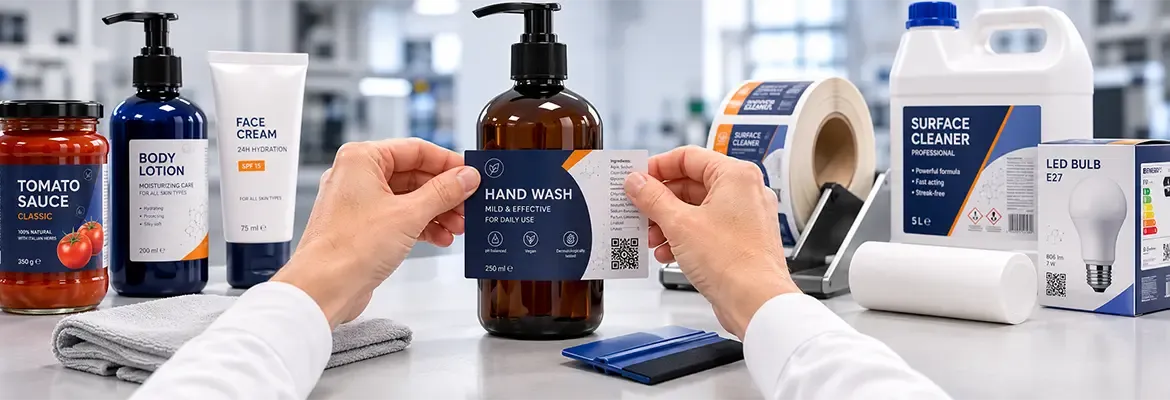
Labels serve as the face of your product, communicating essential information whilst enhancing brand identity. At Labelprint24, we understand that even the highest quality labels can fail to perform if applied incorrectly. Proper label application techniques ensure your products maintain their professional appearance whilst maximising adhesion longevity.
Whether you're labelling food products, cosmetics, chemicals, or packaging materials, mastering the fundamentals of label application can help save time, minimise application errors and reduce the number of labels that need to be discarded due to incorrect placement or poor adhesion. This guide explores professional techniques for various label types across different industries, providing expert insights into the science and art of label application that can transform your product presentation and operational efficiency.
Understanding Label Components for Optimal Application
Before discussing application techniques, it's important to understand the components that make up a label. Each component affects how the label should be applied and performs after application.
Facestock Materials and Their Application Requirements
The facestock is the printable surface of the label and can be made from various materials including paper, film, or foil. Each material has unique properties that influence application techniques:
Paper Labels: Typically more absorbent and less flexible, requiring careful handling during application to prevent tearing. Ideal for dry environments and short-term use. Paper labels may also require additional consideration for moisture exposure as they can absorb humidity from the environment, potentially causing curling or premature degradation if not properly sealed.
Film Labels: Made from materials like polypropylene or polyester, these labels offer greater durability and flexibility. Our booklet labels for cosmetic products utilise film materials that conform well to curved surfaces, making them perfect for bottles and containers. Film labels typically require less application pressure than paper labels and offer superior resistance to moisture, oils, and chemicals, making them ideal for products exposed to challenging environments.
Specialised Materials: For unique applications like chemical labelling, we offer materials that resist acids, solvents, and alkalis, ensuring your safety information remains legible throughout the product's life. These specialised materials often incorporate synthetic polymers with enhanced chemical resistance properties and may require specific application techniques to ensure proper adhesion in extreme environments.

Adhesive Types and Their Application Considerations
The adhesive layer is crucial for proper label application and performance. Different adhesives require specific application techniques:
Permanent Adhesives: These provide the strongest bond and are ideal for products that need long-term labelling. When applying permanent adhesive labels, precision is critical as repositioning is limited. Permanent adhesives typically achieve 80-90% of their ultimate bond strength within 24 hours, but complete curing may take up to 72 hours depending on environmental conditions and substrate material.
Removable Adhesives: These allow for repositioning and clean removal. They require less pressure during application but still need proper surface contact. Removable adhesives are engineered to maintain a consistent low-tack level over time, making them ideal for temporary labelling applications, promotional materials, or products that will be relabelled during their lifecycle.
Temperature-Specific Adhesives: Some adhesives are formulated for extreme temperatures. Cold-temperature adhesives, for example, maintain their tackiness in refrigerated or frozen environments, whilst high-temperature adhesives resist melting or oozing in hot conditions. These specialised formulations often require specific application techniques—cold-temperature adhesives typically need to be applied at room temperature before the product enters cold storage, whilst high-temperature adhesives may need additional curing time before exposure to elevated temperatures.
Surface Preparation: The Foundation of Successful Label Application
The most overlooked aspect of label application is proper surface preparation. No matter how high-quality the label or adhesive, an improperly prepared surface will result in poor adhesion.
Cleaning Techniques for Different Container Materials
Different container materials require specific cleaning approaches:
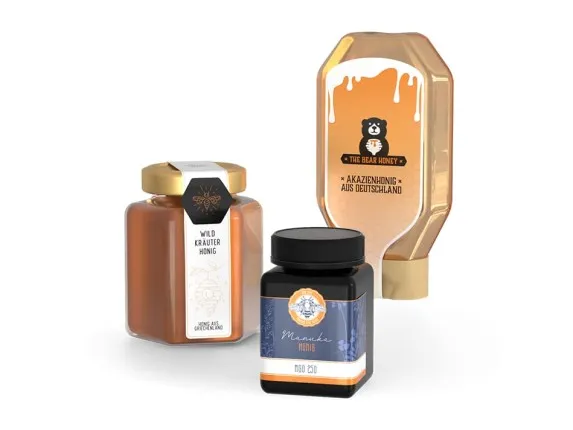
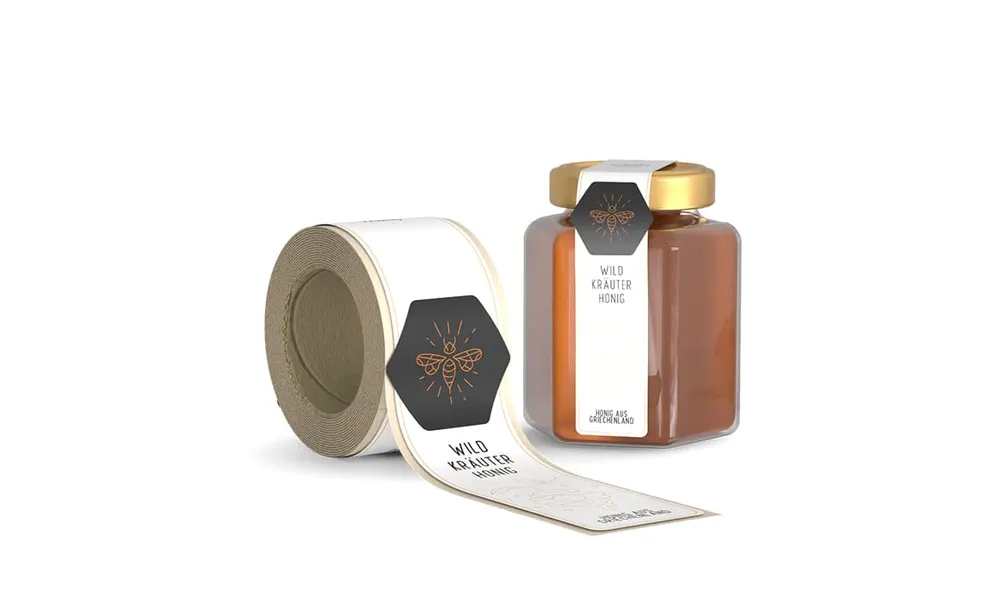
Glass Containers: Clean with isopropyl alcohol to remove oils, fingerprints, and residues. For honey labels and other food products packaged in glass, ensuring a pristine surface is essential for both adhesion and regulatory compliance. Glass surfaces should be completely dry before application, as even microscopic water droplets can interfere with adhesive bonding. For heavily contaminated glass, a two-step cleaning process using a mild detergent followed by an alcohol rinse may be necessary.
Plastic Containers: Some plastics may be sensitive to certain cleaning agents. Use mild soap and water, followed by a thorough rinse and complete drying. For products like shampoo bottles, proper cleaning prevents the "crawling" effect where labels fail to adhere properly. Different plastic polymers (PET, HDPE, PP, etc.) may have varying surface energies that affect adhesion, so it's important to match your adhesive to the specific plastic type. For low surface energy plastics like polyethylene or polypropylene, a specialised primer may be necessary to promote adhesion.
Metal Containers: Remove any manufacturing oils with appropriate degreasers before label application. Metal surfaces often have invisible residues from the manufacturing process that can significantly impair adhesion. For aluminium containers, a mild alkaline cleaner followed by thorough rinsing works well, whilst stainless steel may require specialised metal cleaners to remove microscopic contaminants and optimise the surface for label adhesion.
Temperature and Humidity Considerations
Environmental factors significantly impact label application success:
Optimal Application Temperature: Most pressure-sensitive labels perform best when applied at temperatures between 10°C and 40°C (50°F and 104°F). Within this range, the adhesive maintains optimal flow properties that allow it to wet out and bond properly to the substrate. Application at temperatures outside this range can dramatically reduce initial tack and ultimate adhesion strength, potentially leading to premature label failure.
Surface Temperature: The container surface should be at room temperature. Cold surfaces can cause condensation, whilst hot surfaces might activate the adhesive prematurely. The ideal surface temperature is typically between 15°C and 25°C (59°F and 77°F), which allows the adhesive to flow properly and establish a strong initial bond. For products coming directly from manufacturing processes that involve heating or cooling, allow sufficient time for temperature equilibration before label application.
Humidity Effects: High humidity can affect both paper labels and adhesive performance. Aim for relative humidity between 40% and 60% for optimal results. Excessive humidity can cause paper labels to absorb moisture and expand, potentially leading to wrinkling or bubbling after application. Conversely, extremely low humidity environments can generate static electricity that interferes with proper label positioning and causes dust attraction to adhesive surfaces, compromising bond strength.
Environmental Conditions for Optimal Label Application
Manual Label Application Techniques
For small to medium production runs or speciality products, manual label application remains common. Mastering these techniques ensures professional results even without specialised equipment.
Hand Application Best Practices
Follow these steps for optimal manual label application:
1. Prepare the workspace: Ensure a clean, well-lit area with appropriate temperature and humidity. Proper lighting is essential for accurate label placement, whilst maintaining consistent environmental conditions prevents adhesive performance issues. Consider using a dedicated application station with appropriate ergonomic design to reduce operator fatigue and improve consistency.
2. Handle labels correctly: Touch only the edges or backing, never the adhesive surface. Fingerprints and oils from skin can significantly reduce adhesive performance and create visible imperfections. For delicate or high-value labels, consider using lint-free cotton gloves to further prevent contamination during handling.
3. Peel technique: For small labels, peel the entire backing at once. For larger labels, peel partially and align before removing the rest of the backing. This "hinge method" allows for precise positioning whilst minimising the risk of premature adhesion or label damage. For very large labels, consider using a second person to help maintain proper tension and alignment during application.
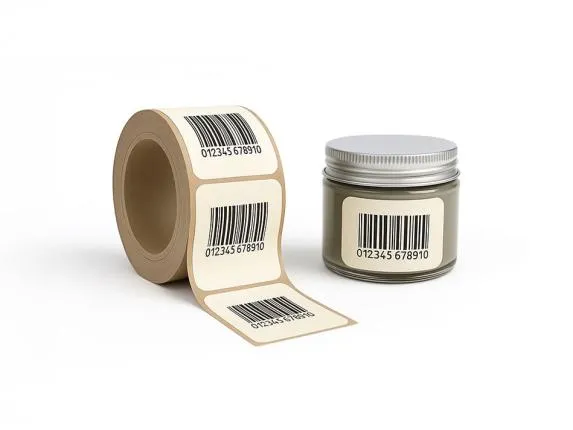
4. Alignment tools: Use alignment guides, jigs, or templates to ensure consistent placement, especially important for products like barcode labels for cosmetic products where scanning accuracy depends on proper placement. Custom application jigs can be created for specific container shapes to dramatically improve consistency and reduce application time across production runs.
5. Application pressure: Apply firm, even pressure from the centre outward to prevent air bubbles. A squeegee, roller, or specialised application tool can help distribute pressure evenly. The correct amount of pressure is crucial—too little results in poor adhesion, whilst excessive pressure might distort the label or damage delicate containers.
Techniques for Different Container Shapes
Container geometry affects application approach:
Cylindrical Containers: Start by aligning the label's centre with a marked point on the container. Apply the centre first, then smooth outward toward the edges, rotating the container as you go. For larger cylindrical containers, consider using a label applicator roller that maintains consistent pressure whilst conforming to the curved surface. The rotation speed should be steady and controlled to prevent label distortion or misalignment.
Flat Surfaces: Use a squeegee or application tool to apply pressure from the centre outward, preventing air bubbles. For large flat surfaces, consider using a wide squeegee with even pressure distribution. The application motion should follow a consistent pattern—typically from top to bottom or from centre outward—to ensure all areas receive adequate pressure and to systematically eliminate air pockets.
Tapered Containers: These require special attention as labels must conform to changing diameters. Apply from the smaller end to the larger end to prevent wrinkling. For severely tapered containers, consider using more flexible label materials or custom-shaped labels designed specifically for the container geometry. In some cases, strategic slits or cuts in the label backing can help it conform to complex tapered shapes.
Textured Surfaces: Additional pressure and sometimes heat may be required to ensure adhesion to textured surfaces. For heavily textured surfaces, consider using thicker, more conformable label materials with aggressive adhesives specifically formulated for rough surfaces. Heat guns or warm air blowers can temporarily increase adhesive flow properties, allowing better penetration into surface textures for improved mechanical bonding.
Automated Label Application Systems
For medium to high-volume production, automated label application systems offer consistency, speed, and reduced labour costs.
Types of Label Application Equipment
Various automated systems serve different production needs:
Tabletop Label Applicators: Semi-automated systems ideal for small to medium production runs, offering precision at an affordable price point. These machines typically require an operator to place and remove containers but automate the actual label application process. Modern tabletop applicators often feature digital controls for precise label positioning, adjustable application speeds, and the ability to handle various container shapes with minimal changeover time.
In-Line Automatic Labellers: Fully integrated into production lines, these systems apply labels at high speeds with minimal operator intervention. These sophisticated machines can handle multiple label placements on a single container and often incorporate vision systems for quality control. Advanced models can achieve application speeds of several hundred containers per minute whilst maintaining placement accuracy within fractions of a millimetre.
Print and Apply Systems: Combine printing and application in one step, ideal for variable information like batch codes or expiration dates. These systems are particularly valuable in industries with strict traceability requirements or frequent product changeovers. Modern print-and-apply systems incorporate high-resolution thermal transfer or digital printing technologies capable of producing barcode, text, and graphic elements on-demand immediately before application.
Setting Up Automated Systems for Optimal Performance
Proper setup ensures consistent results:
Label Roll Configuration: The Toshiba TB-EX4T2 thermal transfer printer and similar equipment require specific roll configurations. Factors include core size (typically 1-inch or 3-inch), outside diameter, and unwind direction. Improper roll configuration can lead to feeding issues, registration problems, and increased downtime. Most automated systems also have specific requirements for label gap distance, backing material thickness, and roll tension that must be precisely configured for optimal performance.
Sensor Calibration: Proper gap, black mark, or transparency sensor calibration ensures accurate label detection. Modern application systems use sophisticated optical or capacitive sensors to detect label position, but these must be properly calibrated for each label material and format. Regular recalibration is essential when changing label stocks or after maintenance procedures to maintain application accuracy and minimise incorrectly applied labels that may need to be discarded.
Pressure Adjustments: Different materials and adhesives require specific application pressure settings. Too little pressure results in poor adhesion, whilst excessive pressure can damage delicate labels or containers. Advanced systems allow for pressure adjustment by zone, enabling optimal application force across labels with varying widths or on containers with complex geometries.
Speed Settings: Balance speed with application quality, especially for difficult container shapes or materials. The optimal application speed depends on numerous factors including label size, container geometry, material properties, and environmental conditions. Most systems allow for programmable speed profiles that can accelerate or decelerate at specific points in the application process to optimise placement accuracy whilst maintaining throughput.
Special Considerations for Food and Beverage Labels
Food and beverage labels face unique challenges due to storage conditions, handling, and regulatory requirements.
Complying with Food Safety Regulations
Food label application must adhere to strict guidelines:

Food-Safe Adhesives: Ensure adhesives are approved for indirect food contact, especially important for food packaging labels. Regulatory bodies like the FDA in the US and the EFSA in Europe have specific requirements for adhesives used in food packaging, including migration limits for chemical components. Documentation of adhesive compliance should be maintained as part of your food safety management system.
Migration Concerns: Low-migration inks and adhesives prevent contamination of food products. Modern food-safe label materials are specifically engineered to minimise the transfer of chemical components from the label to the food product, even under challenging conditions like refrigeration, freezing, or microwave heating. Testing protocols exist to verify migration levels remain below regulatory thresholds throughout the product's shelf life.
Traceability Information: Ensure lot numbers, expiration dates, and other variable information remain legible throughout the product lifecycle. Food traceability data is critical for consumer safety and potential recall management. Application techniques must ensure this information remains intact and readable despite handling, condensation, or temperature fluctuations. Consider redundant coding systems or placement of critical information in multiple locations on the package.
Application Techniques for Refrigerated and Frozen Products
Cold storage presents unique challenges:
Cold-Temperature Adhesives: Special adhesives maintain tackiness in refrigerated or frozen environments. These formulations typically contain higher amounts of tackifiers and plasticisers that remain flexible at low temperatures. Standard adhesives become rigid and lose tack below certain temperatures, whilst cold-temperature formulations maintain flexibility and adhesion down to -40°C in some cases.
Application Timing: Apply labels at room temperature before refrigeration when possible. This allows the adhesive to establish a strong initial bond before being subjected to cold temperatures. The ideal workflow includes a conditioning period of 12-24 hours at room temperature after label application before introducing products to cold storage environments.
Condensation Management: Allow containers to reach room temperature before labelling to prevent moisture trapping. Condensation forms when cold containers are brought into warmer, humid environments, creating a microscopic water layer that prevents proper adhesive contact. Even seemingly dry containers may have invisible condensation that significantly impairs label adhesion.
Material Selection: Choose materials that resist moisture and temperature fluctuations, particularly important for products like honey that may be stored in various conditions. Synthetic facestocks like polypropylene and polyethylene offer superior moisture resistance compared to paper labels. For products that will experience multiple temperature cycles, consider using conformable films with aggressive adhesives specifically designed for thermal cycling environments.
Food Label Application Checklist
- Verify surface is clean and at room temperature
- Confirm label material is appropriate for storage conditions
- Check that adhesive is approved for food contact
- Ensure variable information (dates, lot numbers) is clearly printed
- Apply with consistent pressure from centre outward
- Allow 24-48 hours for adhesive to fully cure before refrigeration
Chemical and Industrial Label Application
Chemical and industrial labels require specialised application techniques to ensure safety information remains visible and legible throughout the product's life.
Safety Considerations for Hazardous Materials
When applying labels to chemical containers:
Chemical Resistance: Ensure label materials and adhesives are resistant to the specific chemicals in the container. Our chemical labels are designed to withstand exposure to acids, solvents, and alkalis. Chemical resistance testing should be conducted under actual use conditions, as theoretical resistance charts may not account for all factors affecting label performance. For extremely challenging environments, consider multiple-layer protection systems that combine chemical-resistant facestocks with specialised adhesives and protective overlaminates.
Regulatory Compliance: Proper application ensures hazard symbols and warning text remain visible and legible. Global regulations like GHS (Globally Harmonised System) have specific requirements for label durability and legibility throughout the product lifecycle. Application techniques must ensure that critical safety information remains intact despite exposure to chemicals, abrasion, or environmental factors. Strategic placement of safety information away from areas of frequent handling or potential chemical exposure can enhance long-term legibility.

Secondary Containment: For extremely hazardous materials, consider secondary containment labelling strategies. This redundant approach places critical safety information on both the primary container and secondary packaging or containment systems. In case of primary label damage or container leakage, this ensures safety information remains accessible to handlers and emergency responders. Application techniques for secondary containment labels should consider potential exposure to leaked materials.
Techniques for Harsh Environment Applications
Labels in industrial settings face challenging conditions:
Surface Preparation: Thorough degreasing and cleaning are essential for industrial containers. Industrial environments often introduce contaminants like oils, greases, and particulates that can significantly impair adhesion. For heavily contaminated surfaces, a multi-stage cleaning process may be necessary, starting with solvent-based degreasers followed by detergent cleaning and final solvent rinsing. Surface roughening or priming may be required for certain materials to enhance mechanical bonding.
High-Temperature Applications: Special heat-resistant adhesives and materials are required for hot-fill processes or containers exposed to heat. These specialised materials often incorporate polyester or polyimide facestocks with acrylic or silicone-based adhesives capable of withstanding temperatures exceeding 300°C in some applications. Application techniques for high-temperature labels may include post-application heat curing to enhance adhesive cross-linking and temperature resistance.
Outdoor Durability: UV-resistant materials and laminates protect labels exposed to sunlight and weather. Outdoor industrial labels must withstand not only UV radiation but also temperature cycling, precipitation, and potentially high humidity or salt spray in coastal environments. Application techniques should ensure complete edge sealing to prevent moisture ingress, which can lead to premature failure through adhesive degradation or facestock delamination.
Abrasion Protection: Consider overlamination for labels subject to frequent handling or abrasion. In industrial environments where labels may contact other surfaces during transportation or use, protective overlaminates significantly extend label life. Application of overlaminate layers requires precise tension control and pressure settings to prevent wrinkles or bubbles whilst ensuring complete edge-to-edge protection without compromising the underlying information.
Speciality Label Application Techniques
Some label types require specific application methods to achieve optimal results.
Applying Multi-Part and Extended Content Labels
Booklet Labels: Booklet labels for cosmetic products provide extended content in a compact format. Apply the base label first, ensuring the booklet remains functional. Booklet labels require precise alignment during application to ensure proper opening and closing functionality. The hinge area is particularly critical—excessive pressure here can damage the mechanism, whilst insufficient adhesion can lead to premature detachment. Consider using application equipment specifically designed for multi-layer constructions that can apply controlled pressure to different label zones.
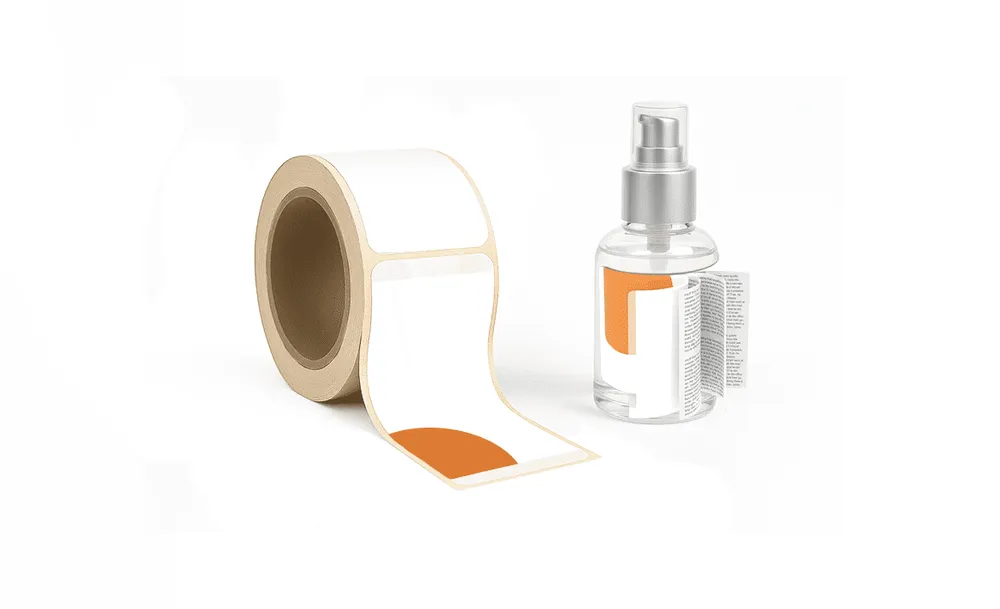
Peel-and-Reveal Labels: Apply with consistent pressure, ensuring the top layer remains easily peelable whilst the base adheres securely. The application process must balance adhesion requirements for the permanent base layer with the need to maintain separation between layers for the peelable portion. Temperature and humidity control is especially critical for these constructions, as environmental conditions can significantly affect the release properties between layers. For automated application, specialised equipment with tension control systems helps maintain the delicate balance required.
Multi-Panel Labels: Apply from one edge to avoid trapping air between panels. These complex constructions often require specialised application equipment or careful manual techniques. For accordion-fold or multi-panel designs, consider using a roller applicator that progressively seals each panel whilst maintaining proper alignment. The application sequence is critical—always work from the base panel outward, ensuring each section is properly positioned before proceeding to the next.
Techniques for Tamper-Evident and Security Labels
Security labels require precise application:
Void Labels: Apply with uniform pressure to ensure the void pattern appears consistently when tampered with. The effectiveness of void labels depends on complete adhesive contact with the substrate—any areas with insufficient pressure may fail to show the void message when tampered with, compromising security. Application tools should distribute pressure evenly across the entire label surface, with special attention to edges and corners where tampering attempts often begin.
Hologram Labels: Safety labels with hologram film require careful handling to prevent damage to the holographic elements during application. Fingerprints, scratches, or excessive pressure can diminish the visual effect of holographic features. Application should be performed in clean environments using gloves or mechanical applicators that minimise direct contact with the holographic surface. The angle of application can affect how holographic elements appear—consistent application angle helps maintain uniform visual effects across product lines.
Destructible Labels: Apply these fragile labels with gentle, even pressure to prevent premature tearing. The ultra-thin, brittle materials used in destructible labels make them particularly challenging to apply without damage. Consider using specialised applicators with controlled pressure settings and smooth, non-stick surfaces. For manual application, a silicone-coated roller can provide even pressure distribution without adhering to the label surface. Once applied, these labels should be allowed to cure completely before the product enters the distribution chain to ensure optimal tamper-evident properties.
Security Label Application Tips
Troubleshooting Common Label Application Issues
Even with proper techniques, label application problems can occur. Knowing how to identify and resolve these issues is essential for maintaining product quality.
Preventing and Fixing Air Bubbles
Air bubbles detract from label appearance and can lead to premature failure:
Prevention: Apply labels from centre outward, using a squeegee tool to push air toward edges. This progressive application technique allows air to escape naturally rather than becoming trapped beneath the label. For cylindrical containers, maintain consistent tension whilst applying from the centre outward in both directions simultaneously. The application environment should be dust-free, as microscopic particles can create nucleation points for bubble formation.
Small Bubble Repair: For small bubbles, puncture with a fine needle and press flat. The puncture should be as small as possible—ideally using a 30-gauge or finer needle—to create a vent without visible damage to the label. After puncturing, use a microfibre cloth or soft squeegee to press from the puncture point outward, forcing air through the tiny opening. On clear labels, these repairs should be performed against a dark background to better visualise the bubbles.
Large Bubble Issues: Large bubbles may require label replacement. If occurring frequently, review application technique and environment. Systematic bubble formation often indicates fundamental issues with application pressure, speed, or environmental conditions. Consider using labels with air-egress adhesives for challenging applications—these specialised adhesives contain microscopic channels that allow air to escape during application whilst maintaining adhesive coverage and bond strength.
Addressing Wrinkles and Misalignment
Wrinkles and misalignment affect both functionality and aesthetics:
Wrinkle Prevention: Apply with consistent tension, particularly on curved surfaces. The key to wrinkle-free application is maintaining uniform tension across the entire width of the label. For curved surfaces, the tension should be sufficient to allow the label to conform to the curve without stretching. Different label materials require different tension levels—film labels generally require less tension than paper labels due to their inherent flexibility and dimensional stability.
Alignment Tools: Use guides, jigs, or templates to ensure consistent placement. Custom alignment tools can dramatically improve application consistency, especially for high-value products where presentation is critical. For cylindrical containers, consider using a turntable with alignment guides that ensure labels are applied at the correct height and orientation. Laser alignment systems can project guideline patterns directly onto containers for precise positioning without physical contact.
Correcting Minor Misalignment: For slight misalignment, carefully lift and reposition before the adhesive fully sets (typically within minutes of application). This window of opportunity varies by adhesive type—removable adhesives offer longer repositioning times than permanent formulations. When repositioning, lift the label slowly at a shallow angle to minimise adhesive transfer and substrate damage. If the label cannot be repositioned without damage, complete removal and replacement is preferable to a visibly misaligned label.
Training Importance: Proper staff training significantly reduces application errors. Comprehensive training should include not only application techniques but also an understanding of label materials, adhesive properties, and environmental factors affecting application success. Hands-on practice with different container types and label materials builds the muscle memory and observational skills needed for consistent results. Regular refresher training helps prevent technique drift and addresses new challenges as they arise.
Quality Control and Performance Monitoring
Implementing robust quality control measures ensures consistent label application results and identifies opportunities for improvement.
Establishing Quality Standards
Define clear criteria for acceptable label application:
Visual Inspection Standards: Develop detailed criteria for acceptable appearance, including tolerance levels for air bubbles, wrinkles, and alignment. Visual standards should be documented with photographic examples showing both acceptable and unacceptable conditions. Train inspectors to consistently apply these standards across all shifts and production lines. Consider using standardised lighting conditions for inspections to ensure consistency in quality assessments.
Adhesion Testing: Implement periodic adhesion tests to verify label bond strength meets specifications. Standard test methods include peel tests, where labels are removed at controlled angles and speeds to measure adhesion force. Establish baseline adhesion values for each label-substrate combination and monitor trends over time. Environmental stress testing can simulate real-world conditions like temperature cycling or humidity exposure to predict long-term performance.
Durability Assessments: Test labels under simulated use conditions to ensure they meet performance requirements throughout the product lifecycle. Accelerated aging tests can predict label performance over months or years in compressed timeframes. Consider testing exposure to UV light, temperature extremes, chemical contact, and mechanical stress depending on the application requirements. Document performance criteria and establish pass/fail thresholds for each test.
Implementing Continuous Improvement Processes
Use data collection and analysis to optimise application processes:
Production Monitoring: Track application rates, defect rates, and equipment efficiency to identify trends and opportunities for improvement. Automated data collection systems can provide real-time feedback on production performance, enabling immediate response to quality issues. Statistical process control techniques help distinguish between normal variation and significant process changes that require intervention.
Root Cause Analysis: When quality issues occur, implement systematic investigation procedures to identify and address underlying causes. Fishbone diagrams and five-why analysis techniques can help trace problems back to their fundamental sources. Document corrective actions and monitor their effectiveness to prevent recurrence. Share learnings across production lines and facilities to benefit from collective experience.
Training Programme Updates: Regularly review and update training materials based on lessons learned and process improvements. Include both successes and failures in training content to provide comprehensive understanding of best practices. Implement competency assessments to ensure all operators maintain required skill levels. Consider cross-training programmes to improve flexibility and knowledge sharing among team members.
Performance Metrics for Label Application
Storage and Handling Best Practices
Proper storage and handling of labels before application significantly impacts performance and shelf life.
Environmental Storage Conditions
Maintain optimal conditions to preserve label quality:
Temperature Control: Store labels in temperature-controlled environments, typically between 15-25°C (59-77°F). Extreme temperatures can affect adhesive properties and dimensional stability of facestock materials. High temperatures may cause adhesive flow or transfer to the release liner, whilst low temperatures can make adhesives brittle and reduce initial tack. Gradual temperature changes are preferable to rapid fluctuations that can cause condensation or thermal stress.
Humidity Management: Maintain relative humidity between 40-60% to prevent moisture-related issues. Excessive humidity can cause paper labels to absorb moisture and dimensionally change, leading to registration problems and print quality issues. Low humidity environments can generate static electricity that interferes with label handling and causes dust attraction to adhesive surfaces. Consider using sealed storage containers or climate-controlled rooms for critical applications.
Light Protection: Store labels away from direct sunlight and UV sources to prevent premature aging of materials and inks. UV exposure can cause fading, brittleness, and changes in adhesive properties even before application. Use opaque packaging or storage containers when possible, and implement first-in-first-out inventory rotation to minimise storage time. For UV-sensitive materials, consider storing in dedicated dark rooms or using UV-filtering storage materials.
Inventory Management and Rotation
Implement systems to ensure labels are used within their optimal performance window:
First-In-First-Out (FIFO): Establish clear procedures for inventory rotation to use older stock before newer arrivals. Label adhesives and materials can degrade over time, even under optimal storage conditions. Implement clear labelling systems showing receipt dates and recommended use-by dates. Consider colour-coding or other visual systems to make FIFO rotation obvious to warehouse staff.
Shelf Life Monitoring: Track label age and remove expired stock from production use. Most pressure-sensitive labels have shelf lives of 1-2 years under proper storage conditions, but this can vary significantly based on adhesive type and environmental factors. Establish regular inventory audits to identify and segregate aging stock before it affects production quality. Consider implementing automated inventory management systems that provide alerts for approaching expiration dates.
Handling Procedures: Train staff in proper label handling techniques to prevent damage during storage and retrieval. Labels should be stored flat or on proper core sizes to prevent edge damage or curl development. Avoid crushing or compressing label rolls, which can cause adhesive transfer or core damage. Use appropriate handling equipment for large or heavy label rolls to prevent dropping or mishandling that could affect performance.
Storage Checklist
- Temperature maintained between 15-25°C (59-77°F)
- Relative humidity controlled between 40-60%
- Labels protected from direct sunlight and UV exposure
- FIFO inventory rotation system implemented
- Regular shelf life monitoring and expired stock removal
- Proper handling procedures to prevent physical damage
Integration with Production Workflows
Successful label application requires seamless integration with overall production processes.
Workflow Optimisation
Design labelling processes that complement rather than constrain production efficiency:
Line Balancing: Ensure labelling capacity matches overall production throughput to prevent bottlenecks. Analyse cycle times for each production step to identify optimal placement of labelling operations within the workflow. Consider parallel processing options where multiple labelling stations can handle different products or package sizes simultaneously. Buffer zones before and after labelling operations can help accommodate natural variations in production timing.
Changeover Procedures: Develop standardised procedures for switching between different label types or products. Minimise changeover time through organised tool and material placement, clear setup instructions, and pre-staging of materials for the next production run. Consider using quick-change fixtures and standardised label formats across product lines where possible to reduce complexity and setup time.
Quality Integration: Embed quality checks into the production flow rather than treating them as separate operations. Inline inspection systems can automatically detect and reject mislabelled products without stopping production. Position quality checkpoints strategically to catch issues early whilst allowing for efficient correction of problems. Implement feedback systems that alert upstream operations when labelling issues indicate potential problems with container preparation or material quality.
Technology Integration
Leverage automation and digital systems to improve efficiency and consistency:
Enterprise Resource Planning (ERP) Integration: Automatic work order generation can help ensure that the correct labels are prepared for each production run, reducing setup errors and the need to discard incorrectly selected or prepared label materials.
Vision Systems: Implement camera-based inspection systems for automated quality control. Modern vision systems can detect defects like air bubbles, wrinkles, misalignment, and missing labels at production speeds. These systems can also verify correct label placement and read barcodes or text to ensure proper product-label matching. Integration with production control systems enables automatic product diverting when defects are detected.
Data Analytics: Use production data to identify trends and optimisation opportunities. Track key performance indicators like application speed, defect rates, material consumption, and downtime causes to identify areas for improvement. Predictive maintenance algorithms can forecast equipment service needs based on performance trends, reducing unexpected downtime. Comparative analysis across production lines or facilities can identify best practices for broader implementation.
Conclusion: Mastering Professional Label Application
Professional label application represents the critical final step in transforming high-quality label materials into effective product identification and brand communication tools. Throughout this comprehensive guide, we have explored the multifaceted nature of label application, from understanding the fundamental properties of different materials and adhesives to implementing sophisticated automated systems that ensure consistent, high-quality results.
The foundation of successful label application lies in meticulous attention to surface preparation and environmental control. As we have seen, even the most advanced label materials and equipment cannot compensate for inadequate cleaning procedures or unfavourable environmental conditions. The investment in proper cleaning protocols, temperature and humidity control, and workspace organisation invariably pays dividends through improved adhesion performance, reduced defect rates, and enhanced product appearance.
The evolution from manual to automated application systems reflects the increasing demands of modern manufacturing for consistency, speed, and quality control. However, the principles underlying successful application remain constant regardless of the level of automation employed. Understanding these fundamentals enables manufacturers to make informed decisions about equipment selection, process optimisation, and quality standards that best serve their specific requirements.
Specialised applications—whether for food safety compliance, chemical resistance, or security purposes—demand particular attention to regulatory requirements and performance specifications. The techniques and materials chosen must not only meet immediate functional needs but also maintain their effectiveness throughout the product's intended lifecycle. This long-term perspective is essential for avoiding costly recalls, regulatory violations, or brand reputation damage that can result from inadequate label performance.
Quality control and continuous improvement processes transform label application from a routine production step into a strategic capability that supports broader business objectives. By implementing systematic monitoring, data collection, and analysis procedures, manufacturers can identify optimisation opportunities that reduce costs, improve quality, and enhance operational efficiency. The investment in proper training, equipment maintenance, and process documentation creates competitive advantages that extend far beyond the labelling operation itself.
Looking forward, the integration of digital technologies and data analytics into labelling operations promises to further enhance capabilities whilst reducing complexity for operators. Vision systems, predictive maintenance algorithms, and automated quality control systems represent the next evolution in professional label application, offering the potential for unprecedented levels of consistency and efficiency whilst maintaining the flexibility to accommodate diverse product requirements.
At Labelprint24, we recognise that successful label application is ultimately about more than just adhering a piece of material to a container—it represents the culmination of careful material selection, process design, and quality management that transforms products into professional, compliant, and marketable goods. Our comprehensive range of labelling solutions, from specialised food labels to industrial chemical labels, combined with expert guidance and support, ensures that your labelling operations contribute positively to your overall manufacturing excellence.
The techniques and principles outlined in this guide provide a solid foundation for achieving professional results in any labelling application. However, the rapidly evolving landscape of materials, equipment, and regulatory requirements demands ongoing learning and adaptation. We encourage manufacturers to maintain close relationships with their label suppliers, invest in comprehensive training programmes, and stay informed about technological advances that can enhance their operations.
Success in professional label application ultimately comes from recognising that every element—from initial surface preparation through final quality inspection—contributes to the overall result. By approaching labelling with the same systematic attention to detail applied to other critical manufacturing processes, companies can ensure that their products not only meet current requirements but are positioned to adapt to future challenges and opportunities in an increasingly competitive marketplace.